Offset Printing Plate Price Comparison
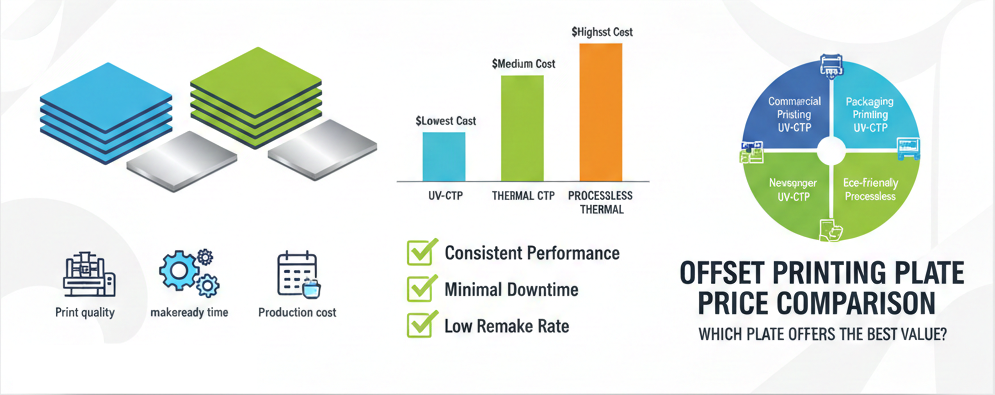
Offset printing plates remain one of the most critical cost drivers in commercial printing. Whether you’re a packaging plant, newspaper printer, or general commercial pressroom, the choice of plate directly influences print quality, makeready time, waste rate, machine compatibility, and—most importantly—overall production cost.
In today’s competitive market, printers face dozens of plate options: thermal CTP, UV-CTP (CTCP), double-layer, single-layer, positive-working, processless, and more. Each category comes with unique pricing patterns and long-term cost implications.
This article provides a professional, data-driven price comparison to help you determine which offset plate offers the best value for your operation.
1. Common Types of Offset Printing Plates
Before comparing pricing, we need to categorize plates by their technology and coating structure.
1. Thermal CTP Plates
Imaging: Infrared laser (830 nm)
Coating: Typically double-layer or single-layer
Widely used in: Commercial printing, packaging, high-quality color work
Pros: Excellent stability, dot holding, and wide processing latitude
Cons: Higher upfront cost
2. UV-CTP / CTCP Plates
Imaging: UV laser (405 nm / 430 nm)
Coating: Photopolymer layer
Used in: General commercial, books, newspapers
Pros: Lower plate cost, compatible with cheaper UV setters
Cons: Potentially lower run length than thermal plates
3. Processless Thermal Plates
Imaging: Thermal CTP, no chemical processing
Pros: Reduce chemistry cost and processing risk
Cons: Higher price per square meter
4. Positive vs Negative Plates
Positive-working: Exposed areas dissolve
Negative-working: Exposed areas harden
Pricing differs slightly, but performance requirements determine which is suitable.
2. Price Comparison by Plate Type
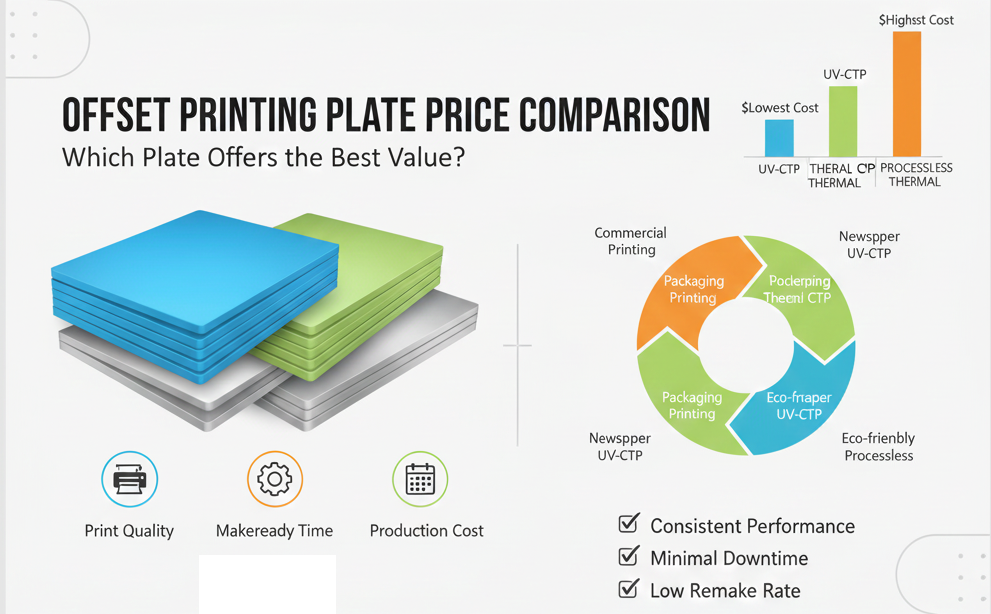
Note: Prices vary by region and aluminum market fluctuations. Below is a global average reference range used by printers.
| Plate Type | Typical Price (USD / m²) | Cost Position | Notes |
|---|---|---|---|
| UV-CTP / CTCP Positive Plate | $2.50 – $4.20 | Cheapest | Most cost-efficient for general printing |
| UV-CTP / CTCP Negative Plate | $2.80 – $4.50 | Low | Better durability than positive |
| Thermal CTP Double-Layer | $4.80 – $7.00 | Medium–High | Higher performance, long run length |
| Thermal CTP Single-Layer | $3.80 – $5.50 | Medium | Lower chemistry usage, quicker processing |
| Processless Thermal Plate | $7.50 – $10.00 | Highest | No developer cost but high plate cost |
3. What Determines Plate Price?
Plate cost is influenced by both raw materials and imaging technology.
Aluminum Base Quality
Higher-purity and thicker aluminum increase:
plate stability
resistance to bending
run length
and price
Coating Structure
Double-layer thermal plates cost more due to its complex coating that ensures strong chemical resistance and long run length.
Single-layer structures reduce manufacturing cost and improve developer savings.
Imaging Technology Compatibility
Thermal plates are usually priced higher due to:
more complex coating formulation
higher R&D cost
stringent quality control
UV-CTP plates benefit from simpler chemistry, resulting in a lower market price.
4. Price Comparison by Application Scenario
A. Commercial Printing (General Print Shops)
Best value: UV-CTP/CTCP Positive Plate
Why:
Lowest cost per square meter
Adequate run length (30,000–80,000 impressions)
Compatible with cost-effective CTCP setters
B. Packaging & High-Quality Color Work
Best value: Thermal CTP Double-Layer Plate
Why:
Outstanding dot reproduction
Strong resistance to aggressive inks and alcohol
Higher run length (100,000–250,000 impressions)
Lower waste during makeready
C. Newspaper Printing
Best value: UV-CTP / CTCP Negative Plate
Why:
Good balance between durability and cost
Faster exposure and development
Suitable for large-volume, single-color runs
D. Environmental / Chemistry-Free Shops
Best value: Processless Thermal Plate
Why:
Eliminates processor maintenance
Reduces water & chemical consumption
Higher upfront cost but lower long-term environmental overhead
5. Price vs Value: What Really Matters for Printers?
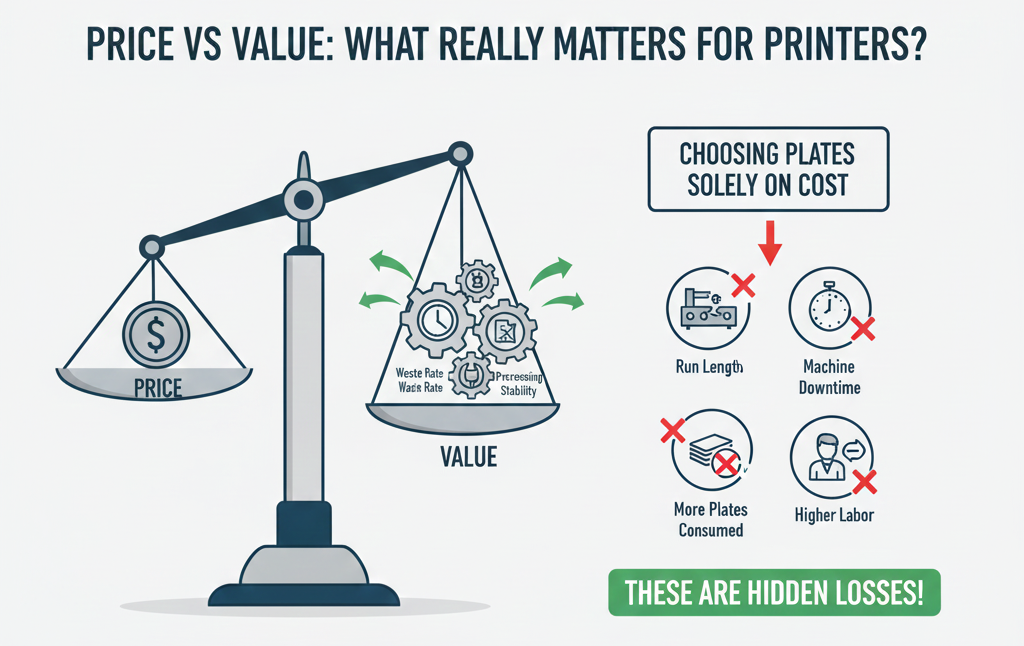
Choosing plates based solely on cost often creates hidden losses. The following factors should also be included when evaluating “value.”
1. Run Length
A cheaper plate with lower run length may end up costing more because:
more plates are consumed
more machine downtime
longer makeready
higher labor consumption
2. Waste Rate
Thermal plates generally produce:
cleaner dots
more consistent density
reduced waste sheets
This directly impacts the cost per job.
3. Compatibility with Existing CTP
Changing from thermal to UV-CTP or vice versa means:
new laser equipment
new developers
new process curve adjustments
These hidden costs must be counted.
4. Processing Stability
Thermal plates = more stable
UV-CTP plates = more sensitive to processing conditions
In high-volume factories, stability equals money.
6. Which Plate Offers the Best Value?
If minimizing cost is your top priority:
✔ UV-CTP / CTCP Positive Plates
Best choice for general commercial work
Lowest cost per square meter
Adequate print performance
If print quality and stability matter most:
✔ Thermal CTP Double-Layer Plates
Best dot stability
Longest run length
Strongest overall value
If you want to eliminate chemistry:
✔ Processless Thermal Plates
Best workflow convenience
Strong environmental benefits
In the end, the best value is the plate that delivers:
consistent performance
minimal machine downtime
low remake rate
reasonable cost per square meter
—not just the lowest purchase price.
7. How Our Company Supports Your Plate Selection
We supply a full range of offset printing plates, including:
Thermal CTP (double-layer & single-layer)
UV-CTP/CTCP plates (positive & negative)
Processless thermal plates
Custom OEM plate production
We help printers choose the best-value plate based on:
job type
print volume
plate consumption
current CTP system
cost control strategy
If you need sample testing or want a quotation for any plate type, you are welcome to contact us at any time.
Why Does a CTP Plate Scum on Press ? 9 Common Causes and Proven Solutions
Learn why CTP plates scum on press, the most common causes, troubleshooting methods, and practical solutions to improve offset printing quality and reduce downtime.

Which Offset Machine Is Best ? A Practical Guide for Commercial Printing
Which offset machine is best? Learn how to choose the right offset printing machine based on format, volume, cost, and CTP technology.
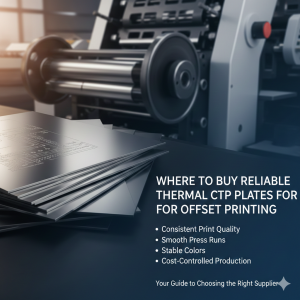
Where to Buy Thermal CTP Plates for Offset Printing | Best Supplier Guide & Expert Tips
Looking for reliable thermal CTP plates for offset printing? This expert guide explains how to choose a trustworthy supplier, compares global and Chinese manufacturers, and shares key quality criteria.