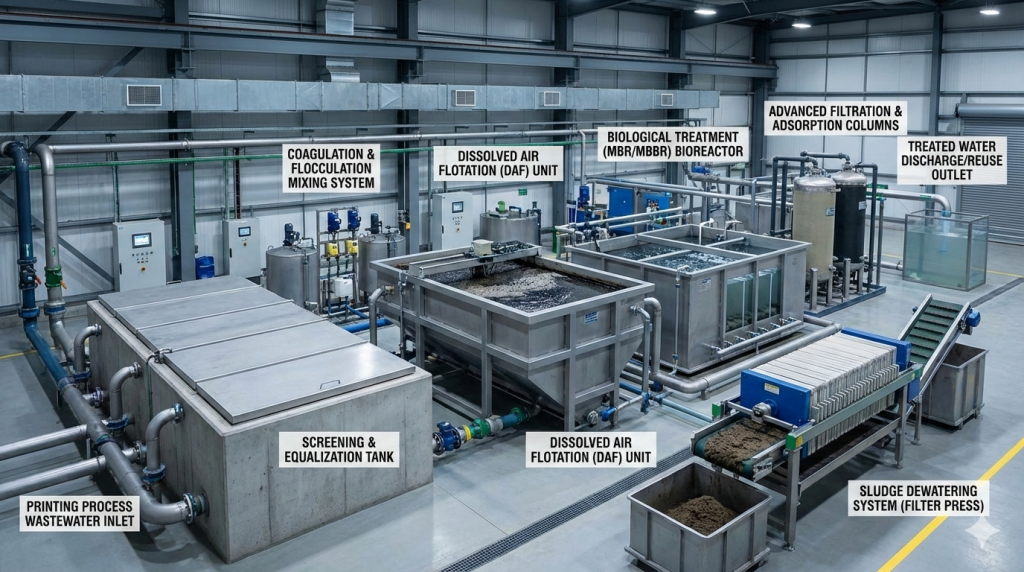
Introduction: Why Printing Ink Wastewater Treatment Matters
With the rapid development of the printing industry, environmental compliance has become a critical operational requirement, not just a regulatory formality. From offset printing and gravure printing to flexographic and digital printing, ink wastewater is one of the most challenging industrial effluents to treat.
The keyword Industry Printing Ink Wastewater Treatment System is increasingly searched by printing factories, packaging plants, and industrial parks facing stricter discharge standards and rising environmental costs.
This article provides a comprehensive and practical guide to printing ink wastewater treatment systems, including wastewater characteristics, treatment processes, system design, technology options, and how to select the right solution for your facility.
What Is an Industry Printing Ink Wastewater Treatment System?
An Industry Printing Ink Wastewater Treatment System is an integrated engineering solution designed to treat wastewater generated during printing processes, such as:
Ink mixing and cleaning
Plate washing and roller cleaning
Printing press wash-up
Equipment maintenance
Floor and workshop cleaning
The goal is to remove pollutants, meet discharge or reuse standards, and reduce environmental impact.
Characteristics of Printing Ink Wastewater
Printing ink wastewater is known for its complex composition and poor biodegradability, which makes treatment technically demanding.
1. High COD and Color
High Chemical Oxygen Demand (COD)
Strong coloration from pigments and dyes
Visual pollution if untreated
2. Oil, Resin, and Surfactants
Common components include:
Mineral oils or vegetable oils
Resins and binders
Emulsifiers and surfactants
These substances interfere with biological treatment if not properly pretreated.
3. Toxic and Refractory Compounds
Organic solvents
Heavy metal pigments (in some inks)
Hard-to-degrade chemical additives
4. Fluctuating Water Quality
Printing wastewater often shows:
Large variations in flow
Unstable pollutant concentrations
Batch-type discharge patterns
This requires flexible and robust system design.
Treatment Objectives for Printing Ink Wastewater
An effective industry printing ink wastewater treatment system aims to:
Reduce COD and BOD
Remove color and turbidity
Separate oils and suspended solids
Eliminate toxic substances
Meet local discharge or reuse standards
In some cases, water reuse is also a key objective.
Typical Treatment Process Flow
A complete printing ink wastewater treatment system usually combines physical, chemical, and biological processes.
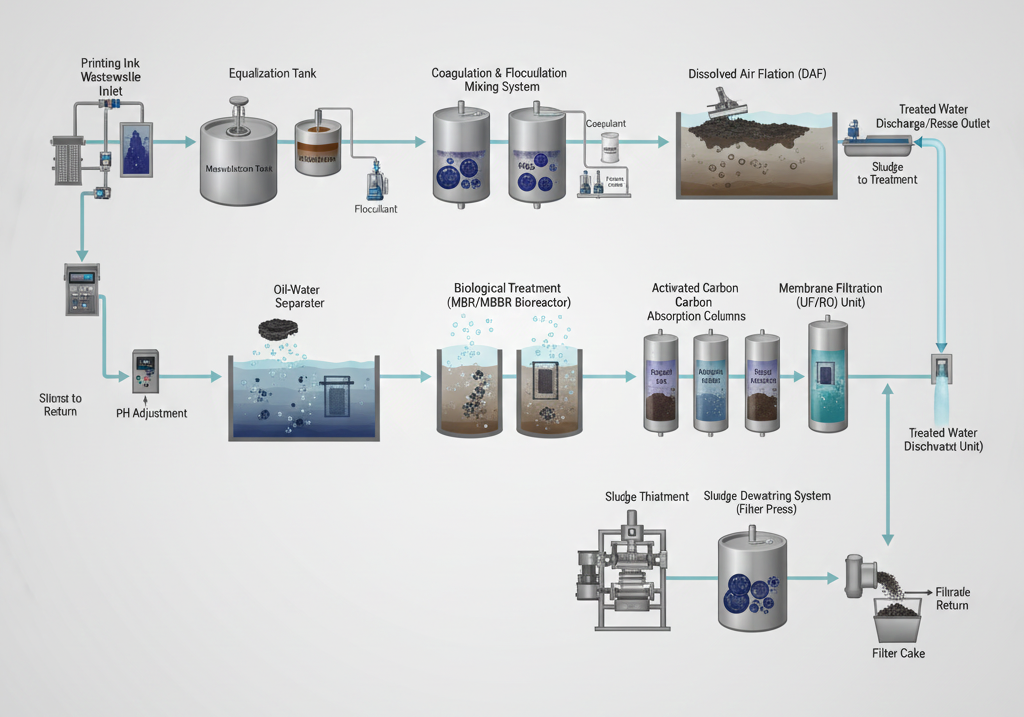
1. Pretreatment Stage
Pretreatment is essential to protect downstream units.
Common pretreatment methods:
Screening and grit removal
Equalization tank for flow balancing
Oil-water separation
pH adjustment
2. Coagulation and Flocculation
This is a core step for ink wastewater.
Chemical coagulants destabilize ink particles
Flocculants form large settleable flocs
Effectively remove color and suspended solids
This step significantly reduces COD and improves overall treatment efficiency.
3. Sedimentation or Dissolved Air Flotation (DAF)
Depending on wastewater characteristics:
Sedimentation tanks for heavier flocs
DAF systems for light ink particles and emulsified oils
DAF is widely used in printing wastewater due to its high efficiency in color and oil removal.
4. Biological Treatment (Optional but Common)
After chemical treatment, biological processes may be applied:
Activated sludge systems
MBR (Membrane Bioreactor)
MBBR (Moving Bed Biofilm Reactor)
This step further reduces organic pollutants and ensures stable discharge compliance.
5. Advanced Treatment and Polishing
For strict discharge or reuse requirements:
Sand or multimedia filtration
Activated carbon adsorption
Advanced oxidation processes (AOP)
Membrane filtration
6. Sludge Treatment
Ink wastewater generates chemical sludge.
Sludge handling typically includes:
Sludge thickening
Dewatering (filter press or centrifuge)
Safe disposal or recycling
Key Technologies Used in Printing Ink Wastewater Treatment Systems
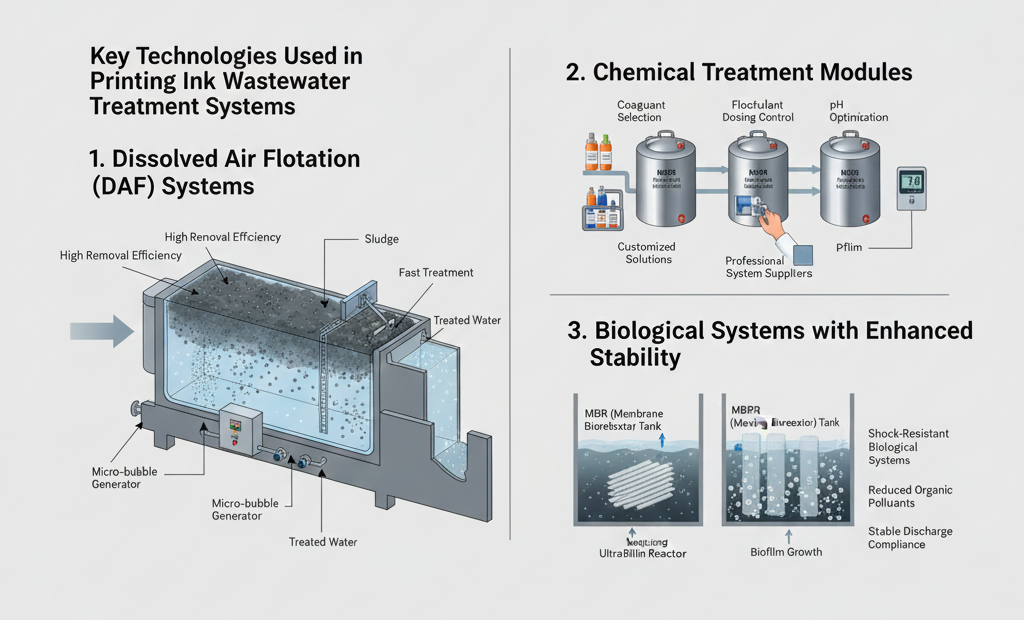
1. DAF Systems
Advantages:
High removal efficiency for ink particles
Compact footprint
Fast treatment
DAF is one of the most widely adopted technologies in industrial printing wastewater treatment.
2. Chemical Treatment Modules
Proper chemical formulation is crucial:
Coagulant selection
Flocculant dosage control
pH optimization
Professional system suppliers often customize chemical solutions for different ink types.
3. Biological Systems with Enhanced Stability
Printing wastewater requires shock-resistant biological systems due to water quality fluctuation.
MBR and MBBR systems are increasingly popular for this reason.
Design Considerations for Industry Printing Ink Wastewater Treatment Systems
When designing or selecting a system, consider:
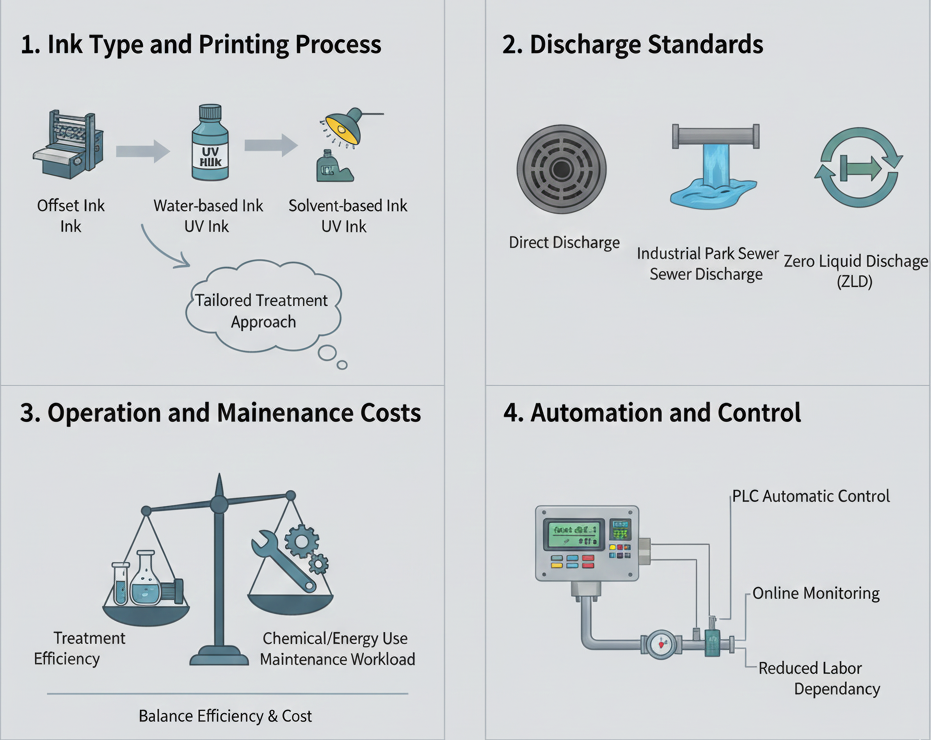
1. Ink Type and Printing Process
Different inks generate different wastewater:
Offset ink
Water-based ink
Solvent-based ink
UV ink
Each requires a tailored treatment approach.
2. Discharge Standards
Standards vary by region:
Direct discharge
Industrial park sewer discharge
Zero liquid discharge (ZLD)
The system must be designed accordingly.
3. Operation and Maintenance Costs
A good system balances:
Treatment efficiency
Chemical consumption
Energy use
Maintenance workload
4. Automation and Control
Modern systems feature:
PLC automatic control
Online monitoring
Reduced labor dependency
Benefits of a Professional Printing Wastewater Treatment System
Implementing a well-designed system brings multiple benefits:
Regulatory compliance
Reduced environmental risk
Improved corporate image
Lower long-term operating cost
Possibility of water reuse
Environmental investment is now a competitive advantage, not just a cost.
Common Problems and Practical Solutions
Problem: Incomplete Color Removal
Solution:
Optimize coagulation chemistry
Add DAF or advanced oxidation
Problem: High Sludge Volume
Solution:
Improve chemical dosing control
Use high-efficiency dewatering equipment
Problem: Unstable Effluent Quality
Solution:
Install equalization tanks
Upgrade automation and monitoring
Conclusion: A Smart Investment for Sustainable Printing
An Industry Printing Ink Wastewater Treatment System is no longer optional for modern printing enterprises. With increasing environmental regulations and customer expectations, professional wastewater treatment is essential for sustainable growth.
Choosing the right system ensures stable compliance, operational efficiency, and long-term cost control.
👉 We are also a professional Printing Waste Water Treatment system manufacturer, offering customized solutions for various printing industries, including offset, packaging, and industrial printing.
If you are looking for a reliable, efficient, and compliant printing wastewater treatment solution, feel free to contact us — we are ready to support your project from design to commissioning.
Why Does a CTP Plate Scum on Press ? 9 Common Causes and Proven Solutions
Learn why CTP plates scum on press, the most common causes, troubleshooting methods, and practical solutions to improve offset printing quality and reduce downtime.

Which Offset Machine Is Best ? A Practical Guide for Commercial Printing
Which offset machine is best? Learn how to choose the right offset printing machine based on format, volume, cost, and CTP technology.
Where to Buy Thermal CTP Plates for Offset Printing | Best Supplier Guide & Expert Tips
Looking for reliable thermal CTP plates for offset printing? This expert guide explains how to choose a trustworthy supplier, compares global and Chinese manufacturers, and shares key quality criteria.