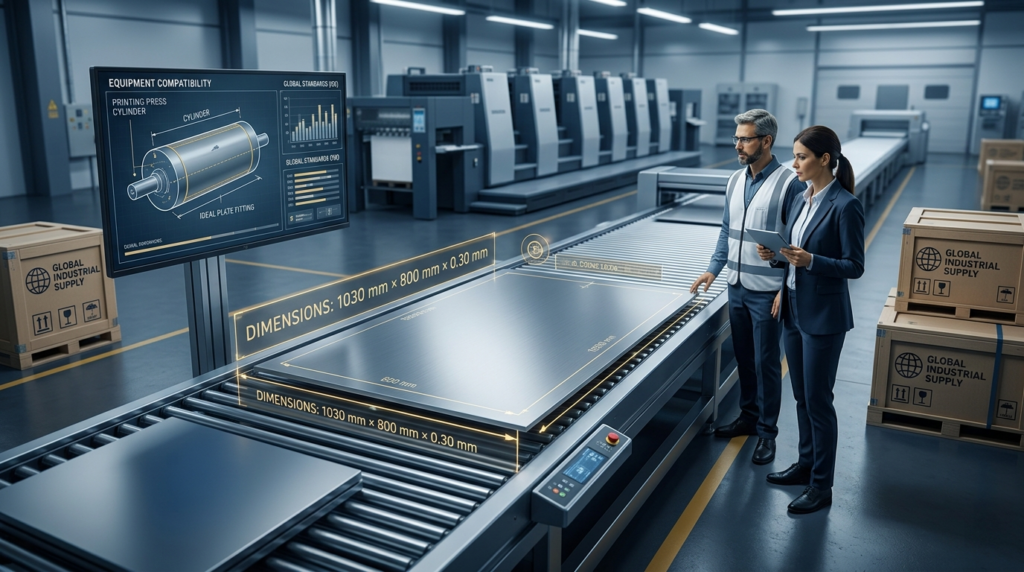
In the global printing and packaging industry, selecting the correct plate size is a critical yet often overlooked decision. Whether you are purchasing CTP plates, offset printing plates, flexographic plates, or industrial manufacturing plates, understanding plate sizing standards can significantly impact production efficiency, printing quality, equipment compatibility, and overall operating costs.
As international supply chains continue to expand in 2026, printers, distributors, packaging manufacturers, and procurement managers increasingly need a clear understanding of B2B manufacturing plate sizing standards.
This comprehensive guide explains everything you need to know about industrial plate sizing standards, including common dimensions, international standards, equipment compatibility, selection criteria, and best practices for global B2B sourcing.
What Are Manufacturing Plate Sizing Standards?
Manufacturing plate sizing standards refer to the standardized dimensions used for printing plates and industrial production plates that ensure compatibility between:
- CTP systems
- Offset printing presses
- Plate processors
- Packaging equipment
- Commercial printing machinery
Standardized sizing helps manufacturers achieve:
- Consistent production quality
- Reduced setup time
- Easier inventory management
- Lower procurement risks
- Global equipment compatibility
Without standardization, printers would face costly customization and operational inefficiencies.
Why Plate Size Matters in B2B Manufacturing
Many buyers focus primarily on plate performance, coating technology, or pricing. However, plate size directly affects production efficiency.
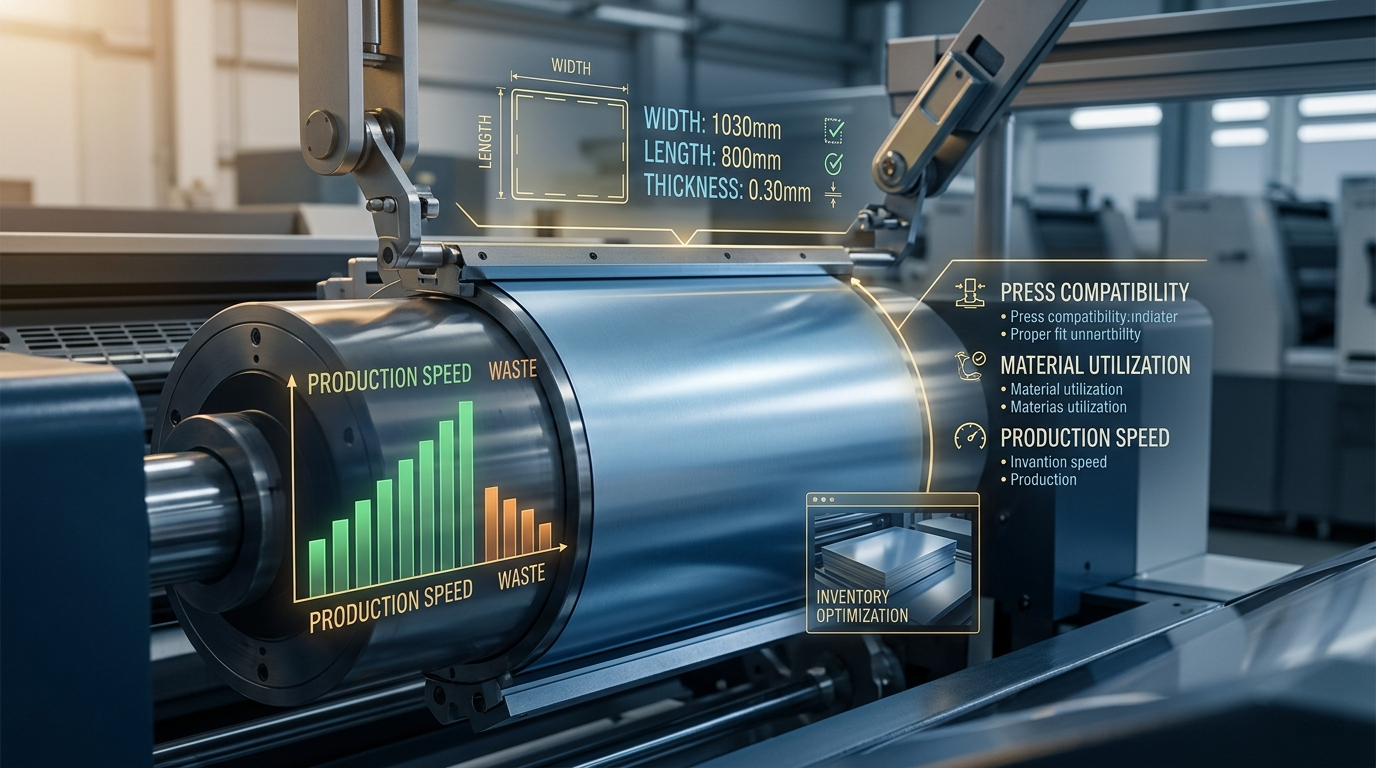
Proper plate sizing influences:
Press Compatibility
The plate must fit precisely on the plate cylinder.
Incorrect sizing may result in:
- Registration errors
- Plate mounting issues
- Increased waste
- Production downtime
Material Utilization
Correct plate dimensions optimize aluminum consumption and reduce waste during manufacturing.
Benefits include:
- Lower production costs
- Better inventory control
- Improved sustainability
Production Speed
Standardized plate sizes simplify:
- Plate handling
- Imaging workflows
- Automated loading systems
This increases overall production efficiency.
Understanding Plate Dimensions
Plate size generally consists of:
Length × Width × Thickness
For example:
1030 × 800 × 0.30 mm
Where:
- 1030 mm = plate length
- 800 mm = plate width
- 0.30 mm = plate thickness
All three dimensions must match equipment requirements.
Common CTP Plate Sizes Used Worldwide
The following sizes are commonly used in commercial offset printing.
| Plate Size (mm) | Typical Application |
|---|---|
| 745 × 605 | Small-format printing |
| 800 × 1030 | Commercial offset printing |
| 1030 × 800 | Sheetfed printing |
| 1130 × 920 | Large-format printing |
| 1160 × 940 | Packaging production |
| 1245 × 970 | Industrial printing |
| 1280 × 1020 | Large packaging presses |
| 1470 × 1180 | Extra-large format printing |
These dimensions vary depending on press manufacturer specifications.
Plate Thickness Standards in Manufacturing
Besides length and width, thickness is equally important.
The most common thickness standards include:
| Thickness | Typical Use |
|---|---|
| 0.15 mm | Small-format presses |
| 0.20 mm | Commercial printing |
| 0.25 mm | Medium-format production |
| 0.30 mm | Packaging printing |
| 0.40 mm | Industrial applications |
Selecting the correct thickness ensures:
- Proper cylinder fit
- Long plate life
- Stable printing performance
Plate Sizing Standards by Press Manufacturer
Different press manufacturers use different plate dimensions.
Heidelberg
Common sizes include:
- 745 × 605 mm
- 1030 × 800 mm
- 1050 × 795 mm
Applications:
- Commercial printing
- Publishing
- Packaging
Komori
Typical sizes:
- 800 × 1030 mm
- 1030 × 800 mm
- 1130 × 920 mm
Applications:
- High-volume commercial printing
- Packaging production
KBA (Koenig & Bauer)
Frequently used sizes:
- 1245 × 970 mm
- 1280 × 1020 mm
Applications:
- Large-format printing
- Folding carton production
Manroland
Common dimensions include:
- 1030 × 800 mm
- 1130 × 920 mm
Applications:
- Commercial and industrial printing
International Plate Sizing Standards
Global plate manufacturing generally follows metric standards.
ISO-Based Manufacturing
Many manufacturers align production with:
- ISO dimensional standards
- Press manufacturer specifications
- Regional printing requirements
Benefits include:
- Easier global sourcing
- Better compatibility
- Reduced inventory complexity
Customized Plate Sizes in B2B Manufacturing
Not all production environments use standard dimensions.
Many industrial customers require:
OEM Sizes
Custom dimensions for:
- Specialized presses
- Legacy equipment
- Proprietary systems
Packaging Applications
Packaging manufacturers often require:
- Larger plates
- Non-standard widths
- Special thicknesses
Regional Variations
Some markets maintain unique specifications based on historical equipment installations.
Examples include:
- Europe
- North America
- Southeast Asia
- Middle East
How to Select the Correct Plate Size
Professional procurement teams evaluate several factors.
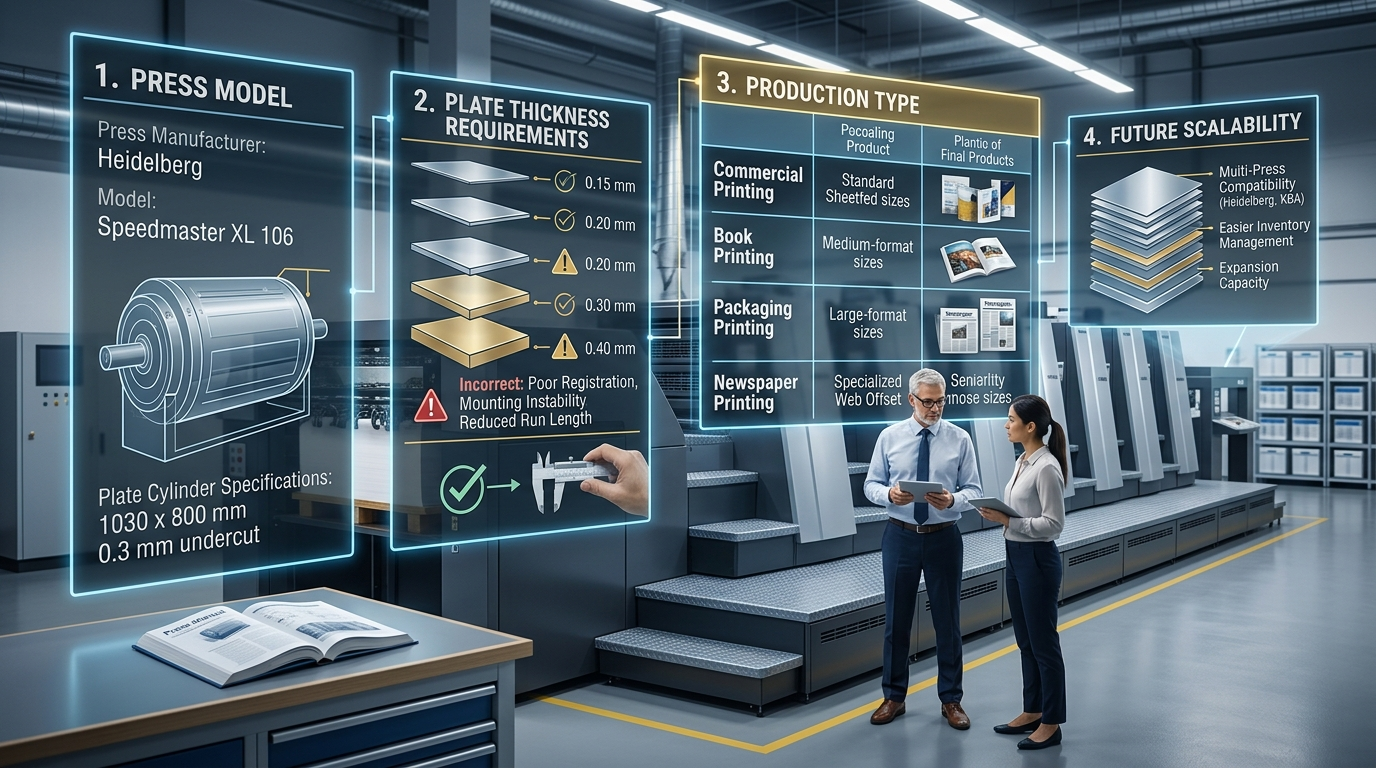
1. Press Model
Always identify:
- Press manufacturer
- Model number
- Plate cylinder specifications
The press manual remains the most reliable source.
2. Plate Thickness Requirements
Incorrect thickness can cause:
- Poor registration
- Mounting instability
- Reduced run length
3. Production Type
Different applications require different dimensions.
| Application | Recommended Size Category |
|---|---|
| Commercial printing | Standard sheetfed sizes |
| Book printing | Medium-format sizes |
| Packaging printing | Large-format sizes |
| Newspaper printing | Specialized web offset sizes |
4. Future Scalability
Many B2B buyers choose plate specifications that allow:
- Multi-press compatibility
- Easier inventory management
- Expansion capacity
Common Mistakes in B2B Plate Procurement
Ordering Based Only on Previous Invoices
Equipment upgrades may require different plate dimensions.
Always verify current specifications.
Ignoring Thickness
Length and width may be correct while thickness is incorrect.
This often causes mounting issues.
Overlooking Regional Standards
Different regions may use slightly different specifications.
Always confirm dimensions before shipment.
Failing to Request Technical Drawings
Professional suppliers should provide:
- Technical specifications
- Dimension drawings
- Compatibility verification
Future Trends in Manufacturing Plate Sizing
The industry is evolving toward:
Greater Standardization
Global buyers increasingly prefer universal dimensions.
Smart Inventory Management
ERP systems are helping printers manage plate inventories more efficiently.
Automation Compatibility
Modern automated plate loaders require highly consistent dimensions.
Sustainable Manufacturing
Optimized plate sizing reduces aluminum waste and lowers environmental impact.
Frequently Asked Questions (FAQ)
What is the most common CTP plate size?
One of the most widely used sizes worldwide is 1030 × 800 mm, especially for commercial sheetfed offset printing.
How do I determine the correct plate size for my press?
Check:
- Press manufacturer
- Press model
- Technical manual
- Existing plate specifications
Consulting your plate supplier is also recommended.
Does plate thickness affect print quality?
Yes. Proper thickness improves:
- Registration stability
- Plate durability
- Printing consistency
Can plate sizes be customized?
Yes. Many manufacturers offer OEM and customized plate dimensions for specialized equipment.
Are plate sizing standards the same worldwide?
While many dimensions are standardized, variations still exist depending on:
- Region
- Press manufacturer
- Industry sector
What happens if the plate size is incorrect?
Potential issues include:
- Mounting failures
- Registration errors
- Increased waste
- Press downtime
Which industries require large-format plates?
Large-format plates are commonly used in:
- Folding carton printing
- Packaging production
- Industrial graphics
- Commercial large-format printing
Should I stock multiple plate sizes?
Many commercial printers maintain inventory of several sizes to support different press models and production requirements.
Conclusion
Understanding B2B manufacturing plate sizing standards is essential for efficient printing and packaging production. Correct plate dimensions improve compatibility, reduce waste, increase productivity, and help maintain consistent print quality.
Whether you operate a commercial print shop, packaging factory, publishing company, or distribution business, selecting the right plate size is a strategic decision that directly impacts operational success.
As global manufacturing becomes increasingly automated and standardized, partnering with an experienced plate supplier can help ensure that your plate specifications meet both current and future production requirements.
Looking for a Reliable CTP Plate Manufacturer?
We are a professional manufacturer specializing in:
- Thermal CTP Plates
- Processless CTP Plates
- UV CTP Plates
- Customized Plate Sizes
- OEM Manufacturing Services
We provide:
- Global export support
- Stable quality control
- Competitive factory pricing
- Customized dimensions and thicknesses
- Professional technical consultation
If you are looking for reliable CTP plate solutions for commercial printing, packaging production, or industrial applications, contact us today for samples, technical specifications, and quotation support.
Why Does a CTP Plate Scum on Press ? 9 Common Causes and Proven Solutions
Learn why CTP plates scum on press, the most common causes, troubleshooting methods, and practical solutions to improve offset printing quality and reduce downtime.

Which Offset Machine Is Best ? A Practical Guide for Commercial Printing
Which offset machine is best? Learn how to choose the right offset printing machine based on format, volume, cost, and CTP technology.
Where to Buy Thermal CTP Plates for Offset Printing | Best Supplier Guide & Expert Tips
Looking for reliable thermal CTP plates for offset printing? This expert guide explains how to choose a trustworthy supplier, compares global and Chinese manufacturers, and shares key quality criteria.