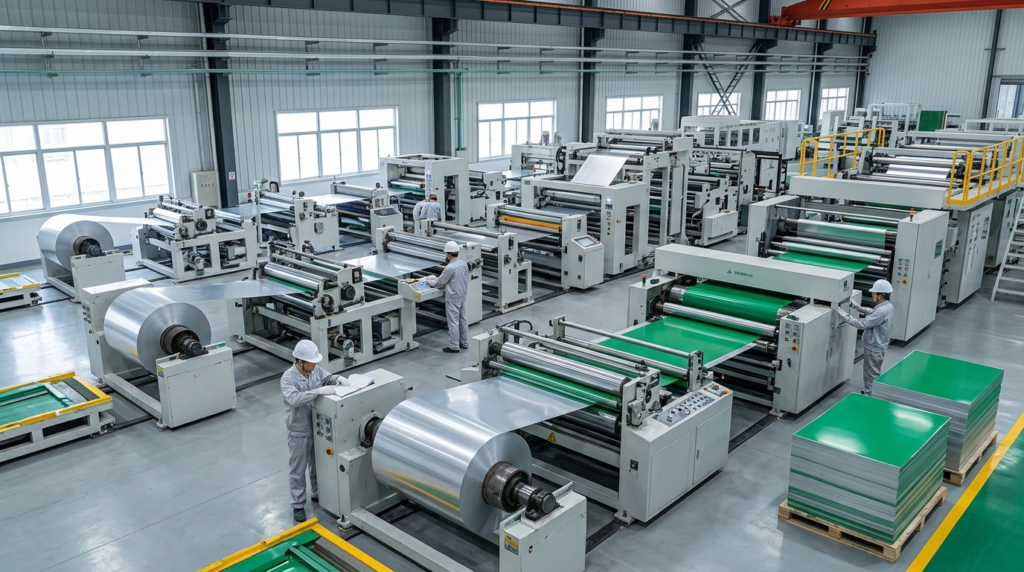
China PS Plate Factory for Professional Offset Printing
If you are looking for a reliable China PS plate factory, choosing the right manufacturer is more important than simply finding the lowest price.
PS plates are precision printing materials. Their performance depends on the quality of the aluminum substrate, graining technology, anodizing process, photosensitive coating, plate dimensions, exposure characteristics, development conditions, and production consistency.
For commercial printers, printing-material distributors, importers, and OEM customers, an experienced manufacturer can provide more than competitive pricing.
A professional factory should provide:
- Stable PS plate quality
- Consistent batch performance
- Multiple plate specifications
- OEM and private-label production
- Reliable production capacity
- Technical support
- Export packaging
- Long-term supply capability
CNCTP Plates specializes in the manufacturing and global supply of offset printing plates, including positive PS plates, thermal CTP plates, process-free CTP plates, and other prepress products.
Our goal is to provide international B2B customers with reliable printing plate products and long-term manufacturing support.
What Is a PS Plate?
PS plate stands for Presensitized Plate.
It is a traditional offset printing plate that uses a photosensitive coating to create the image required for lithographic printing.
Unlike modern CTP plates, conventional PS plates normally require a film-based exposure workflow.
The basic process includes:
Artwork → Film → Plate Exposure → Chemical Development → Printing Press
PS plates remain relevant in markets where conventional plate-making equipment is still widely used or where customers require a cost-effective offset plate solution.
Why Buy PS Plates from a China Factory?
China has become an important global manufacturing base for printing materials.
For international buyers, sourcing PS plates directly from a Chinese factory can provide several advantages.
Competitive Manufacturing Costs
Large-scale manufacturing and an established printing-material supply chain allow Chinese factories to produce PS plates competitively.
However, professional buyers should compare total landed cost, rather than simply comparing the factory quotation.
Total cost can include:
- Plate price
- Packaging
- Inland transportation
- Ocean or air freight
- Insurance
- Import duties
- Local delivery
- Product waste
Flexible Production
Professional Chinese PS plate manufacturers can often support different:
- Plate sizes
- Thicknesses
- Surface treatments
- Packaging configurations
- Labels
- Product specifications
This is particularly important for distributors and importers.
OEM Manufacturing
Many B2B customers do not want to sell another manufacturer’s brand.
Instead, they want to develop their own printing plate brand.
A professional China PS plate factory can support:
- Private labels
- Custom cartons
- Custom product labels
- Customized packaging
- OEM specifications
This allows distributors to build a long-term product portfolio rather than simply reselling a third-party brand.
Positive PS Plates
Positive PS plates are one of the most widely used types of conventional offset printing plates.
The photosensitive coating is designed so that the image is formed through controlled exposure and subsequent chemical development.
High-quality positive PS plates can provide:
- Good image reproduction
- Stable development
- Excellent dot reproduction
- Reliable ink-water balance
- Consistent press performance
They are suitable for a wide range of conventional offset printing applications.
PS Plate Specifications
PS plate specifications vary according to the printing press, plate-making equipment, and customer requirements.
Common specifications may include:
| Specification | Typical Options |
|---|---|
| Plate Type | Positive PS Plate |
| Thickness | 0.15 / 0.20 / 0.25 / 0.30 mm and other options |
| Aluminum Base | 1050 / 1060 and suitable grades |
| Color | Blue / Green |
| Working Type | Positive |
| Application | Offset Printing |
| Processing | Conventional chemical development |
| Sizes | Standard and customized |
| Packaging | Standard / OEM |
Exact specifications should always be confirmed with the manufacturer before bulk production.
Some Chinese PS plate manufacturers publicly list thickness ranges from approximately 0.15 mm to 0.40 mm and a wide range of plate sizes, demonstrating the flexibility available from Chinese production sources.
How Is a PS Plate Manufactured?
A professional PS plate factory needs to control multiple production stages.
1. Aluminum Substrate Preparation
The aluminum substrate is the foundation of the PS plate.
Its characteristics influence:
- Plate flatness
- Mechanical strength
- Surface quality
- Printing stability
High-quality aluminum is essential for producing consistent printing plates.
2. Electrochemical Graining
The aluminum surface is treated to create a controlled microscopic texture.
This process helps the plate achieve the required:
- Water retention
- Ink-water balance
- Coating adhesion
- Printing performance
The graining process is therefore one of the important quality-control stages in PS plate manufacturing.
3. Anodizing
The aluminum surface may undergo anodizing treatment to improve the characteristics of the plate surface.
Proper anodizing contributes to:
- Surface durability
- Hydrophilic performance
- Printing stability
4. Photosensitive Coating
The photosensitive coating is applied to the treated aluminum substrate.
This is one of the most critical steps in PS plate production.
Coating consistency affects:
- Sensitivity
- Resolution
- Development latitude
- Dot reproduction
- Press performance
5. Drying and Curing
The coating must be dried under controlled production conditions.
Temperature and production parameters must remain stable to maintain batch consistency.
6. Cutting
The coated material is cut into the required plate dimensions.
Common requirements include:
- Standard press sizes
- Custom sizes
- Different thicknesses
- Special packaging configurations
7. Quality Inspection
Before shipment, professional factories should inspect:
- Dimensions
- Thickness
- Surface quality
- Coating uniformity
- Sensitivity
- Development performance
- Packaging
Quality control is particularly important for international B2B orders because inconsistent plates can cause significant production losses at the customer’s printing plant.
China PS Plate Factory vs Trading Company
One of the most important questions for international buyers is:
Am I buying directly from a factory or from a trading company?
The difference can significantly affect your purchasing strategy.
| Factor | Factory | Trading Company |
| Production Control | High | Limited |
| Product Customization | High | Depends on factory |
| OEM | Usually available | Depends on partner |
| Factory Pricing | Direct | May include margin |
| Technical Support | Direct | Often intermediary |
| Production Planning | Strong | Depends on supplier |
| Quality Control | Factory controlled | Depends on source |
A trading company is not necessarily a bad supplier.
For smaller buyers, a trading company may provide:
- Multiple brands
- Lower MOQ
- Easier sourcing
- Local communication
However, large-volume buyers should determine whether direct factory sourcing can provide better long-term value.
How to Verify a China PS Plate Factory
Before placing a large order, ask the supplier for evidence of manufacturing capability.
Factory Verification Checklist
Check whether the supplier can provide:
Production Facility
Ask for:
- Factory address
- Production line information
- Factory photographs or video
- Production capacity
Product Information
Ask for:
- Technical data sheet
- Product specifications
- Recommended developer
- Exposure conditions
- Storage requirements
Quality Documentation
Depending on the market, request:
- ISO certification
- Quality inspection records
- Batch information
- Product testing data
Sample Testing
Always test samples before committing to a large order.
Ideally, test the PS plates using your actual:
- Plate exposure equipment
- Developer
- Printing press
- Ink
- Fountain solution
This provides a much more reliable evaluation than comparing brochures.
Why PS Plate Quality Matters
A low-cost PS plate can become expensive if it causes production problems.
Poor-quality plates may result in:
- Uneven exposure
- Weak image formation
- Poor dot reproduction
- Development instability
- Plate scratches
- Poor ink-water balance
- Shorter press life
- Increased plate waste
For a commercial printing plant, the real cost of a printing plate is therefore not simply:
Purchase Price
but:
Purchase Price + Waste + Downtime + Rework + Production Risk
A slightly more expensive plate with stable performance can often deliver a lower total cost.
PS Plate Storage Requirements
PS plates are sensitive photographic materials and should be stored under appropriate conditions.
A professional supplier should provide clear storage recommendations.
Typical considerations include:
- Avoid direct sunlight
- Keep plates dry
- Avoid excessive humidity
- Avoid extreme temperatures
- Protect packaging from physical damage
- Follow the manufacturer’s recommended shelf life
Storage conditions can directly affect plate performance.
Therefore, international buyers should also evaluate how plates are packaged for long-distance transportation.
PS Plates vs Thermal CTP Plates
PS plates and thermal CTP plates serve different prepress workflows.
| Feature | PS Plates | Thermal CTP Plates |
| Workflow | Film-based | Digital |
| Film Required | Yes | No |
| Imaging | Conventional exposure | Thermal laser |
| Automation | Lower | Higher |
| Initial Equipment | Lower in traditional systems | Higher |
| Production Efficiency | Moderate | High |
| Typical Application | Conventional offset | Modern commercial printing |
If your printing facility already uses conventional film-based plate-making equipment, PS plates can remain a practical choice.
If you are upgrading to a digital CTP workflow, thermal CTP plates are generally more appropriate.
PS Plates vs CTCP Plates
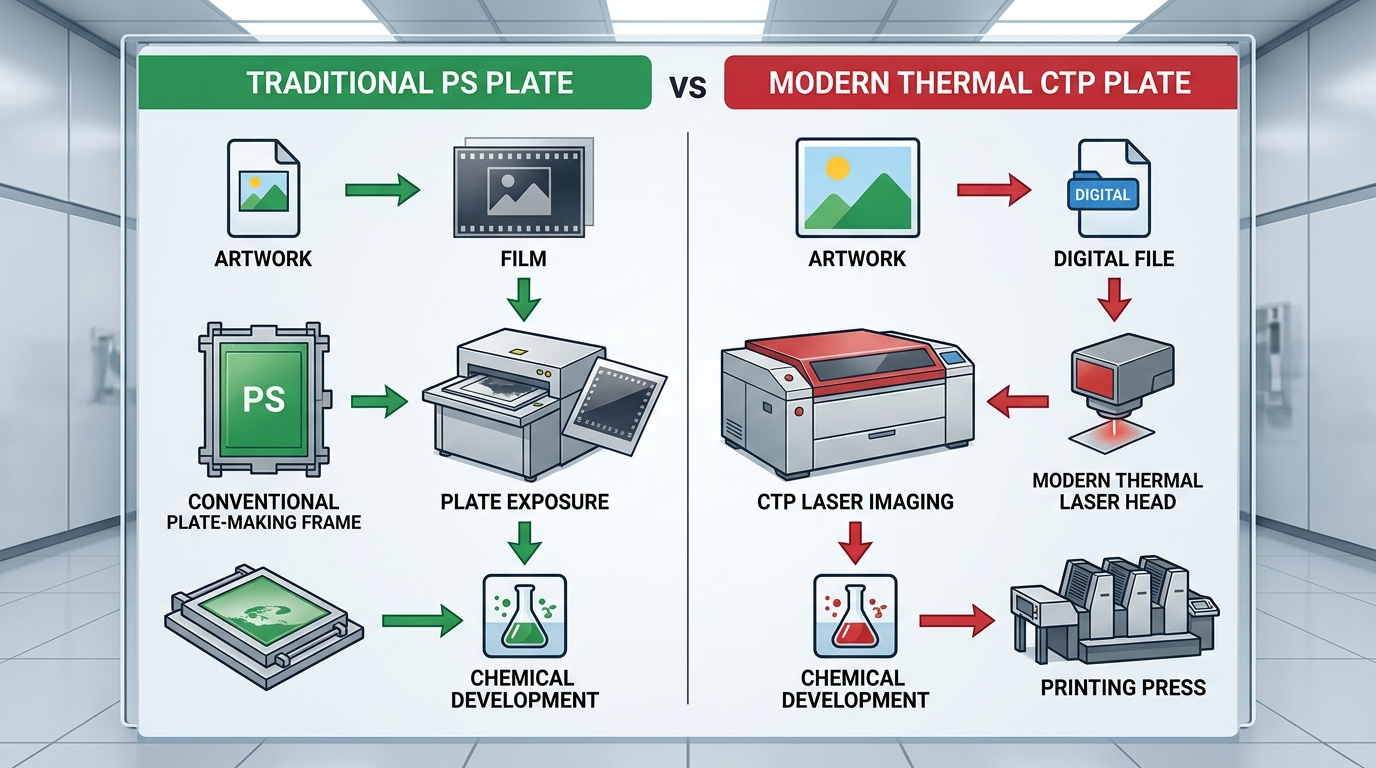
CTCP stands for Computer-to-Conv. Plate and uses a computer-to-conventional-plate workflow.
Unlike traditional PS plate exposure through film, CTCP imaging exposes a conventional plate directly using UV technology.
| Feature | PS Plate | CTCP Plate |
| Film | Usually required | Not required |
| Imaging | Conventional exposure | UV CTP |
| Plate Type | Photosensitive | Conventional plate coating |
| Workflow | Traditional | Digital |
| Chemical Development | Required | Usually required |
This makes CTCP an intermediate technology between conventional film-based plate production and modern thermal CTP.
How Much Does a China PS Plate Cost?
PS plate pricing depends on many factors.
These include:
- Plate size
- Plate thickness
- Order quantity
- Aluminum cost
- Coating specification
- Packaging
- OEM requirements
- Destination
- Shipping terms
For B2B buyers, it is better to request a quotation based on the exact specification instead of relying on a generic online price.
A proper RFQ should include:
Size + Thickness + Quantity + Type + Packaging + Destination
For example:
Positive PS Plate / 0.15 mm / 650 × 550 mm / 10,000 m² / OEM packaging / USA
This allows the manufacturer to provide a much more accurate quotation.
What Is the MOQ for China PS Plates?
MOQ varies significantly between manufacturers.
Some suppliers publicly list minimum orders of several thousand square meters, while others may offer smaller trial orders depending on product type and production schedule.
For long-term B2B cooperation, MOQ may be negotiated according to:
- Standard product
- Custom product
- OEM packaging
- Annual purchasing volume
- Production schedule
The best approach is to discuss your expected monthly or annual consumption with the manufacturer.
OEM PS Plate Manufacturing in China
For distributors, OEM manufacturing can be more valuable than buying standard branded plates.
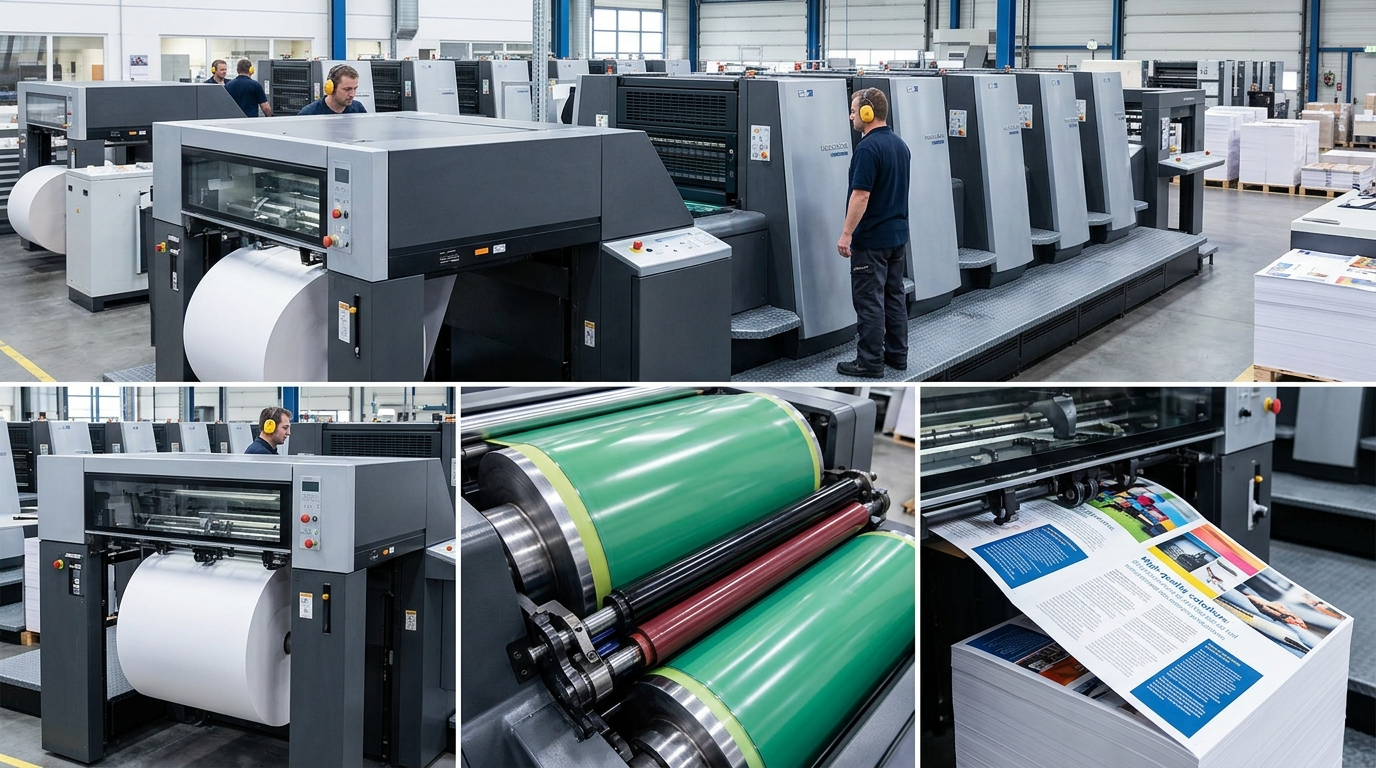
A professional OEM program can include:
Custom Brand
Your company logo and brand identity can be used on:
- Plate boxes
- Labels
- Cartons
- Product documentation
Custom Packaging
Packaging can be designed according to your market.
Custom Product Specification
Depending on production capability, manufacturers may support:
- Different dimensions
- Different thicknesses
- Different coating characteristics
- Special packaging
OEM requirements should be confirmed before production.
Why Choose CNCTP Plates?
CNCTP Plates is a professional manufacturer and supplier of prepress printing materials serving international B2B customers.
Our product portfolio includes:
- Positive PS Plates
- Thermal CTP Plates
- Process-Free CTP Plates
- Violet CTP Plates
- UV-CTP Plates
- Printing chemicals and related prepress materials
Our experience in printing plates allows us to support customers who need to transition between conventional PS workflows and modern CTP production.
More Than a PS Plate Supplier
For B2B customers, our role is not simply to ship boxes of plates.
We can help customers evaluate:
- Plate type
- Plate size
- Thickness
- CTP compatibility
- Printing requirements
- Packaging
- Export logistics
This is particularly valuable for distributors and importers who need a stable product line rather than one-time purchasing.
Global B2B PS Plate Supply
CNCTP Plates can support customers in international markets, including:
- United States
- Canada
- Mexico
- Europe
- Middle East
- Southeast Asia
- Africa
- Latin America
International buyers can discuss:
- FOB
- CIF
- DDP
- OEM
- Private label
- Bulk purchasing
Shipping terms should be selected according to the buyer’s destination, import capability, and order volume.
Who Should Buy PS Plates Directly from a China Factory?
Direct factory sourcing is particularly suitable for:
Printing Companies
Companies with regular monthly consumption can negotiate stable supply programs.
Printing Material Distributors
Distributors can develop their own product portfolio and improve purchasing margins.
Importers
Importers can purchase container-level quantities and distribute products locally.
OEM Brands
Companies developing their own PS plate brand can use factory manufacturing without establishing their own production line.
Large Printing Groups
Multi-site printing companies can consolidate purchasing and standardize plate specifications.
Frequently Asked Questions
What is a China PS plate factory?
A China PS plate factory is a manufacturing facility in China that produces presensitized offset printing plates used in conventional lithographic printing workflows.
Are Chinese PS plates good quality?
Quality varies significantly between manufacturers. Professional factories with controlled aluminum treatment, coating technology, quality inspection, and stable production processes can provide consistent PS plate performance.
Can I buy PS plates directly from a Chinese manufacturer?
Yes. Many Chinese factories supply international printing companies, distributors, and importers directly.
Can Chinese PS plate factories provide OEM products?
Yes. Depending on the manufacturer and order volume, OEM services can include customized labels, cartons, packaging, and product specifications.
What is the difference between PS and CTP plates?
Traditional PS plates normally use a film-based exposure process, while CTP plates are imaged directly from digital files using a CTP system.
Are PS plates still used?
Yes. Although CTP technology has become dominant in many modern printing environments, conventional PS plates remain useful in markets and printing facilities that continue to operate film-based workflows.
How do I get a quotation from a China PS plate factory?
Provide the supplier with your plate type, dimensions, thickness, required quantity, packaging requirements, destination country, and OEM requirements. The manufacturer can then calculate a more accurate quotation.
Request a PS Plate Factory Quotation
If you are looking for a China PS plate factory for long-term B2B supply, CNCTP Plates can provide professional product and manufacturing support.
We work with:
- Commercial printers
- Printing-material distributors
- Importers
- OEM brands
- Packaging printers
- Publishing companies
Our product range covers conventional PS plates as well as modern thermal and process-free CTP solutions.
To request a quotation, send us:
PS Plate Type + Size + Thickness + Quantity + Destination Country
Our team can recommend the appropriate product specification and provide a competitive B2B quotation.
Conclusion
China remains an important sourcing market for PS plates because of its established printing-material manufacturing infrastructure, flexible production capabilities, competitive manufacturing costs, and international export experience.
However, choosing the right supplier requires more than comparing price.
A reliable China PS plate factory should demonstrate:
Manufacturing capability + Stable quality + Technical expertise + OEM flexibility + Export experience + Long-term supply reliability
CNCTP Plates provides professional PS plate and CTP plate solutions for international B2B customers, helping printing companies and distributors source reliable offset printing materials directly from an experienced manufacturing partner.
If you are currently purchasing PS plates through a distributor and want to compare a direct factory-supply solution, contact CNCTP Plates with your current specification and annual consumption.
Why Does a CTP Plate Scum on Press ? 9 Common Causes and Proven Solutions
Learn why CTP plates scum on press, the most common causes, troubleshooting methods, and practical solutions to improve offset printing quality and reduce downtime.
Which Offset Machine Is Best ? A Practical Guide for Commercial Printing
Which offset machine is best? Learn how to choose the right offset printing machine based on format, volume, cost, and CTP technology.
Where to Buy Thermal CTP Plates for Offset Printing | Best Supplier Guide & Expert Tips
Looking for reliable thermal CTP plates for offset printing? This expert guide explains how to choose a trustworthy supplier, compares global and Chinese manufacturers, and shares key quality criteria.