Introduction
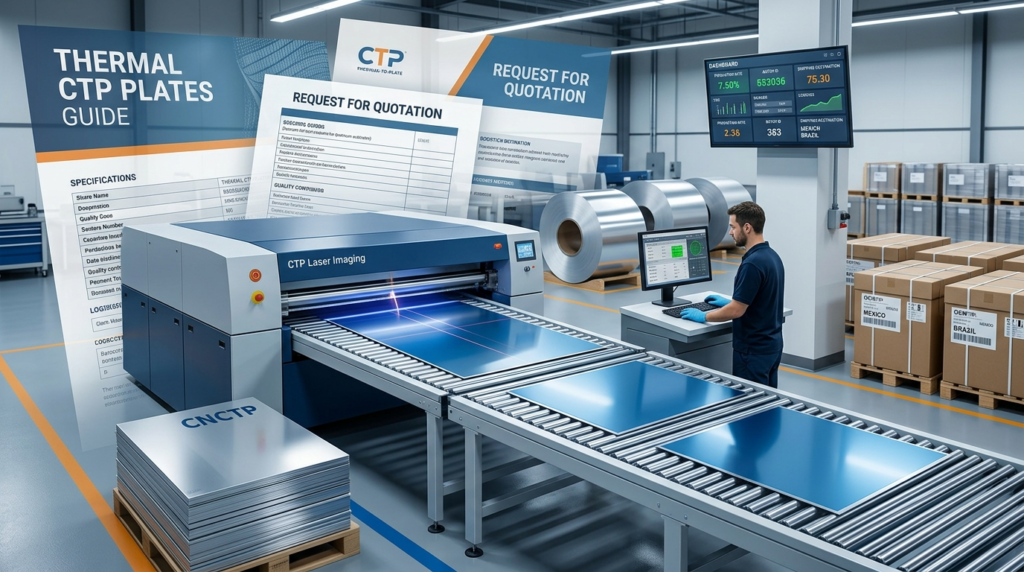
Purchasing Thermal CTP (Computer-to-Plate) Plates is more than simply asking for a price. For distributors, commercial printers, publishers, and OEM buyers, a well-prepared Request for Quotation (RFQ) can significantly improve procurement efficiency, reduce communication time, and help suppliers provide accurate pricing.
Unfortunately, many buyers send incomplete inquiries such as:
- “Please send your best price.”
- “Need CTP plates.”
- “Quote me.”
Without detailed technical information, manufacturers often need several rounds of communication before issuing a quotation. This delays purchasing decisions and increases the risk of receiving products that do not match production requirements.
This guide explains how to prepare a professional RFQ for thermal CTP plates, what information manufacturers need, common mistakes to avoid, and practical tips for obtaining the best quotation.
Why a Detailed RFQ Matters
A professional RFQ benefits both buyers and suppliers.
Faster Quotations
Complete specifications reduce unnecessary clarification and speed up response times.
Accurate Pricing
Correct technical information minimizes pricing errors and unexpected costs.
Better Product Matching
Manufacturers can recommend the most appropriate plate based on the customer’s equipment and production needs.
Reduced Procurement Risk
Detailed RFQs help avoid incorrect shipments, production delays, and unnecessary returns.
Essential Information to Include in Your RFQ
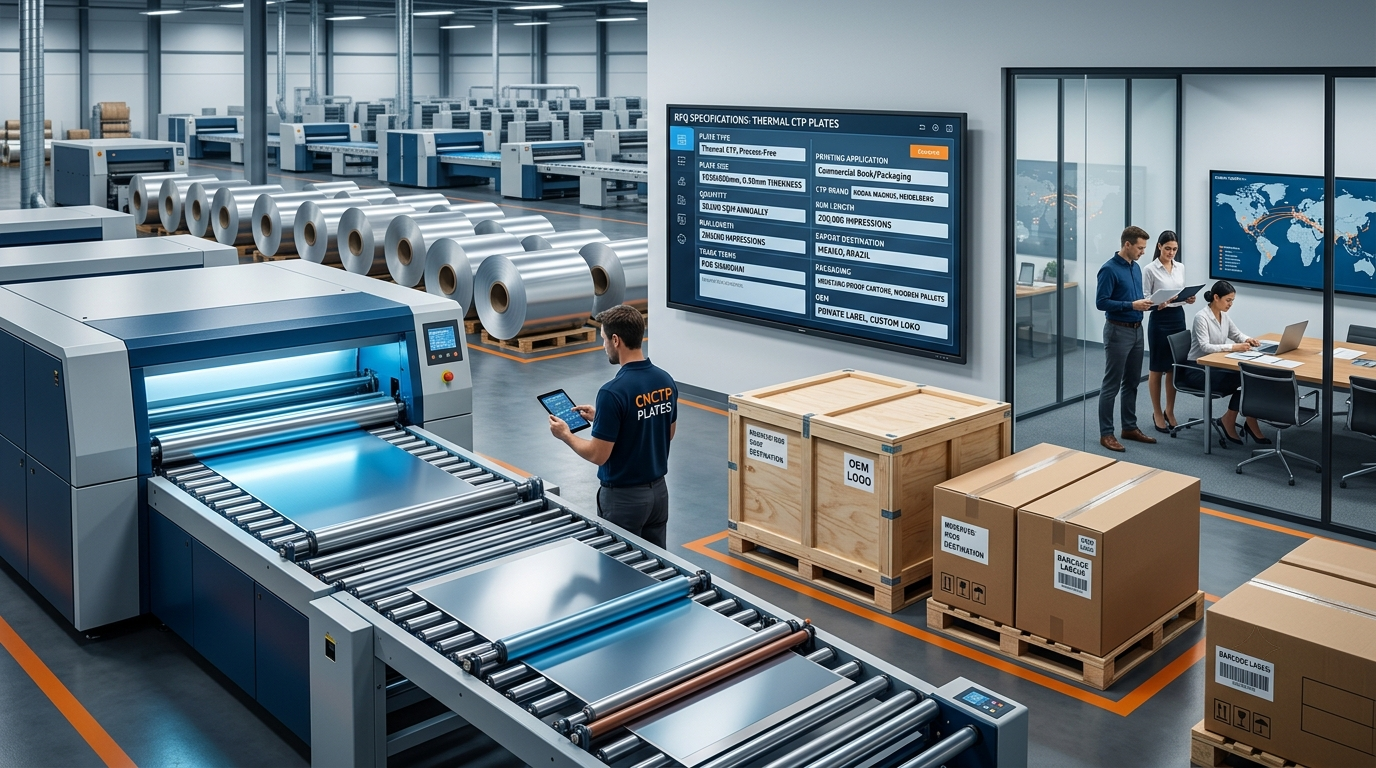
1. Plate Type
Clearly specify the type of printing plate required.
Examples:
- Thermal CTP Plate
- Process-Free Thermal Plate
- Positive Thermal Plate
- Double-Layer Thermal Plate
2. Plate Size
Provide the exact dimensions.
Example: 1030 × 800 mm
Common international sizes include:
| Size (mm) | Typical Application |
|---|---|
| 745 × 605 | Small Offset Press |
| 830 × 660 | Commercial Printing |
| 1030 × 800 | Large Offset Press |
| 1160 × 940 | Packaging Printing |
3. Thickness
Specify plate thickness.
Common options include:
- 0.15 mm
- 0.20 mm
- 0.30 mm
- 0.40 mm
Different presses require different thicknesses.
4. Quantity
Always indicate the required quantity.
Example:500 pieces or 20,000 square meters annually
Annual demand helps manufacturers offer more competitive pricing.
5. Printing Application
Describe your printing business.
Examples:
- Commercial Printing
- Book Printing
- Packaging Printing
- Newspaper Printing
- Label Printing
Different applications require different plate characteristics.
6. CTP Machine Brand
Specify your imaging equipment.
Examples:
- Kodak Magnus
- Screen
- Heidelberg Suprasetter
- Creo Trendsetter
- Cron
- Amsky
This helps suppliers confirm compatibility.
7. Required Run Length
Typical options include:
- 50,000 impressions
- 100,000 impressions
- 200,000 impressions
- 300,000+ impressions
Longer runs may require premium coating technology.
8. Export Destination
Specify the delivery country.
Shipping costs vary significantly by destination.
9. Trade Terms
Include your preferred Incoterms.
Examples:
- EXW
- FOB Shanghai
- CIF Mexico
- DDP
This allows suppliers to calculate logistics accurately.
10. Packaging Requirements
If you have special requirements, mention them.
Examples:
- OEM packaging
- Neutral cartons
- Private label
- Moisture-proof export packaging
- Wooden pallets
11. OEM or Private Label Requirements
Many distributors require:
- Custom logo
- Custom carton design
- Barcode labels
- Product manuals
- Marketing materials
Mention these requirements early in the inquiry.
Common RFQ Mistakes
Asking Only for “Best Price”
Price alone is insufficient.
Without specifications, suppliers cannot determine:
- Plate type
- Production cost
- Shipping method
- Packaging requirements
Omitting Plate Size
A difference of just a few millimeters can affect production compatibility and pricing.
Ignoring Thickness
Different thicknesses use different amounts of aluminum and coating materials, directly impacting cost.
Not Mentioning Equipment
Compatibility with the customer’s CTP system is essential.
Not Providing Shipping Destination
Freight costs often account for a significant portion of total procurement costs.
Questions Buyers Should Ask Suppliers
Before placing an order, buyers should confirm:
- What is the recommended run length?
- Is the plate compatible with my CTP system?
- What is the shelf life?
- What certifications does the product have?
- Can you provide OEM packaging?
- What is the production lead time?
- Do you offer technical support?
- Can samples be provided?
- What quality inspections are performed before shipment?
How Manufacturers Evaluate an RFQ
Professional manufacturers typically assess:
Technical Feasibility
Can the requested specifications be produced consistently?
Production Capacity
Can the required quantity be delivered within the requested timeline?
Logistics
What shipping method best balances cost and delivery speed?
Long-Term Cooperation Potential
Manufacturers often provide more competitive pricing for customers with recurring annual demand.
Why Work Directly with a Manufacturer?
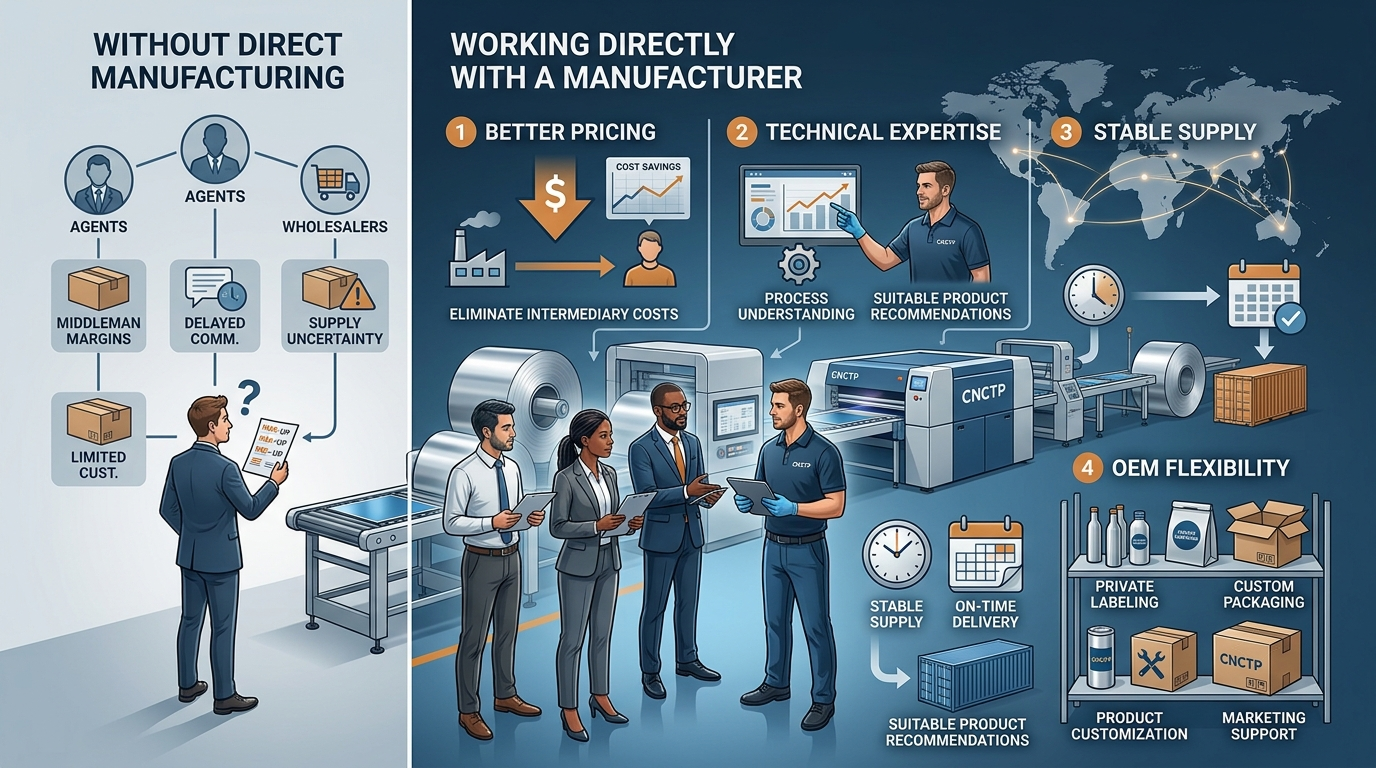
Purchasing directly from a factory offers several advantages.
Better Pricing
Factory-direct procurement eliminates unnecessary intermediary costs.
Technical Expertise
Manufacturers understand production processes and can recommend the most suitable products.
Stable Supply
Direct cooperation improves inventory planning and delivery reliability.
OEM Flexibility
Manufacturers can provide:
- Private labeling
- Customized packaging
- Product customization
- Marketing support
Why Choose CNCTP Plates?
For importers seeking a reliable long-term partner, CNCTP Plates has become a trusted OEM manufacturer supplying distributors and printing companies worldwide.
Product Range
- Thermal CTP Plates
- Process-Free CTP Plates
- UV CTP Plates
- Positive PS Plates
Manufacturing Strengths
- 25+ years of industry experience
- Advanced coating production lines
- High-purity aluminum substrates
- Strict quality control
- Stable batch consistency
- OEM & private label services
- Exported to more than 60 countries
Whether you are purchasing for a printing factory, distribution business, or government procurement project, providing a detailed RFQ enables the CNCTP Plates team to deliver faster quotations, technical recommendations, and competitive factory pricing.
Frequently Asked Questions
What information should be included in a thermal CTP plate RFQ?
A complete RFQ should include plate type, dimensions, thickness, quantity, printing application, CTP machine model, required run length, destination country, trade terms, and packaging requirements.
Why do suppliers request so many technical details?
Each specification affects manufacturing cost, compatibility, and shipping. Accurate information ensures the quotation matches your actual production needs.
Can I request OEM packaging?
Yes. Many manufacturers, including CNCTP Plates, provide private-label packaging, custom branding, and OEM services for distributors.
Should I request samples before placing a bulk order?
Yes. Testing samples on your own CTP system is the best way to verify compatibility and printing performance before large-scale procurement.
How can I receive the fastest quotation?
Provide complete technical specifications, annual purchasing volume, destination port, preferred trade terms, and any special requirements in your initial inquiry.
Conclusion
A well-prepared RFQ is one of the most effective tools for reducing procurement time, improving quotation accuracy, and building long-term relationships with reliable thermal CTP plate manufacturers.
By including complete technical specifications, packaging preferences, and commercial requirements, buyers can avoid misunderstandings, accelerate purchasing decisions, and obtain products that match their production needs.
For distributors, commercial printers, and OEM buyers, working directly with an experienced manufacturer such as CNCTP Plates provides access to professional technical support, competitive factory pricing, and dependable global supply.
Why Does a CTP Plate Scum on Press ? 9 Common Causes and Proven Solutions
Learn why CTP plates scum on press, the most common causes, troubleshooting methods, and practical solutions to improve offset printing quality and reduce downtime.

Which Offset Machine Is Best ? A Practical Guide for Commercial Printing
Which offset machine is best? Learn how to choose the right offset printing machine based on format, volume, cost, and CTP technology.
Where to Buy Thermal CTP Plates for Offset Printing | Best Supplier Guide & Expert Tips
Looking for reliable thermal CTP plates for offset printing? This expert guide explains how to choose a trustworthy supplier, compares global and Chinese manufacturers, and shares key quality criteria.