Introduction
When discussing Computer-to-Plate (CTP) technology, most people focus on laser imaging systems, photosensitive coatings, or plate processors. However, one of the most critical components of every CTP printing plate is often overlooked—the aluminum substrate.
The quality of the aluminum used in a CTP plate directly affects imaging accuracy, print quality, run length, chemical resistance, and overall production stability.
Whether you are a commercial printer, printing plate distributor, OEM buyer, or prepress engineer, understanding CTP aluminum can help you choose better printing plates and improve production efficiency.
This guide explains what CTP aluminum is, how it is manufactured, its technical characteristics, and why it plays such an important role in modern offset printing.
What Is CTP Aluminum?
CTP aluminum refers to the high-purity aluminum sheet used as the base material for manufacturing Computer-to-Plate (CTP) printing plates.
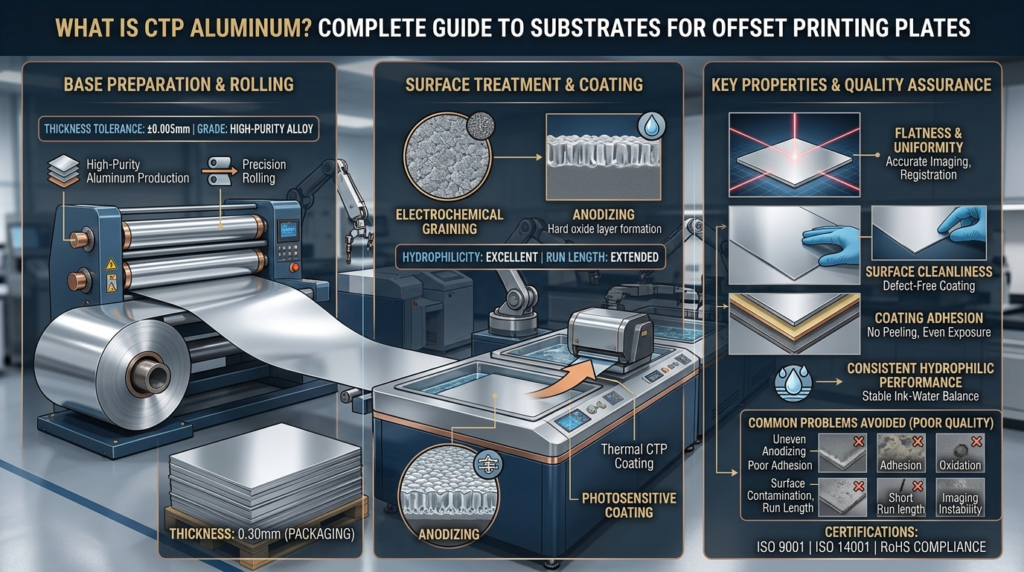
Before becoming a finished printing plate, the aluminum sheet undergoes multiple precision manufacturing processes, including:
- Aluminum rolling
- Surface cleaning
- Electrochemical graining
- Anodizing
- Photosensitive coating
- Quality inspection
The aluminum substrate provides the mechanical strength, dimensional stability, and hydrophilic surface required for high-quality offset printing.
Without a high-quality aluminum base, even the most advanced photosensitive coating cannot deliver consistent printing performance.
Why Is Aluminum Used for CTP Plates?
Aluminum has several properties that make it ideal for offset printing plates.
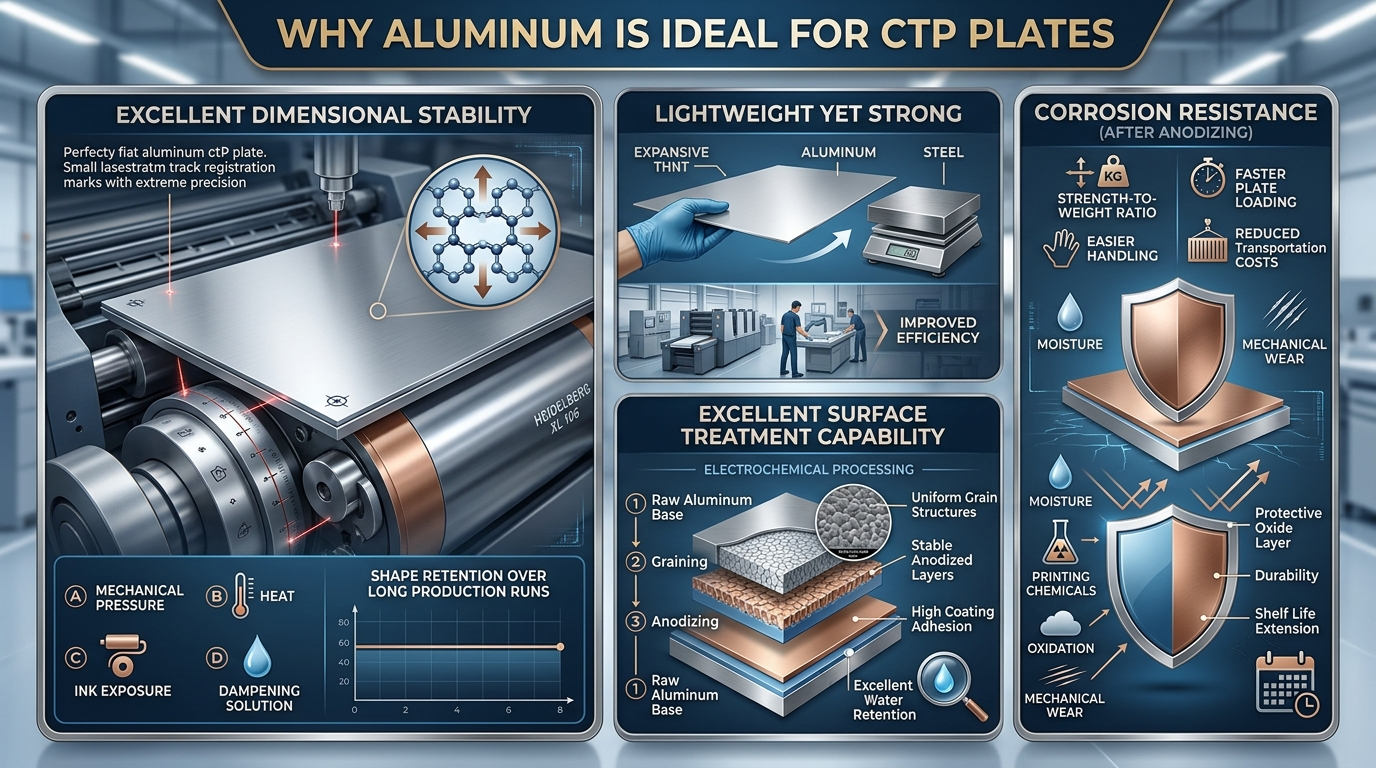
Excellent Dimensional Stability
During printing, plates experience:
- Mechanical pressure
- Heat
- Ink exposure
- Dampening solution
Aluminum maintains its shape under these conditions, ensuring accurate image registration throughout long production runs.
Lightweight Yet Strong
Compared with steel or other metals, aluminum offers an excellent strength-to-weight ratio.
Benefits include:
- Easier handling
- Faster plate loading
- Reduced transportation costs
- Improved production efficiency
Excellent Surface Treatment Capability
Aluminum responds exceptionally well to electrochemical processing.
This enables manufacturers to create:
- Uniform grain structures
- Stable anodized layers
- High coating adhesion
- Excellent water retention
These characteristics are essential for offset lithographic printing.
Corrosion Resistance
After anodizing, the aluminum surface develops a protective oxide layer that helps resist:
- Moisture
- Printing chemicals
- Oxidation
- Mechanical wear
This improves plate durability and extends shelf life.
How Is CTP Aluminum Manufactured?
Producing CTP-grade aluminum requires significantly higher precision than standard industrial aluminum sheets.
Step 1: High-Purity Aluminum Production
Manufacturers typically use high-purity aluminum alloys with controlled chemical composition to ensure consistent quality.
Requirements include:
- Uniform thickness
- Minimal impurities
- Excellent flatness
- Stable mechanical properties
Step 2: Precision Rolling
Large aluminum coils are rolled into extremely precise thicknesses.
Typical CTP plate thicknesses include:
| Plate Thickness | Common Applications |
|---|---|
| 0.15 mm | Commercial printing |
| 0.20 mm | General offset printing |
| 0.30 mm | Packaging printing |
| 0.40 mm | Long-run and UV printing |
Thickness tolerance is tightly controlled to ensure compatibility with CTP imaging systems.
Step 3: Electrochemical Graining
The aluminum surface is roughened through electrochemical graining.
This microscopic texture improves:
- Water retention
- Ink-water balance
- Coating adhesion
- Printing consistency
Uniform graining is one of the defining features of high-quality CTP aluminum.
Step 4: Anodizing
Anodizing creates a hard aluminum oxide layer on the surface.
Benefits include:
- Improved wear resistance
- Better corrosion protection
- Longer run length
- Increased coating stability
The anodized layer also enhances the plate’s hydrophilic properties, which are critical for offset printing.
Step 5: Photosensitive Coating
Finally, manufacturers apply a photosensitive coating suitable for:
- Thermal CTP systems
- UV (violet) CTP systems
- Process-free CTP technology
The quality of the coating depends heavily on the consistency of the underlying aluminum substrate.
Key Properties of High-Quality CTP Aluminum
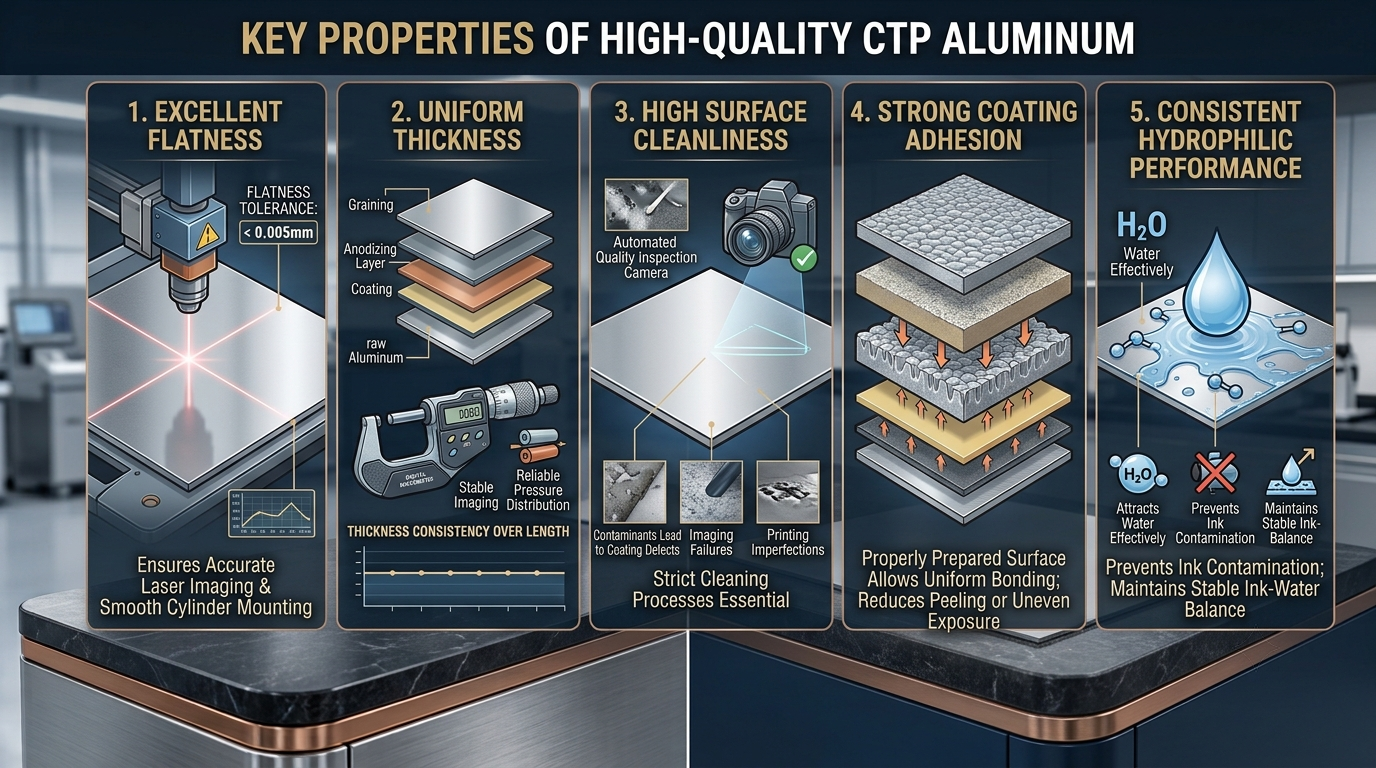
Professional-grade CTP aluminum should provide:
Excellent Flatness
Flat plates ensure accurate laser imaging and smooth mounting on the press cylinder.
Uniform Thickness
Consistent thickness helps maintain:
- Stable imaging
- Accurate registration
- Reliable pressure distribution
High Surface Cleanliness
Contaminants can lead to:
- Coating defects
- Imaging failures
- Printing imperfections
Strict cleaning processes are essential during production.
Strong Coating Adhesion
A properly prepared aluminum surface allows the photosensitive coating to bond uniformly, reducing the risk of peeling or uneven exposure.
Consistent Hydrophilic Performance
The non-image areas of a printing plate must attract water effectively to prevent ink contamination.
High-quality aluminum helps maintain a stable ink-water balance during printing.
How Aluminum Quality Affects Printing Performance
The aluminum substrate has a direct impact on nearly every stage of the printing process.
Imaging Accuracy
Uniform aluminum ensures:
- Sharp image reproduction
- Precise dot formation
- High-resolution output
Print Quality
A stable substrate improves:
- Fine text clarity
- Smooth gradients
- Consistent color reproduction
- Reduced background toning
Plate Durability
Premium aluminum provides:
- Better scratch resistance
- Longer press life
- Higher run length
This is particularly important for packaging and commercial printing applications.
Production Efficiency
High-quality aluminum reduces:
- Plate defects
- Make-ready time
- Waste
- Press downtime
Ultimately, it lowers total production costs.
Common Problems Caused by Poor-Quality Aluminum
Inferior aluminum substrates may result in:
- Uneven anodizing
- Poor coating adhesion
- Oxidation issues
- Surface contamination
- Shorter run lengths
- Imaging instability
- Increased plate waste
- Inconsistent print quality
These problems often outweigh any initial cost savings.
How to Evaluate CTP Aluminum Quality
When sourcing CTP plates, buyers should consider:
Aluminum Purity
Higher purity generally improves consistency and durability.
Surface Treatment Technology
Look for manufacturers using advanced electrochemical graining and anodizing processes.
Thickness Accuracy
Consistent thickness improves compatibility with CTP equipment and printing presses.
Manufacturing Experience
Experienced manufacturers typically maintain tighter quality control throughout the production process.
Quality Certifications
Recommended certifications include:
- ISO 9001
- ISO 14001
- RoHS Compliance
These certifications demonstrate a commitment to consistent manufacturing standards.
Choosing a Reliable CTP Plate Manufacturer
The quality of the aluminum substrate depends largely on the manufacturer’s production capabilities.
When selecting a supplier, consider:
- Advanced coating lines
- Automated quality inspection
- Stable aluminum sourcing
- OEM manufacturing capability
- Export experience
- Technical support
- Consistent batch quality
Working with an experienced manufacturer helps ensure reliable plate performance and long-term production stability.
Frequently Asked Questions
What is CTP aluminum?
CTP aluminum is the high-purity aluminum substrate used to manufacture Computer-to-Plate printing plates. It serves as the structural base that supports the photosensitive coating and ensures stable printing performance.
Why is aluminum used for CTP plates?
Aluminum offers excellent dimensional stability, corrosion resistance, lightweight strength, and compatibility with electrochemical surface treatments, making it ideal for offset printing applications.
Does aluminum quality affect print quality?
Yes. The quality of the aluminum substrate influences imaging precision, coating adhesion, run length, ink-water balance, and overall printing consistency.
What thicknesses are available for CTP aluminum?
The most common thicknesses are 0.15 mm, 0.20 mm, 0.30 mm, and 0.40 mm, depending on the intended printing application.
How can I identify a high-quality CTP plate?
Look for plates manufactured with high-purity aluminum, advanced graining and anodizing technology, consistent thickness, and strict quality control from an experienced manufacturer.
Conclusion
CTP aluminum is the foundation of every high-performance offset printing plate. While coatings and imaging technologies often receive the most attention, the quality of the aluminum substrate ultimately determines how well a plate performs throughout its lifecycle.
A premium aluminum base contributes to accurate imaging, stable ink-water balance, longer run lengths, and consistent print quality. For printers, distributors, and OEM buyers, selecting CTP plates manufactured with high-quality aluminum is an investment that improves productivity, reduces waste, and delivers reliable results in commercial printing.
Why Does a CTP Plate Scum on Press ? 9 Common Causes and Proven Solutions
Learn why CTP plates scum on press, the most common causes, troubleshooting methods, and practical solutions to improve offset printing quality and reduce downtime.

Which Offset Machine Is Best ? A Practical Guide for Commercial Printing
Which offset machine is best? Learn how to choose the right offset printing machine based on format, volume, cost, and CTP technology.
Where to Buy Thermal CTP Plates for Offset Printing | Best Supplier Guide & Expert Tips
Looking for reliable thermal CTP plates for offset printing? This expert guide explains how to choose a trustworthy supplier, compares global and Chinese manufacturers, and shares key quality criteria.