Introduction: Why 3D Printer Flex Plates Are Becoming Essential
In desktop and industrial 3D printing, one of the most common frustrations users face is print removal. Prints sticking too tightly to the build plate can lead to damaged parts, broken tools, or even cracked glass beds. As 3D printing technology continues to evolve, so do solutions to improve user experience and production efficiency.
This is why the 3D Printer Flex Plate has become one of the most popular upgrades for FDM and resin 3D printers. Flexible build plates offer strong adhesion during printing and effortless removal afterward, dramatically improving workflow efficiency.
In this article, we take a professional, practical look at what a 3D printer flex plate is, how it works, its advantages, material options, and how to choose the right flex plate for your 3D printer.
What Is a 3D Printer Flex Plate?
A 3D Printer Flex Plate is a removable, flexible build surface designed to sit on top of a printer’s heated bed or resin printer platform.
It typically consists of:
A spring steel or flexible resin plate
A magnetic base attached to the printer bed
A special surface coating for adhesion
After printing, users simply remove the plate and bend it slightly, allowing the printed part to pop off cleanly without tools.
How a 3D Printer Flex Plate Works
The working principle is simple but highly effective:
During printing
The flex plate remains flat and firmly attached to the magnetic base, providing a stable printing surface.After printing
The plate is removed and gently flexed, breaking the adhesion between the print and the surface.Part removal
Prints detach easily, reducing damage risk and saving time.
This combination of rigidity during printing and flexibility afterward is what makes flex plates so effective.
Key Advantages of a 3D Printer Flex Plate
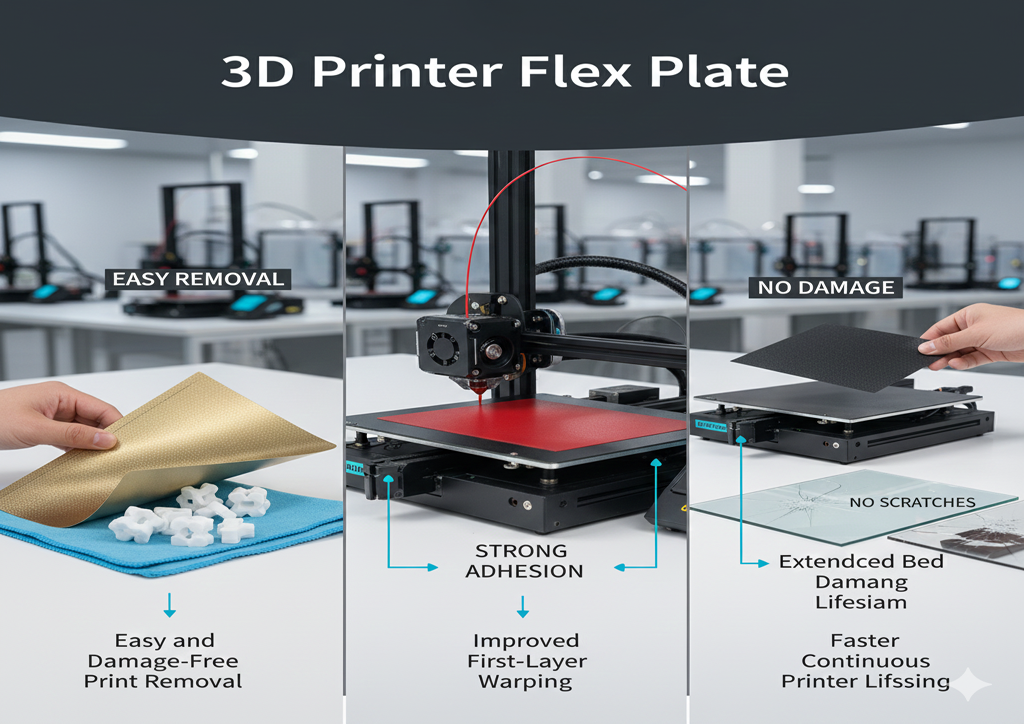
1. Easy and Damage-Free Print Removal
One of the biggest advantages is tool-free removal:
No scraping
No chisels
No broken prints
This is especially important for large prints, thin models, or delicate geometries.
2. Improved First-Layer Adhesion
Modern flex plates feature optimized surface coatings that:
Improve first-layer adhesion
Reduce warping
Minimize print failure
Good adhesion during printing combined with easy release afterward is a major productivity boost.
3. Reduced Bed Damage
Traditional glass or aluminum beds can:
Chip
Crack
Scratch over time
Using a removable flex plate protects the original build plate and extends printer lifespan.
4. Faster Workflow
For production environments, flex plates:
Reduce downtime between prints
Enable quick part removal
Support continuous printing
This is particularly valuable for print farms and small-batch manufacturing.
Common Types of 3D Printer Flex Plates
1. Spring Steel Flex Plates
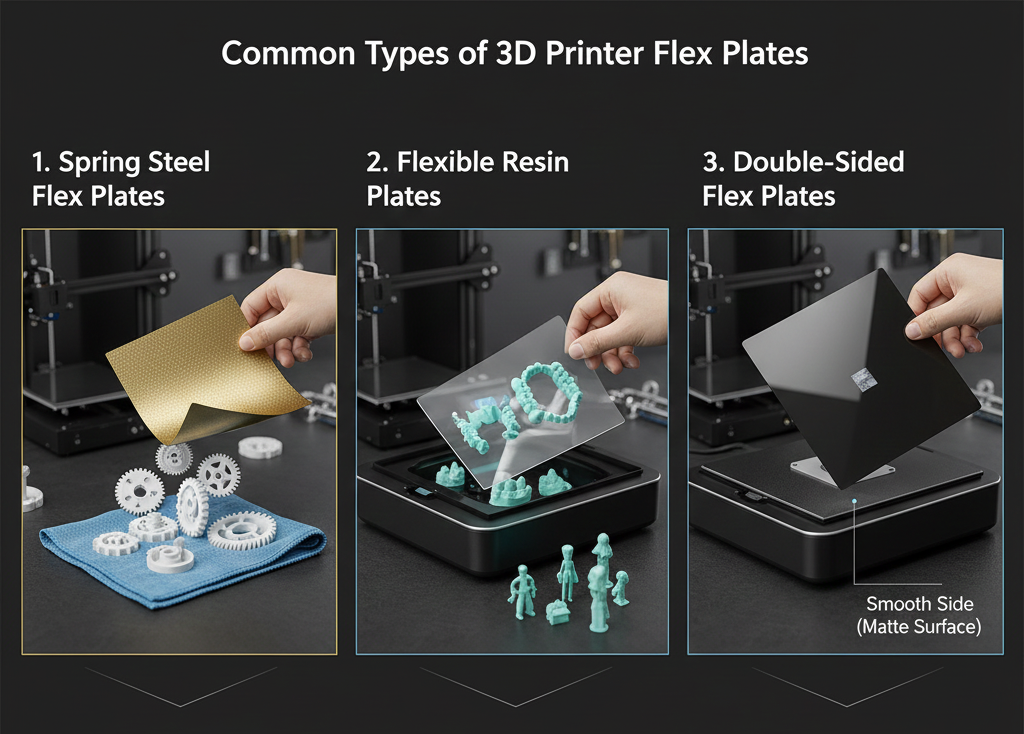
Material: High-quality spring steel
Features:
High strength
Long service life
Excellent flatness
Spring steel plates are the most popular choice for FDM printers.
2. Flexible Resin Plates
Material: Engineering-grade flexible resin
Features:
Lightweight
Chemical resistance
Smooth release characteristics
These plates are widely used in resin (SLA/DLP/LCD) 3D printers, where gentle part removal is critical.
3. Double-Sided Flex Plates
Some flex plates offer two usable surfaces, such as:
Smooth side for glossy finishes
Textured side for matte surfaces
This provides more flexibility without changing hardware.
Surface Coatings and Textures
The performance of a 3D printer flex plate depends heavily on its surface treatment.
Common Surface Types:
PEI-coated surfaces
Textured powder-coated surfaces
Smooth resin-based coatings
Each surface type affects:
Adhesion strength
Bottom layer texture
Compatibility with different materials
Material Compatibility
A quality 3D printer flex plate supports a wide range of printing materials.
For FDM Printers:
PLA
PETG
ABS
TPU
Nylon (with proper temperature control)
For Resin Printers:
Standard resin
Tough resin
Engineering resin
Dental and industrial resins
Choosing the right surface coating ensures optimal adhesion for each material.
How to Choose the Right 3D Printer Flex Plate
1. Printer Type and Size
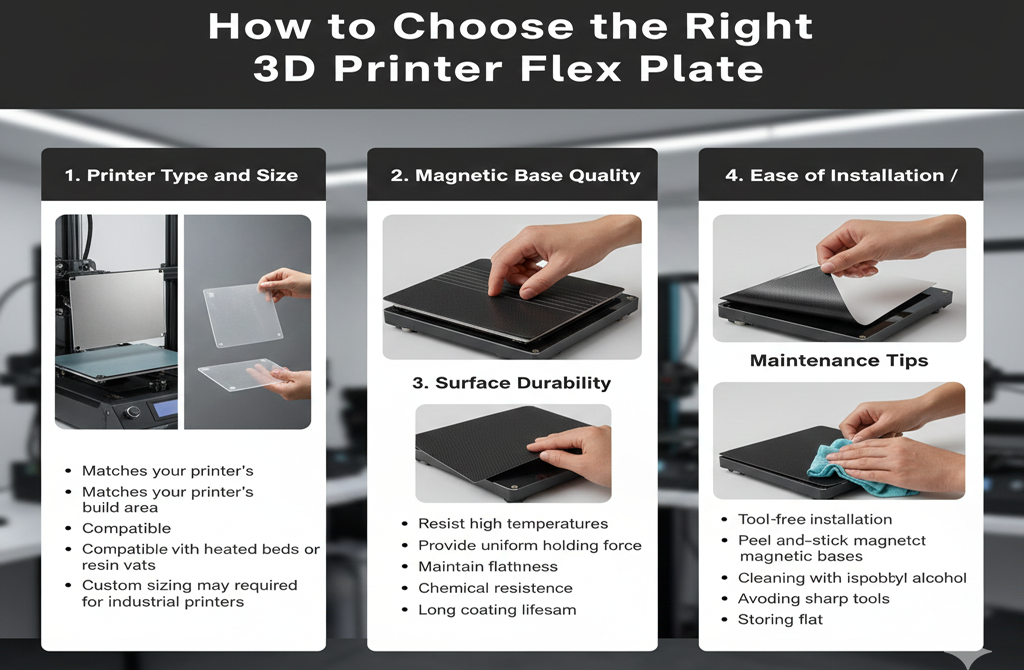
Ensure the flex plate:
Matches your printer’s build area
Is compatible with heated beds or resin vats
Custom sizing may be required for industrial printers.
2. Magnetic Base Quality
A good magnetic base should:
Resist high temperatures
Provide uniform holding force
Maintain flatness over time
Weak magnets can lead to layer shifting and failed prints.
3. Surface Durability
Look for:
Scratch resistance
Chemical resistance (especially for resin printing)
Long coating lifespan
4. Ease of Installation
Most flex plates are designed for:
Tool-free installation
Peel-and-stick magnetic bases
This allows easy upgrades without printer modification.
Maintenance and Care Tips
Proper care extends the life of your flex plate.
Best practices include:
Cleaning with isopropyl alcohol
Avoiding sharp tools on the surface
Storing flat when not in use
For resin flex plates, regular cleaning prevents resin buildup and ensures consistent release.
Industrial and Professional Applications
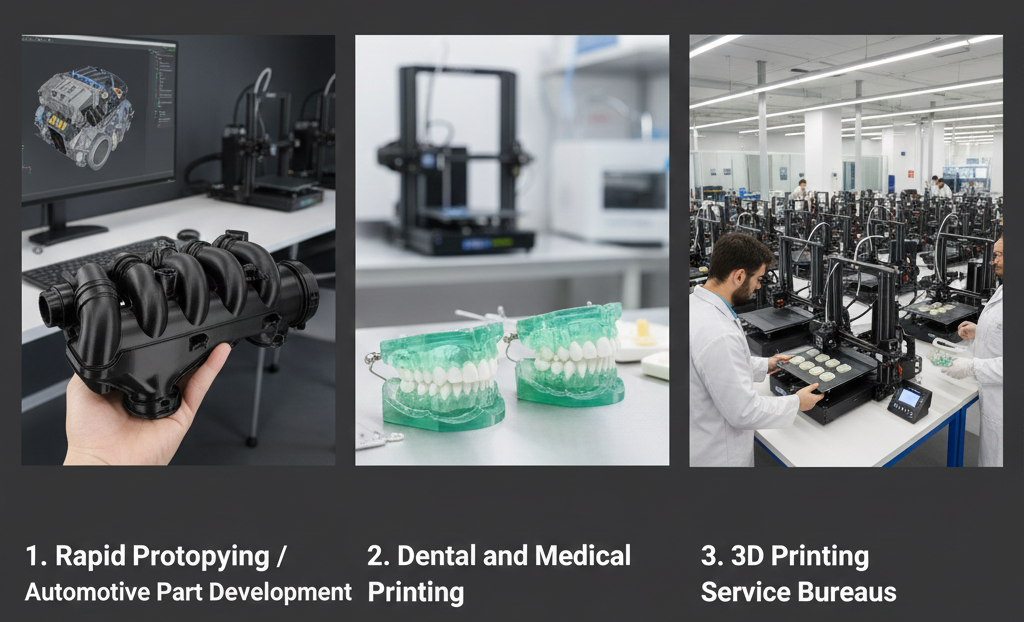
3D printer flex plates are widely used in:
Rapid prototyping
Dental and medical printing
Automotive part development
Consumer product design
3D printing service bureaus
Their reliability and efficiency make them a standard component in professional setups.
Why Flexible Resin Plates Are Gaining Popularity
Flexible resin plates offer:
Gentle release for delicate parts
Excellent chemical resistance
Smooth surface finish
They are particularly suitable for high-precision resin printing, where part integrity and surface quality are critical.
Cost vs Value: Are Flex Plates Worth It?
While a 3D printer flex plate may cost more than traditional surfaces, the value is clear:
Reduced print failures
Faster production cycles
Less part damage
Improved operator safety
For most users, the return on investment is very high.
Conclusion: A Smart Upgrade for Any 3D Printer
A 3D Printer Flex Plate is more than just an accessory—it’s a productivity upgrade that improves print quality, safety, and workflow efficiency.
Whether you are a hobbyist, professional designer, or industrial user, investing in the right flex plate can significantly enhance your 3D printing experience.
👉 We are also a professional Flexible Resin Plate manufacturer, supplying high-quality flexible build plates for FDM and resin 3D printers.
If you are looking for reliable, durable, and easy-release flexible resin plates, feel free to contact us — we are happy to support your application and customization needs.
Why Does a CTP Plate Scum on Press ? 9 Common Causes and Proven Solutions
Learn why CTP plates scum on press, the most common causes, troubleshooting methods, and practical solutions to improve offset printing quality and reduce downtime.

Which Offset Machine Is Best ? A Practical Guide for Commercial Printing
Which offset machine is best? Learn how to choose the right offset printing machine based on format, volume, cost, and CTP technology.
Where to Buy Thermal CTP Plates for Offset Printing | Best Supplier Guide & Expert Tips
Looking for reliable thermal CTP plates for offset printing? This expert guide explains how to choose a trustworthy supplier, compares global and Chinese manufacturers, and shares key quality criteria.