Introduction — why the blanket matters
In offset lithography the blanket is not an accessory — it is the working surface that receives the inked image from the plate and transfers it to paper or other substrates. A good blanket delivers consistent ink film, accurate dot reproduction, predictable sheet release and long life; a poor blanket causes slurring, ghosting, and costly downtime. The blanket’s physical construction and surface chemistry therefore directly determine printing stability and print quality.
What a modern rubber blanket is made of
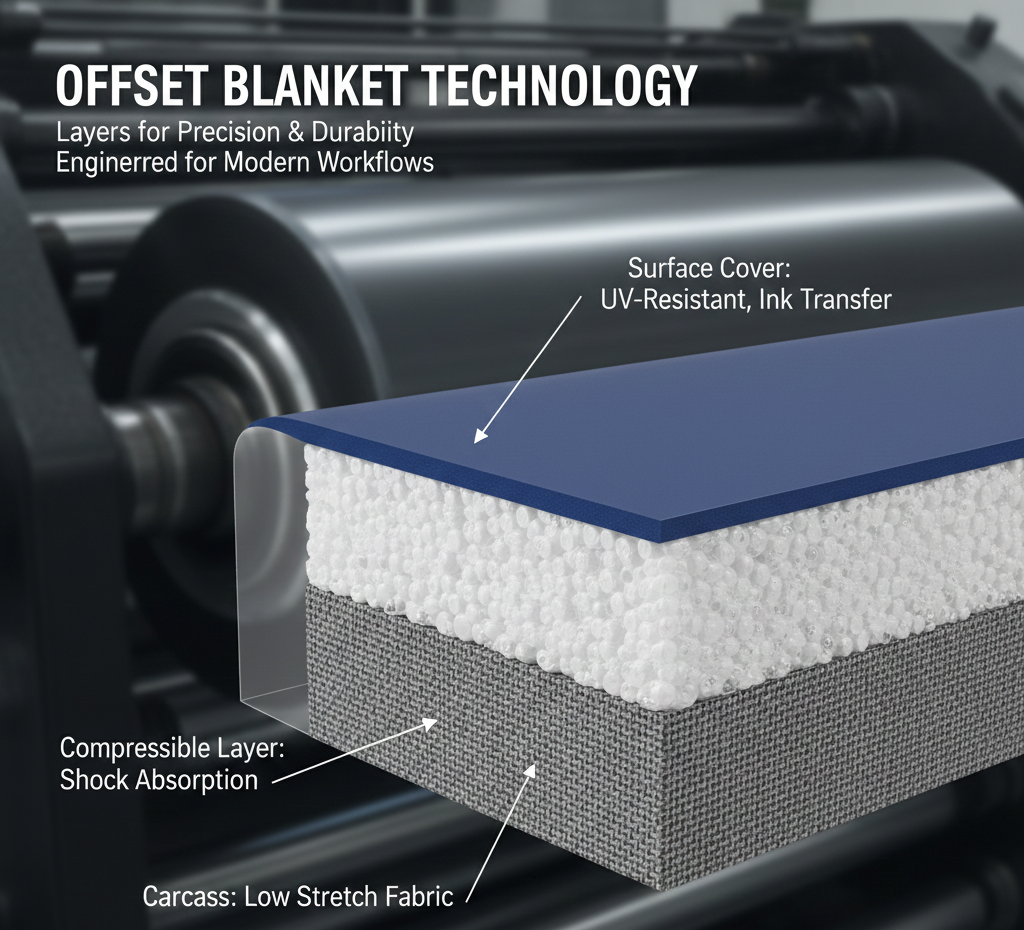
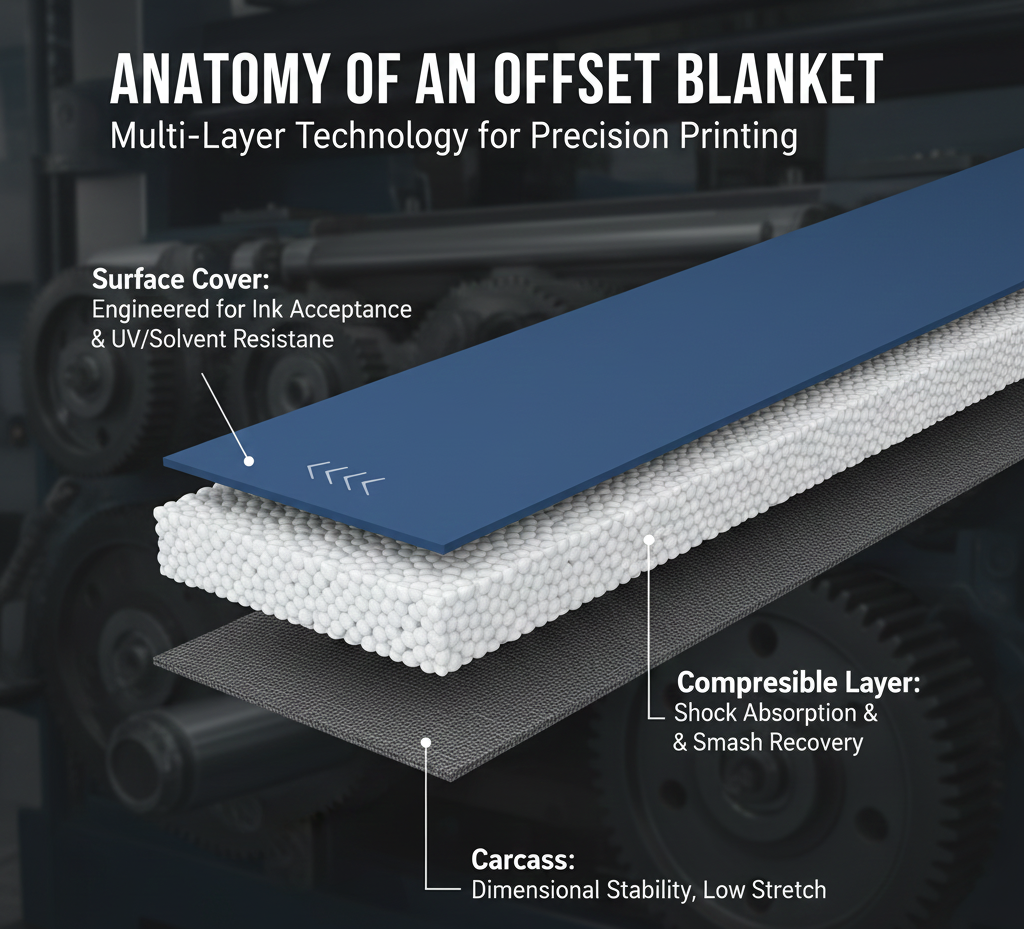
Most commercially successful offset blankets are multi-layer constructions combining a woven carcass, closed- or open-cell compressible layer(s), and a top rubber or polymer cover engineered for the ink systems in use (conventional, UV, LED-UV, etc.). Common elastomers include compounded EPDM or other synthetic rubbers chosen for solvent/swelling resistance and durability. High-end manufacturers use solvent-cast or vulcanized processes to control thickness and dimensional stability.
Why layers matter (short):
Carcass (fabric): provides dimensional stability and low stretch so register stays constant.
Compressible layer: evens pressure across plate–blanket–substrate contacts; acts like a shock absorber to protect dot shapes and reduce smash-related damage.
Surface cover: engineered for ink acceptance, washability and resistance to swelling from modern inks (especially UV and LED-UV).
Compressibility: the often-under-appreciated variable
Compressibility controls how pressure is distributed across the impression cylinder. Too stiff a blanket = localized high pressure → dot gain and damage; too soft = poor ink transfer and cushioning that blunts highlights. Today’s “compressible” blankets with closed-cell layers let printers tolerate a wider packing window and extend usable life because they recover (smash recovery) and protect against over-packing. Choosing a blanket requires matching the compressible profile to your press model, substrates and ink system.
Practical check: if you see uneven solids, banding or dot collapse on coated stocks, verify blanket compressibility/packing before chasing plates or inks — it’s often the quickest win.
Surface finish and dot fidelity
Surface micro-texture (microgrind / buffed / ground finishes) affects ink film laydown, tonal range and highlight detail. A finely ground micro-surface will hold sharper halftones; a buffed or smoother finish can improve solids and make cleaning easier. For UV/LED inks, look for covers formulated to resist swelling and chemical attack (these are commonly labeled “UV-capable” or EPDM-based). Many blanket lines are explicitly optimized for UV or hybrid workflows.
Electrical properties — antistatic and conductive blankets
Static charge is a real operational problem: at high press speeds, paper and blankets can accumulate static leading to misfeeds, misregistration, dust attraction and shock risks during web handling. Suppliers address this in two ways:
Surface treatments / additives that increase surface conductivity slightly to dissipate charge.
Conductive layers or fibers embedded in the carcass for static bleed-off.
Select an “antistatic” or “conductive” blanket when running high-speed web work, very dry climates, or substrates prone to static. Note that antistatic capability is not universal — check manufacturer specifications for surface resistivity and intended ink systems.
Lifespan, durability and what shortens blanket life
Blanket life depends on:
Chemical exposure (solvents, aggressive cleaners, certain coatings)
Smash/impact abuse from poor plate packing or foreign objects
Incompatible ink chemistries (UV inks can swell inferior covers)
Abrasive substrates (coarse board, metallic inks with fillers)
Modern blankets with dense carcasses and engineered closed-cell compressible layers are built to resist gauge loss and delamination — giving more impressions per blanket and lower total cost of ownership. Regular inspection for nicks, delamination and surface glazing plus correct wash/rinse procedures will extend life.
Maintenance best practices (quick checklist)
Clean with manufacturer-recommended solvents — aggressive solvents can strip protective finishes.
Monitor gauge loss and replace before gauge variance impacts registration (measure with micrometer).
Use the correct packing sequence and check that packing strips are not over-tight.
Rotate blankets where possible to even wear; keep a record of impressions per blanket.
Use antistatic sprays or grounding where static buildup is interfering with feed or registration.
Selecting the right blanket for your workflow
When choosing, evaluate:
Substrate type: coated, uncoated, board, film — each behaves differently.
Ink system: conventional vs UV/LED vs hybrid — choose a cover compatible with the ink chemistry.
Press speed and format: higher speeds favor blankets with excellent smash recovery and dimensional stability.
Packing latitude needed: compressible blankets give more tolerance for operator variation.
A useful quick decision table:
| Requirement | Recommendation |
|---|---|
| High-speed sheetfed, mixed substrates | Compressible, closed-cell blanket with dense carcass |
| Lots of UV/LED jobs | UV-resistant cover (EPDM / solvent-resistant formulation) |
| Static problems in dry climate | Antistatic/conductive blanket or grounding measures |
| Long runs with coated stocks | High-smash-recovery blanket; monitor gauge loss |
(Recommendations above summarize manufacturer guidance and case reports from pressrooms.)
Troubleshooting common blanket-caused print defects
Blurry halftones / dot gain: check packing, blanket compressibility and surface finish.
Slurring or ghosting: worn blanket or glazing — clean and inspect for delamination.
Swelling / soft areas after UV jobs: blanket cover not UV-compatible — change to UV-rated blanket.
Final notes — integrating blankets into a modern prepress ecosystem
Blankets are one piece of a system that includes plates, inks and press settings. Optimizing one without the others yields limited gains. For example, matching a modern compressible, UV-resistant blanket to stable CTP plates and controlled fountain solutions produces the most reliable, high-fidelity output. 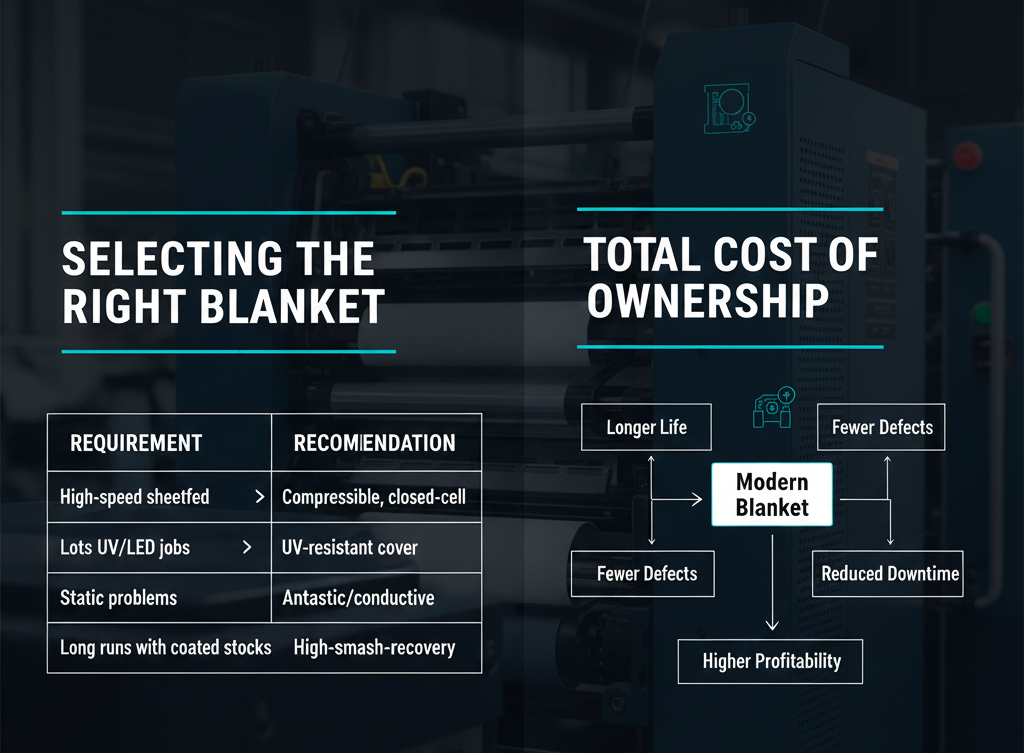
Contact
If you’re specifying consumables for a commercial pressroom, choose suppliers with clear technical data (compressibility curves, surface resistivity, recommended inks/cleaners) and good technical support. Many leading blanket manufacturers (and consumables suppliers) publish application notes showing the expected impressions per blanket and maintenance procedures — these are valuable for calculating total cost of ownership.
For printers who want factory-direct options and tightly matched prepress materials (plates, films, inks), suppliers such as the one behind this site produce products and documentation aimed at modern offset and hybrid workflows. Their product pages and technical blogs include blanket and plate pairing recommendations that help you match blankets to plate chemistry and press conditions. If you’d like samples or data sheets to compare compressibility curves, surface finish photos, and static-resistivity specs, reputable suppliers can provide those on request.

Why Does a CTP Plate Scum on Press ? 9 Common Causes and Proven Solutions
Learn why CTP plates scum on press, the most common causes, troubleshooting methods, and practical solutions to improve offset printing quality and reduce downtime.

Which Offset Machine Is Best ? A Practical Guide for Commercial Printing
Which offset machine is best? Learn how to choose the right offset printing machine based on format, volume, cost, and CTP technology.

Where to Buy Thermal CTP Plates for Offset Printing | Best Supplier Guide & Expert Tips
Looking for reliable thermal CTP plates for offset printing? This expert guide explains how to choose a trustworthy supplier, compares global and Chinese manufacturers, and shares key quality criteria.