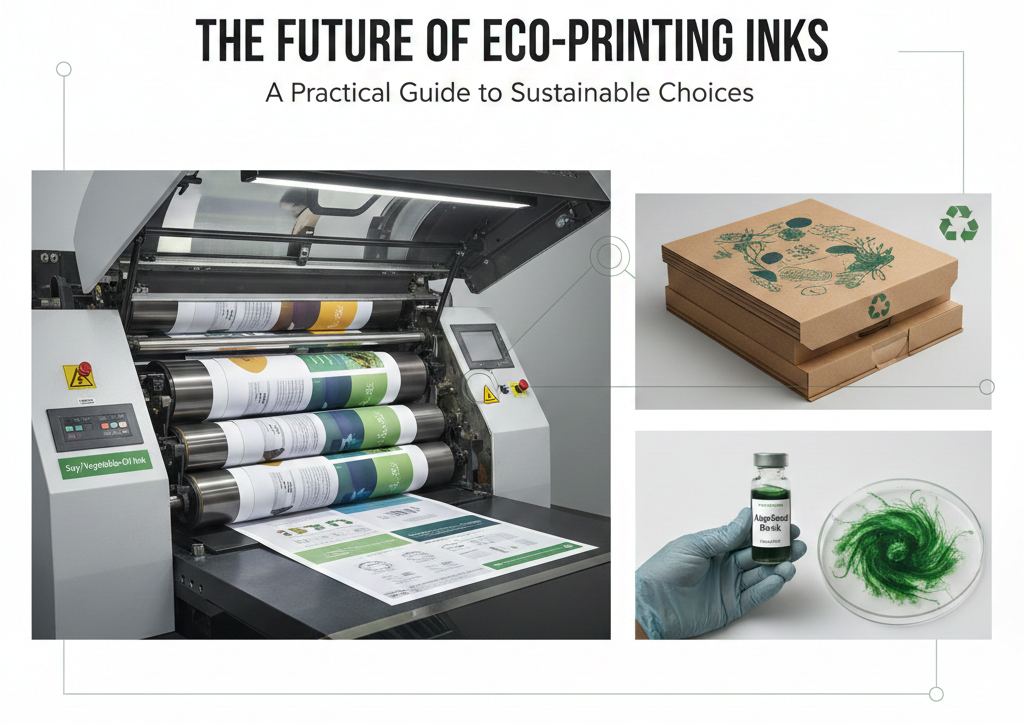
1.What Makes an Ink Eco-Friendly?
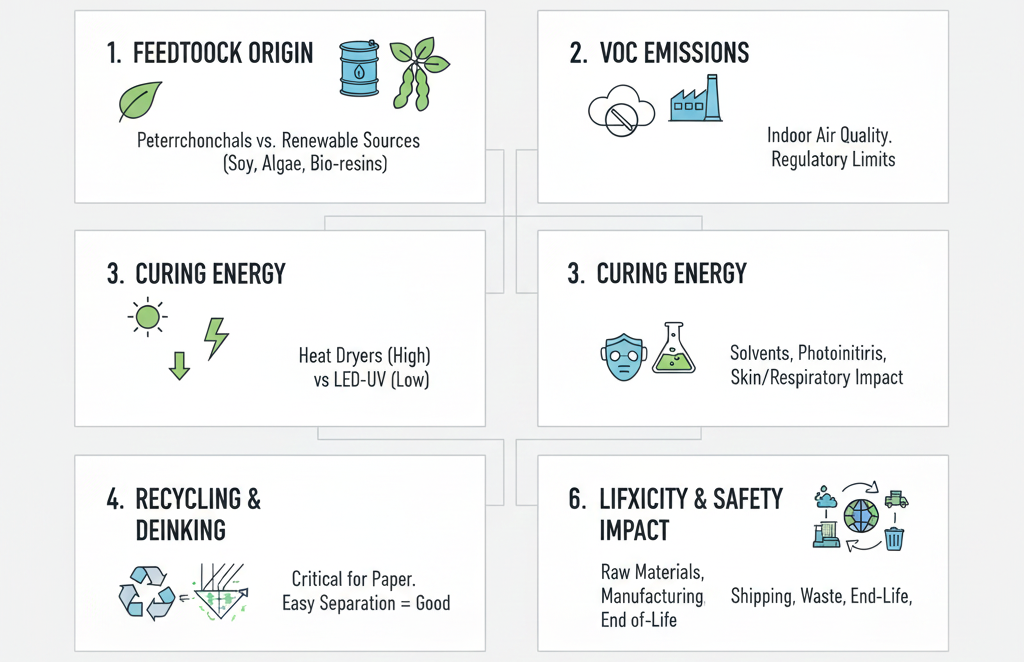
Before comparing ink types, you must evaluate them using consistent criteria. Here are the six most important ones:
1.1 Feedstock Origin
-
Petrochemical (mineral oil, synthetic resins)
-
Renewable (soybean oil, vegetable oils, algae oils, bio-resins)
1.2 VOC (Volatile Organic Compounds) Emissions
-
VOCs affect indoor air quality
-
Some jurisdictions regulate VOC limits for offset printing
1.3 Energy Required for Drying or Curing
-
Heat dryers (high energy)
-
LED-UV curing (very low energy)
-
Air drying
1.4 Recycling & Deinking Compatibility
-
Critical for magazines, books, and packaging
-
Some inks easily separate from paper fibers
-
Others form films that stay embedded and contaminate pulp
1.5 Toxicity & Worker Safety
-
Solvents
-
Photoinitiators (in UV inks)
-
Skin/respiratory impact
1.6 Lifecycle Environmental Impact
-
Raw material extraction
-
Manufacturing
-
Shipping
-
Pressroom waste
-
End-of-life handling
A truly eco-friendly ink performs well across most (not just one) of these indicators.
To make the differences clear, here is a detailed side-by-side comparison of the major printing ink categories:
Environmental Comparison of Common Printing Inks
| Ink Type | VOC Level | Renewable Content | Curing / Drying Energy | Recycling / Deinking | Safety / Toxicity | Typical Applications | Environmental Strengths | Limitations |
|---|---|---|---|---|---|---|---|---|
| Soy / Vegetable-Oil Offset Ink | Low | Medium–High | Medium (oxidation drying) | Good | Very safe | Books, magazines, commercial sheets | Reduced fossil oil, good deinkability | Drying slower, performance varies |
| Water-Based (Aqueous) Ink | Very low | Medium | Moderate (water evaporation) | Very good | Very safe | Packaging, flexo, digital | Extremely low VOC, recyclable | Sensitive to water-absorbing substrates |
| Low-VOC / Mineral-Oil Offset Ink | Lower than traditional | Low | Medium | Good | Safe with ventilation | Commercial offset | Reduced VOC, stable quality | Still uses petrochemicals |
| UV / LED-UV Ink | Near zero | Low–Medium | Very low for LED-UV | Medium–Poor (crosslinked film) | Requires PPE | Labels, packaging, high-speed commercial | Instant cure, huge energy savings | Deinking challenges; photoinitiators |
| Latex Ink | Low | Medium | High (heat curing) | Good | Safe | Wide-format signage | Low odor, low VOC, durable | High energy for curing |
| Bio-Based / Algae Inks | Low | Very high | Medium | Good | Very safe | Specialty eco-printing | Fully renewable feedstock potential | Limited availability, higher cost |
2. Detailed Breakdown of Each Ink Type
2.1 Soy & Vegetable-Oil Offset Inks
The most widely recognized “eco-friendly ink” in consumer printing.
Why they are eco-friendly
-
Replace part of mineral oil with renewable vegetable oils
-
Improve biodegradability
-
Generally low VOC
-
Excellent recycling compatibility
Best for
-
Books
-
Newspapers
-
Commercial offset jobs
-
Long-run publications
Key limitations
-
Slower drying
-
Require careful fountain solution balance
-
Not fully bio-based—still contains petroleum derivatives
2.2 Water-Based (Aqueous) Inks
Increasingly important in packaging and flexographic printing.
Why they are eco-friendly
-
Almost no VOC emissions
-
Very low smell
-
Safe for workers and indoor environments
-
Strong deinkability
Best for
-
Paper packaging
-
Corrugated boxes
-
Food packaging (with compliant formulations)
-
Some digital wide-format systems
Limitations
-
Drying energy can be higher due to water evaporation
-
Sensitive to substrate surface tension
2.3 Low-VOC Offset Inks
Modified mineral-oil inks designed to reduce emissions.
Why they are eco-friendly
-
Significantly reduced solvent evaporation
-
Fewer air emissions
-
Improved operator safety
Best for
-
Offset commercial printers wanting fast adoption without major equipment changes
Limitations
-
Still based on petrochemicals
-
Environmental improvements mainly related to VOCs, not to renewable content
2.4 UV & LED-UV Curable Inks
Extremely popular due to fast curing and efficiency.
Why they are eco-friendly
-
Near-zero VOC emissions
-
LED-UV curing is energy-efficient
-
Instant handling reduces waste
But important limitations
-
Crosslinked ink films are hard to remove during recycling
-
Some photoinitiators raise regulatory questions
-
Not biodegradable
Best for
-
Labels
-
Folding cartons
-
High-speed commercial printing where curing speed matters
2.5 Latex Inks
Used mainly in wide-format signage.
Why they are eco-friendly
-
Low VOC
-
Good outdoor durability without heavy solvents
-
Good deinking behavior
Limitations
-
Requires high heat to cure
-
Therefore increases energy consumption
2.6 Bio-based & Algae-Derived Inks
Innovative inks created to minimize fossil dependency.
Eco advantages
-
Highest potential renewable content
-
Low VOC and safe user profile
-
Strong biodegradability potential
Current obstacles
-
Limited commercial scale
-
Higher price
-
Performance varies across printing systems
3. Which Ink Is “Most Eco-Friendly”?
There is no universal winner, but based on today’s technology:
✔ Most balanced & practical sustainable choice:
Soy/Vegetable-Oil Modified Offset Inks
Good across all metrics: renewable content, deinkability, safety, reasonable cost.
✔ Lowest VOC emissions:
Water-Based Aqueous Inks
Especially for packaging and flexo.
✔ Lowest energy consumption:
LED-UV Inks
But recycling compatibility must be considered.
✔ Most future-oriented eco-ink:
Algae / bio-resin inks
Still emerging but highly promising.
The best option depends entirely on your printing method, regulatory environment, substrate, and sustainability goals.
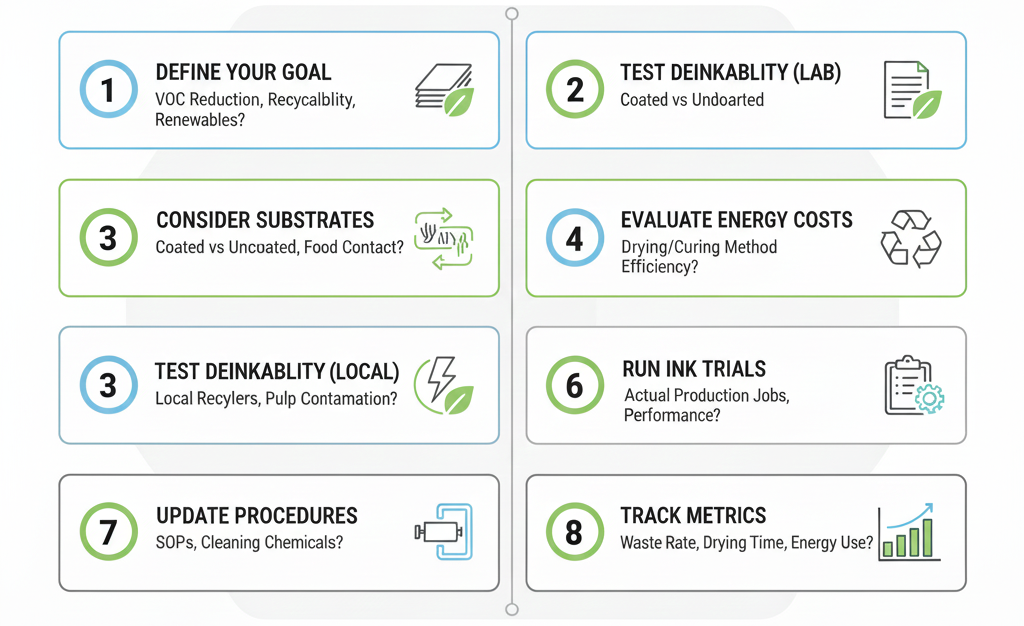
4. Practical Checklist for Choosing Eco-Friendly Ink
-
Define your goal: VOC reduction, recyclability, renewable materials, or energy savings
-
Consider your substrates: coated vs uncoated, food contact, water sensitivity
-
Test deinkability with local recyclers
-
Evaluate drying/curing energy costs
-
Run ink trials on actual production jobs
-
Update pressroom SOPs and cleaning chemicals
-
Train operators on new ink behavior
-
Track result metrics (waste rate, drying time, energy use)
5. How Our Company Can Support Your Eco-Printing Goals
At CNCTP Plates, we focus on offset printing consumables designed to integrate smoothly with modern, eco-friendly ink systems. While our main products include thermal CTP plates, blankets, films, chemicals, and auxiliary materials, our technical team regularly helps customers:
-
Match plate chemistry with vegetable-oil, water-based, or LED-UV inks
-
Optimize plate–ink–blanket compatibility
-
Reduce waste, improve start-up performance, and stabilize print quality
-
Build sustainable workflow upgrades with the correct prepress materials
If you plan to adopt a greener ink solution, our specialists can support you in testing, evaluating, and achieving consistent high-quality results.
Why Does a CTP Plate Scum on Press ? 9 Common Causes and Proven Solutions
Learn why CTP plates scum on press, the most common causes, troubleshooting methods, and practical solutions to improve offset printing quality and reduce downtime.

Which Offset Machine Is Best ? A Practical Guide for Commercial Printing
Which offset machine is best? Learn how to choose the right offset printing machine based on format, volume, cost, and CTP technology.
Where to Buy Thermal CTP Plates for Offset Printing | Best Supplier Guide & Expert Tips
Looking for reliable thermal CTP plates for offset printing? This expert guide explains how to choose a trustworthy supplier, compares global and Chinese manufacturers, and shares key quality criteria.