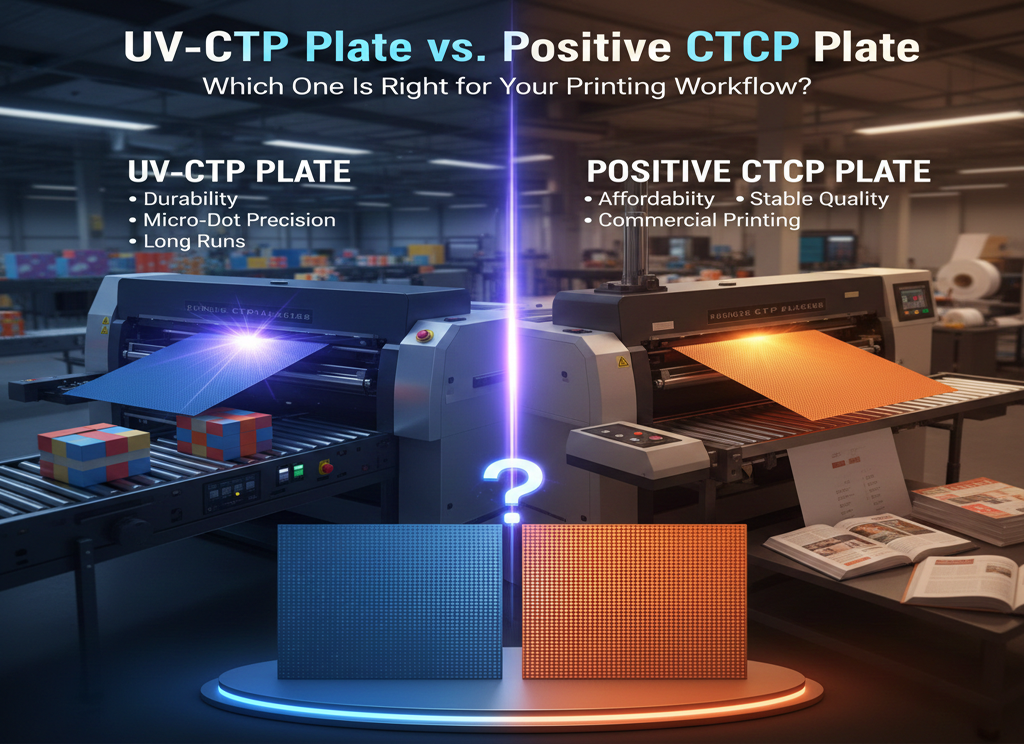
UV-CTP Plate vs. Positive CTCP Plate: Which One Is Right for Your Printing Workflow?
In the offset printing industry, choosing the right plate technology is a key factor that determines image quality, workflow efficiency, cost structure, and environmental impact. Among many plate types, UV-CTP plates and Positive CTCP plates remain two of the most widely used — but they serve different production needs.
This article breaks down the differences in a clear, practical way so you can easily understand how each plate works, where they are used, and which one may be the best fit for your printing environment.
1. What Are UV-CTP Plates?
UV-CTP (Ultraviolet Computer-to-Plate) plates are designed to be imaged using traditional UV laser CTP systems. These systems were popular before thermal CTP became mainstream and are still widely used because of their stability, durability, and lower equipment cost.
Key Features
Uses UV lasers for imaging
Generally negative-working chemistry
Excellent run-length durability
Suitable for varnishes, alcohol-based fountain solutions, and harsh printing environments
Commonly used in packaging printing, commercial offset, and long-run jobs
2. What Are Positive CTCP Plates?
Positive CTCP plates (Computer-to-Conventional-Plate) are imaged using violet or UV-visible light sources on modified plate-setters originally designed for analog plates. CTCP technology is cost-effective and popular in developing markets where printers want digital CTP quality without the high investment of thermal systems.
Key Features
Positive-working chemistry, familiar to most pressrooms
Designed for UV-visible light imaging
Lower investment cost for equipment
Suitable for newspapers, books, general commercial printing
Good balance between cost and plate performance
3. Side-by-Side Comparison Table
Below is a clear comparison of the two plate types, making it easier to understand their strengths and differences:
UV-CTP Plate vs. Positive CTCP Plate
| Category | UV-CTP Plate | Positive CTCP Plate |
|---|---|---|
| Imaging Technology | UV laser CTP systems | CTCP (UV-visible light exposure) |
| Working Type | Typically negative-working | Positive-working |
| Resolution & Dot Reproduction | High resolution; excellent highlight dots | Good resolution; suitable for most commercial print |
| Durability / Run Length | Very high (long-run capable, suitable for harsh chemistry) | Medium to high (depends on brand and processing) |
| Equipment Cost | Higher CTP system cost | Lower equipment cost, affordable for small–mid printers |
| Chemical Resistance | Strong resistance — ideal for alcohol, UV ink, varnish | Standard resistance; suitable for most offset inks |
| Best For | Packaging, long-run commercial printing, industrial environments | Newspapers, books, general commercial printing |
| Environmental Impact | More chemistry-intensive | More energy-efficient; can be used with low-chem processing |
| Market Popularity | Popular in packaging-heavy regions | Very common in cost-sensitive markets |
4. How Do They Differ in Real Printing Conditions?
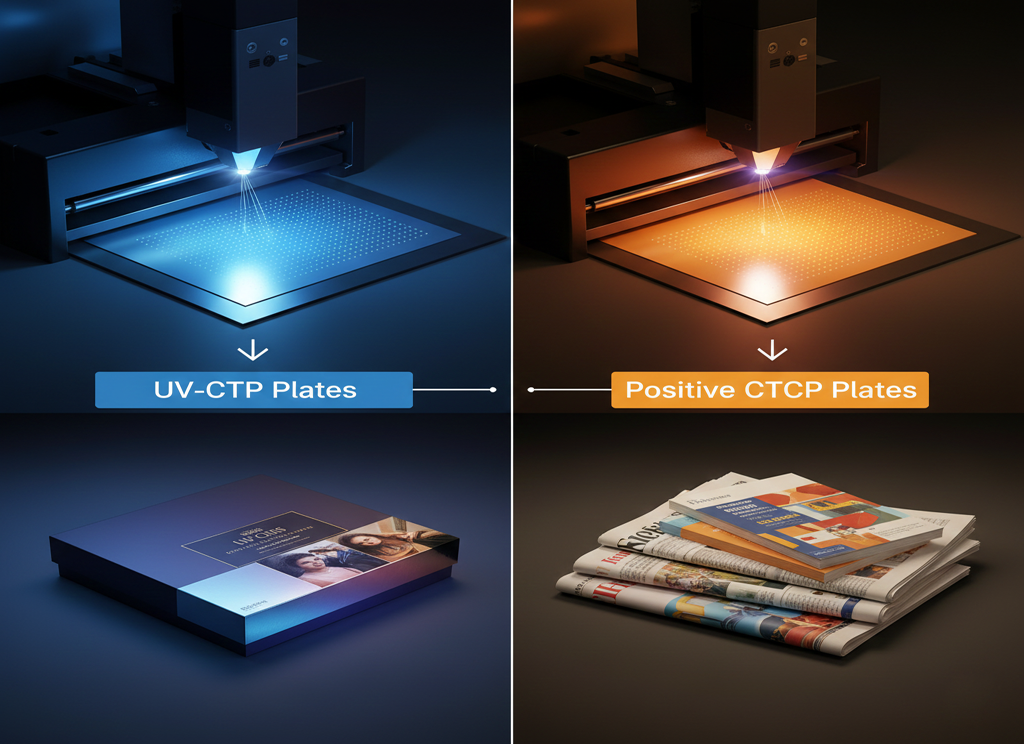
4.1 Imaging and Dot Performance
UV-CTP Plates
UV lasers produce very fine micro-dots
Excellent for small text, sharp edges, and highlight details
Better stability under heavy ink loads
Positive CTCP Plates
Provide stable dot reproduction for general work
Slightly less sharp in highlight areas compared to UV-CTP
More than sufficient for newspapers, brochures, catalogs
4.2 Durability and Long-Run Jobs
UV-CTP Plates
Designed for high wear resistance
Ideal for:
Long-run commercial printing
Packaging and label printing
UV ink applications
High-pressure dampening systems
Positive CTCP Plates
Durability varies by manufacturer
Suitable for:
Medium-run commercial printing
Book printing
Newspaper production
If your jobs often exceed 100,000 impressions, UV-CTP plates generally perform better.
4.3 Cost Structure and Operational Investment
UV-CTP
Higher initial equipment cost
Higher chemistry usage
Lower cost per impression for long-run jobs
CTCP
Low equipment investment
Plates are usually cheaper
Ideal for smaller printers or high-volume, low-margin businesses
4.4 Environmental Considerations
UV-CTP Plates
Traditional systems often require:
More developer
Higher chemical strength
Some modern UV-CTP plates have low-chem Plates, but still less eco-friendly than CTCP
Positive CTCP Plates
Can use low-chem or processless-style CTCP systems
Lower energy consumption due to simpler imaging technology
Better for printers wanting reduced chemical usage
5. Which One Should You Choose?
Here’s a simple rule-of-thumb guide based on your business model:
 Choose UV-CTP Plates if:
You handle long-run packaging or commercial jobs
You need excellent durability under harsh chemistry
You frequently use UV inks or varnishes
You want the sharpest possible dot quality
Choose Positive CTCP Plates if:
Your market is price-sensitive
You print books, newspapers, or standard commercial work
You want lower initial investment
You need stable, predictable performance with simple operation
6. Final Thoughts: A Practical Choice for Every Printer
Both UV-CTP and Positive CTCP plates are mature, reliable technologies widely used in the global offset printing industry. The “best” choice depends on your specific workflow, job types, and cost structure.
UV-CTP → durability, micro-dot precision, long runs
CTCP → affordability, stable quality, mainstream commercial printing
If your print shop needs both high-durability packaging work and cost-effective commercial production, many printers even operate dual systems to handle both plate types efficiently.
At the end of the day, the key is using high-quality, well-engineered plates. Our company manufactures UV-CTP plates and CTCP plates designed for stable dot reproduction, consistent processing, and reliable press performance. If you need technical specifications or sample testing, we’re always ready to assist.
Why Does a CTP Plate Scum on Press ? 9 Common Causes and Proven Solutions
Learn why CTP plates scum on press, the most common causes, troubleshooting methods, and practical solutions to improve offset printing quality and reduce downtime.
Which Offset Machine Is Best ? A Practical Guide for Commercial Printing
Which offset machine is best? Learn how to choose the right offset printing machine based on format, volume, cost, and CTP technology.
Where to Buy Thermal CTP Plates for Offset Printing | Best Supplier Guide & Expert Tips
Looking for reliable thermal CTP plates for offset printing? This expert guide explains how to choose a trustworthy supplier, compares global and Chinese manufacturers, and shares key quality criteria.