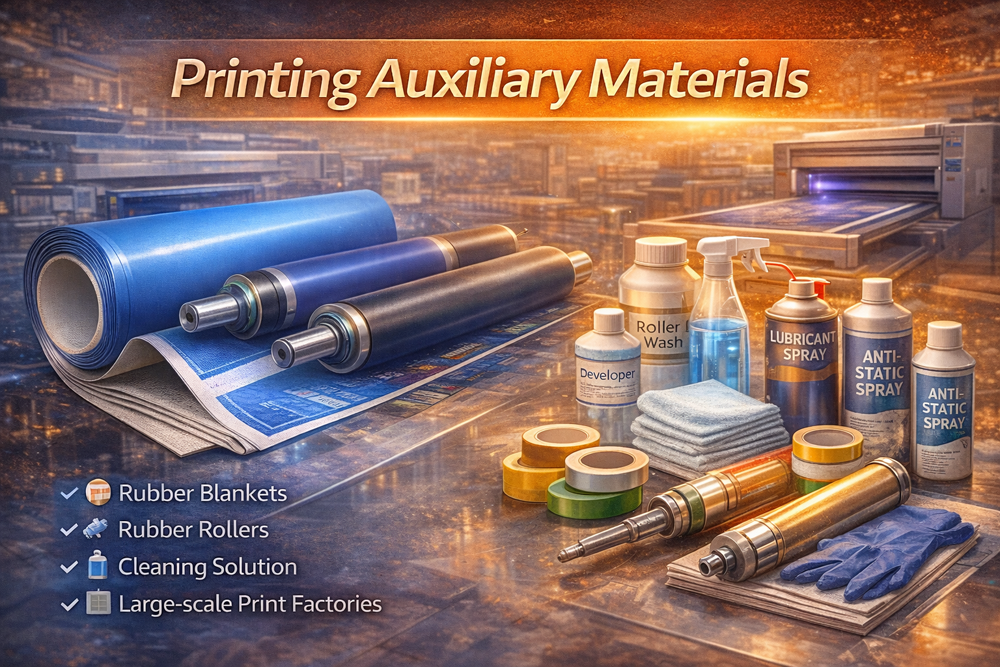
In the world of printing, achieving high-quality, consistent results requires more than just top-tier presses and plates. Printing auxiliary materials play a pivotal role in ensuring smooth operations, reducing downtime, and maintaining print quality. From rubber blankets and rollers to cleaning solutions and lubricants, each accessory contributes to the overall efficiency and output of a print shop. This guide provides an in-depth look at the most essential printing auxiliary materials, their applications, maintenance, and selection tips for professionals.
1. What Are Printing Auxiliary Materials?
Printing auxiliary materials, sometimes referred to as printing consumables or accessories, encompass all non-primary components that support the printing process. While the press and the printing plate handle the actual image transfer, auxiliary materials help maintain precision, consistency, and quality.
These materials include:
Rubber blankets and rollers
Cleaning and maintenance chemicals
Lubricants and greases
Protective and anti-static agents
Consumables such as tapes, adhesives, and foils
They are crucial for both offset and digital printing environments, ensuring longevity of the equipment and optimal print results.
2. Rubber Blankets
Structure and Function
Rubber blankets are a core auxiliary material in offset printing. They consist of multiple layers: a compressible layer, a rubber surface layer, and sometimes a fabric backing. The compressible layer allows the blanket to adapt to slight variations in paper thickness and plate surface irregularities, ensuring uniform ink transfer.
Key Benefits
Provides smooth and consistent ink transfer
Absorbs minor imperfections in substrates
Enhances color accuracy and registration
Reduces wear on printing plates
Maintenance Tips
Clean after every print run to prevent ink buildup
Avoid excessive pressure that can damage the rubber surface
Store in a controlled environment to prevent drying or deformation
3. Rubber Rollers
Importance in Printing
Rubber rollers are responsible for evenly distributing ink and fountain solutions across plates and blankets. Properly maintained rollers contribute to consistent ink density and minimize defects such as streaking or mottling.
Types
Form Rollers: Transfer ink from the inking system to the plate
Distributor Rollers: Ensure uniform ink distribution across the press
Fountain Rollers: Apply dampening solution to the plate
Maintenance and Replacement
Monitor for hardness and wear; replace when surface is cracked
Clean regularly to prevent chemical degradation
Rotate periodically to prevent flat spots
4. Cleaning and Maintenance Chemicals
Essential Chemicals
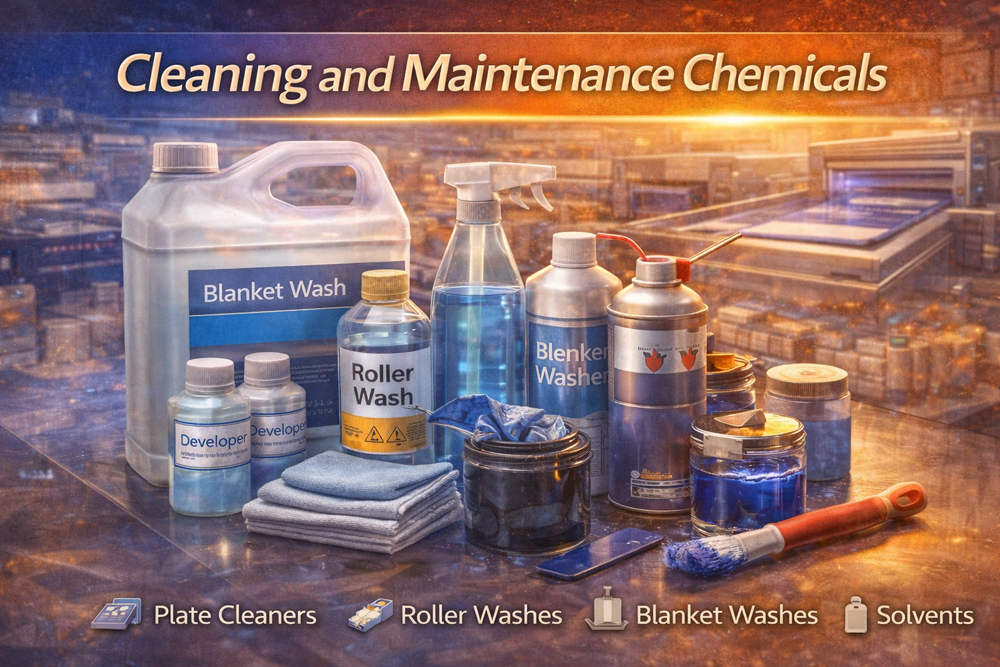
Printing operations rely on various chemicals to maintain equipment hygiene:
Plate cleaners: Remove residual ink from printing plates
Roller washes: Clean rollers and prevent ink contamination
Blanket washes: Protect rubber blankets from damage
Solvents: Remove stubborn ink deposits from press components
Best Practices
Use chemicals compatible with the material surfaces
Follow manufacturer safety guidelines
Avoid overuse, which can deteriorate rubber and metal surfaces
5. Lubricants and Anti-Static Agents
Friction and static electricity can compromise printing quality. Lubricants and anti-static agents help maintain smooth operation:
Lubricants: Reduce wear on press gears and moving components
Anti-static sprays: Prevent paper jams and ink attraction issues
Proper application ensures longer service life and reduced downtime.
6. Consumables: Tapes, Adhesives, and Protective Materials
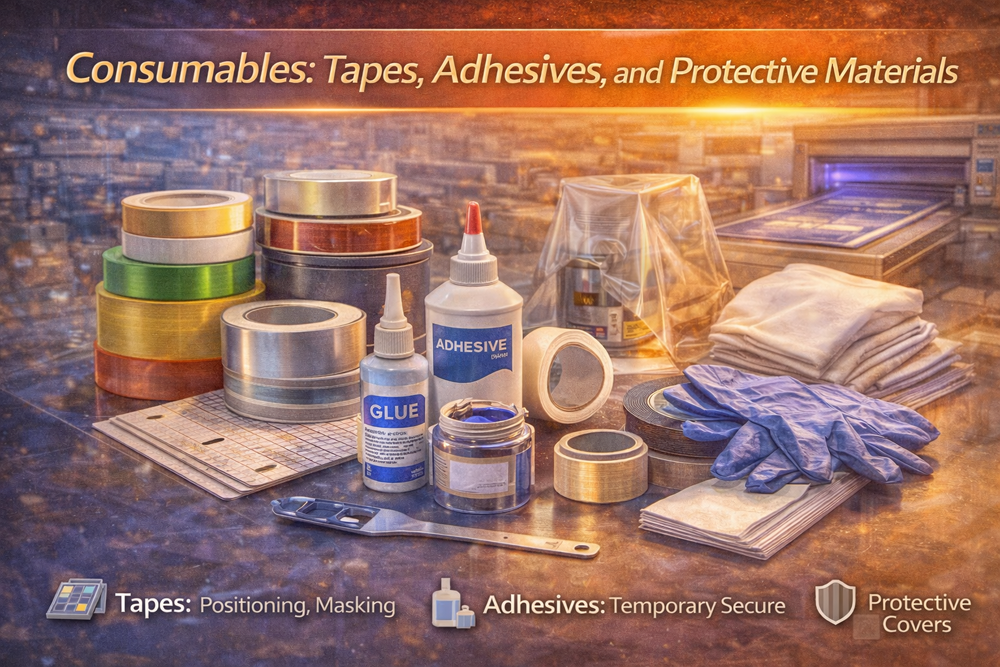
Tapes: For plate positioning, masking, or repairs
Adhesives: Secure substrates or components temporarily
Protective covers: Shield sensitive press parts from dust and contaminants
These small but vital materials contribute significantly to efficiency and quality control.
7. How to Choose the Right Auxiliary Materials
When selecting printing auxiliary materials, consider:
Compatibility: Ensure materials match your press and plate type
Quality: Higher-quality materials reduce downtime and defects
Supplier Support: Reliable suppliers provide technical guidance and after-sales service
Cost Efficiency: Balance between upfront cost and long-term performance
8. Maintenance and Storage Recommendations
Store rubber blankets and rollers flat in a controlled environment
Avoid direct sunlight and extreme temperatures
Follow manufacturer guidelines for chemical storage
Implement a regular inspection schedule to detect wear or contamination
9. Conclusion
Printing auxiliary materials are more than just supporting tools; they are essential to achieving consistent, high-quality print results. Proper selection, use, and maintenance of rubber blankets, rollers, chemicals, and consumables significantly impact the efficiency, longevity, and output quality of your printing operation.
As a professional supplier of printing auxiliary materials, we provide high-quality Rubber Blankets and Rubber Rollers designed to enhance the performance of your printing press. Contact us to explore solutions tailored for your print shop.

Why Does a CTP Plate Scum on Press ? 9 Common Causes and Proven Solutions
Learn why CTP plates scum on press, the most common causes, troubleshooting methods, and practical solutions to improve offset printing quality and reduce downtime.

Which Offset Machine Is Best ? A Practical Guide for Commercial Printing
Which offset machine is best? Learn how to choose the right offset printing machine based on format, volume, cost, and CTP technology.
Where to Buy Thermal CTP Plates for Offset Printing | Best Supplier Guide & Expert Tips
Looking for reliable thermal CTP plates for offset printing? This expert guide explains how to choose a trustworthy supplier, compares global and Chinese manufacturers, and shares key quality criteria.