Introduction
CTP (Computer-to-Plate) technology has significantly improved efficiency and print quality in modern offset printing. However, even the highest-quality printing plates can experience performance issues if they are improperly stored, transported, or handled.
One of the most common yet often overlooked issues is CTP plate oxidation.
Oxidation can reduce plate sensitivity, damage the anodized aluminum surface, shorten plate shelf life, and ultimately affect print quality. For printing companies, distributors, and plate manufacturers, understanding oxidation problems is essential for maintaining consistent production performance and minimizing waste.
This guide explains the causes of CTP plate oxidation, how to identify it, its impact on printing operations, and proven methods for prevention and correction.
What Is CTP Plate Oxidation?
CTP plates are manufactured using high-purity aluminum substrates that undergo electrochemical graining and anodizing treatments before receiving photosensitive coatings.
Although anodized aluminum provides excellent corrosion resistance, the plate surface can still react with oxygen, moisture, chemicals, or contaminants over time.
When oxidation occurs, unwanted chemical reactions create surface defects that may interfere with imaging, development, ink acceptance, and printing performance.
In severe cases, oxidation can make the plate unusable before it even reaches the pressroom.
What Does Oxidation Look Like on a CTP Plate?
Oxidation symptoms can vary depending on storage conditions and exposure time.
Common visual indicators include:
- White or gray discoloration
- Yellowish surface staining
- Uneven surface appearance
- Dark spots or patches
- Watermark-like marks
- Dull aluminum finish
- Surface haze or cloudiness
In advanced cases, oxidation may become visible immediately after package opening.
Why Do CTP Plates Oxidize?
Several environmental and operational factors contribute to oxidation.
1. Excessive Humidity
Humidity is the leading cause of oxidation during storage.
When moisture penetrates packaging, the aluminum surface becomes vulnerable to chemical reactions.
Common risk situations include:
- Warehouses without climate control
- Coastal regions with high humidity
- Long-term storage during rainy seasons
- Improper container ventilation
Relative humidity above 65% significantly increases oxidation risks.
2. Improper Storage Temperature
Extreme temperatures accelerate chemical degradation.
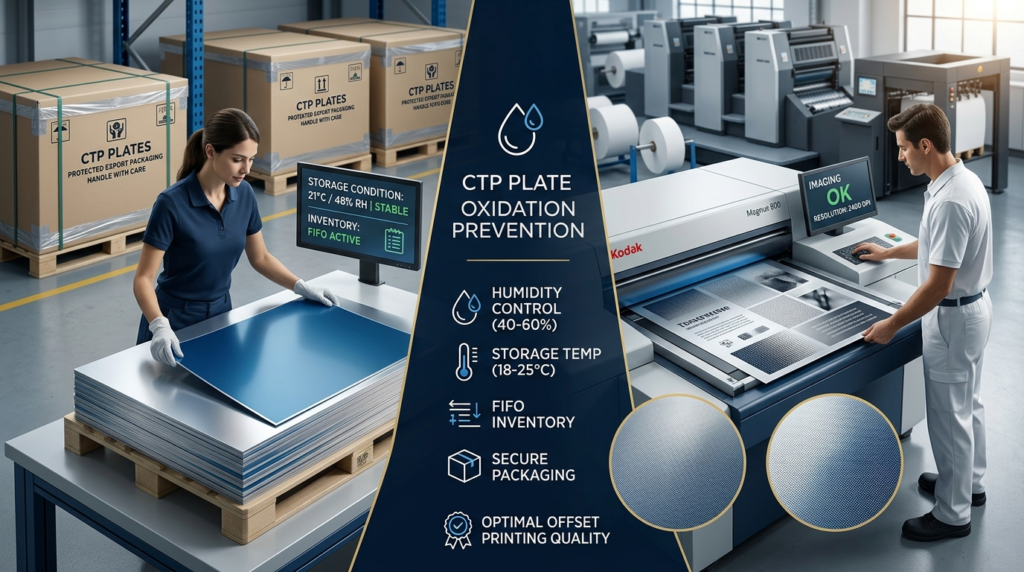
Recommended storage conditions typically include:
- Temperature: 18°C–25°C
- Relative Humidity: 40%–60%
Problems often occur when plates are stored:
- Near heat sources
- Under direct sunlight
- In non-insulated warehouses
- Inside overheated shipping containers
3. Damaged Packaging
Export packaging protects plates from environmental exposure.
If packaging is damaged during transportation, moisture and contaminants can enter and initiate oxidation.
Common issues include:
- Torn cartons
- Broken pallet wrapping
- Water exposure during shipping
- Poor sealing methods
4. Long-Term Storage
All printing plates have a recommended shelf life.
Even under ideal conditions, photosensitive coatings and aluminum surfaces gradually age.
Typical shelf life ranges from:
| Plate Type | Recommended Shelf Life |
|---|---|
| Thermal CTP Plate | 12–24 Months |
| Process Free Plate | 12–18 Months |
| UV CTP Plate | 12–18 Months |
Using plates beyond the recommended storage period increases oxidation risk.
5. Chemical Contamination
Certain chemicals can react with aluminum surfaces.
Potential contamination sources include:
- Cleaning solvents
- Acidic vapors
- Industrial pollutants
- Printing chemicals
- Developer spills
Even minor contamination can initiate localized oxidation.
How Oxidation Affects Printing Performance
Oxidized plates often exhibit production problems that increase waste and downtime.
Imaging Problems
Oxidation may interfere with laser exposure.
Possible effects:
- Reduced sensitivity
- Uneven imaging
- Incomplete image formation
- Lower resolution
Development Issues
For conventional thermal or UV plates, oxidation can cause:
- Uneven development
- Residual coating
- Poor image contrast
- Processing instability
Press Performance Problems
During printing, oxidation may result in:
- Background toning
- Scumming
- Ink-water balance issues
- Poor dot reproduction
- Reduced run length
These issues often increase make-ready time and production costs.
How to Identify Oxidation Before Printing
Early detection helps prevent unnecessary production losses.
Visual Inspection
Check for:
- Surface discoloration
- Visible stains
- Oxidized edges
- Surface irregularities
Visual inspection should be performed before imaging.
Imaging Test
Run a small exposure test.
Indicators include:
- Weak image density
- Inconsistent dot formation
- Unexpected image defects
Water Test
Experienced operators sometimes observe water behavior on the plate surface.
Oxidized areas may display:
- Uneven wetting
- Water beading
- Irregular hydrophilic properties
How to Prevent CTP Plate Oxidation
Maintain Proper Storage Conditions
The most effective prevention method is environmental control.
Recommended conditions:
| Parameter | Recommended Range |
|---|---|
| Temperature | 18–25°C |
| Humidity | 40–60% RH |
| Sunlight Exposure | None |
| Ventilation | Moderate |
Store Plates Horizontally
Proper stacking reduces packaging stress and minimizes air exposure.
Best practices include:
- Flat storage
- Stable pallets
- Even weight distribution
Follow FIFO Inventory Management
FIFO (First-In, First-Out) ensures older inventory is consumed first.
Benefits include:
- Reduced aging risk
- Better inventory turnover
- Lower oxidation probability
Keep Plates in Original Packaging
Manufacturers design packaging specifically to protect plates from:
- Moisture
- Dust
- Physical damage
- Environmental contaminants
Packages should remain sealed until use.
Control Shipping Conditions
For international shipments:
- Use waterproof packaging
- Apply desiccants when necessary
- Avoid prolonged port storage
- Protect containers from excessive heat
Can Oxidized CTP Plates Be Recovered?
The answer depends on severity.
Minor Oxidation
Light surface oxidation may still allow acceptable printing performance after testing.
However, image quality verification is recommended before production use.
Severe Oxidation
When oxidation has damaged:
- Photosensitive coating
- Aluminum surface structure
- Hydrophilic layer
Recovery is generally not practical.
Replacement is often the most economical solution.
How Manufacturers Reduce Oxidation Risks
Leading CTP plate manufacturers use several technologies to improve storage stability.
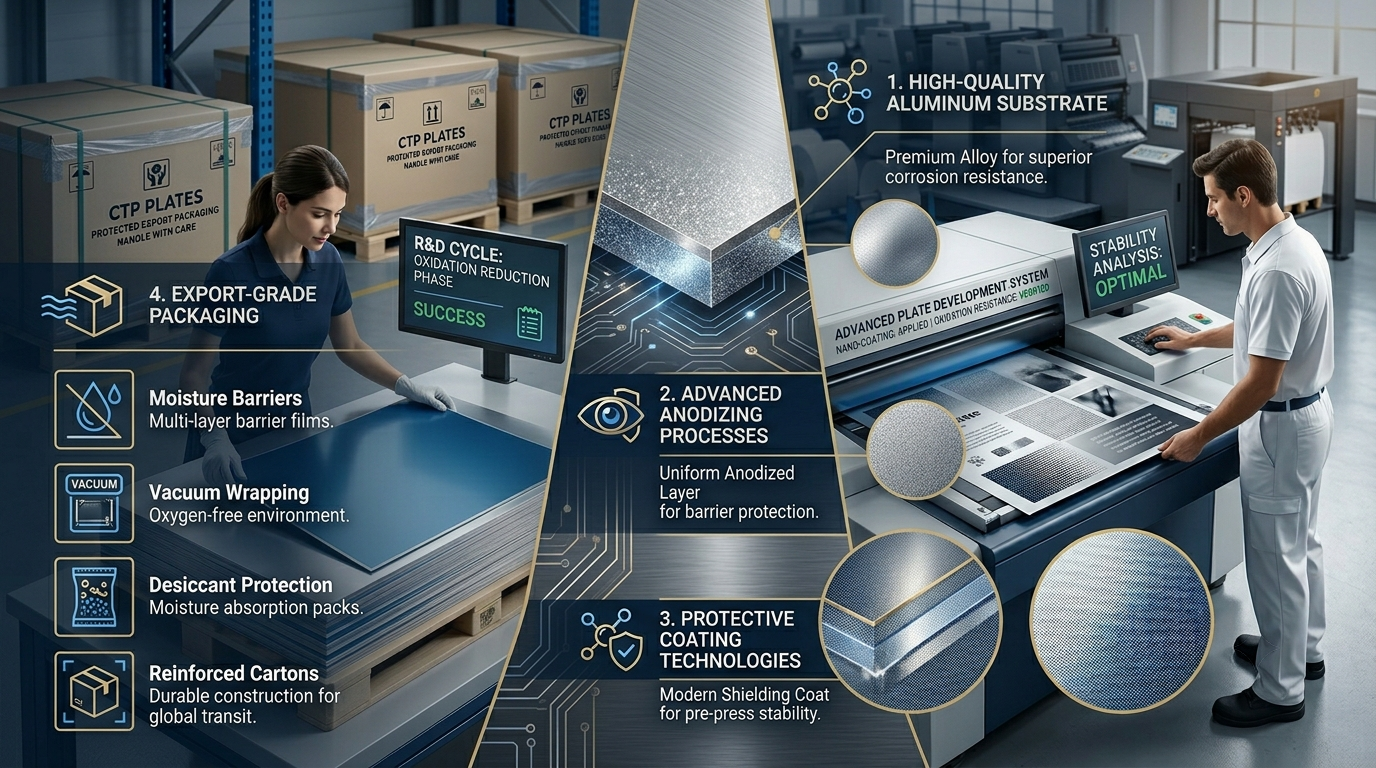
These include:
High-Quality Aluminum Substrates
Premium aluminum provides better corrosion resistance.
Advanced Anodizing Processes
Uniform anodized layers improve protection against environmental exposure.
Protective Coating Technologies
Modern coatings help shield sensitive plate surfaces during storage and transportation.
Export-Grade Packaging
Professional export packaging often includes:
- Moisture barriers
- Vacuum wrapping
- Desiccant protection
- Reinforced cartons
Frequently Asked Questions
What causes CTP plate oxidation?
The most common causes are excessive humidity, improper storage temperature, damaged packaging, long-term storage, and chemical contamination.
Can oxidized CTP plates still be used?
Mild oxidation may allow limited use after testing, but severe oxidation often results in unacceptable print quality and should be avoided.
How long can CTP plates be stored safely?
Most CTP plates have a recommended shelf life of 12–24 months when stored under proper environmental conditions.
What humidity level is safe for CTP plate storage?
Most manufacturers recommend maintaining relative humidity between 40% and 60%.
How can oxidation be prevented?
Proper storage, climate control, sealed packaging, FIFO inventory management, and moisture protection during transportation are the most effective preventive measures.
Conclusion
CTP plate oxidation is one of the most common causes of premature plate failure in offset printing operations. While oxidation often develops gradually, its effects can be significant, leading to imaging defects, development issues, print quality problems, and increased production costs.
By understanding the causes of oxidation and implementing proper storage, handling, and inventory management practices, printing companies can maximize plate performance, extend shelf life, and reduce waste. Selecting high-quality plates from experienced manufacturers with advanced anodizing and packaging technologies is also a critical step toward minimizing oxidation-related risks.
Why Does a CTP Plate Scum on Press ? 9 Common Causes and Proven Solutions
Learn why CTP plates scum on press, the most common causes, troubleshooting methods, and practical solutions to improve offset printing quality and reduce downtime.

Which Offset Machine Is Best ? A Practical Guide for Commercial Printing
Which offset machine is best? Learn how to choose the right offset printing machine based on format, volume, cost, and CTP technology.
Where to Buy Thermal CTP Plates for Offset Printing | Best Supplier Guide & Expert Tips
Looking for reliable thermal CTP plates for offset printing? This expert guide explains how to choose a trustworthy supplier, compares global and Chinese manufacturers, and shares key quality criteria.