Introduction
For printing plate distributors, commercial printing companies, and international importers, understanding container loading capacity is essential for controlling logistics costs and planning procurement.
One of the most frequently asked questions when sourcing offset printing plates is:
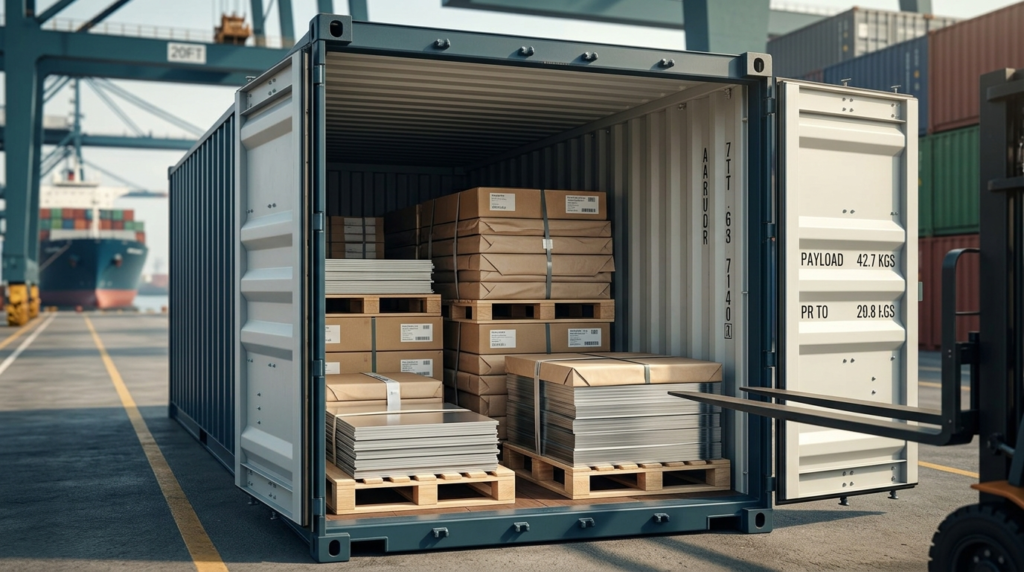
How many CTP plates can fit in a 20FT container?
The answer depends on several factors, including plate size, thickness, packaging method, pallet configuration, and container weight limitations.
This guide explains how container capacity is calculated, provides estimated loading quantities for common CTP plate sizes, and offers practical shipping recommendations to maximize transportation efficiency and reduce freight costs.
Why Container Capacity Matters
International shipping costs have become a major component of printing plate procurement expenses.
Understanding container utilization helps buyers:
- Reduce shipping cost per plate
- Improve inventory planning
- Optimize warehouse space
- Negotiate better freight rates
- Estimate landed costs more accurately
For high-volume distributors, proper container planning can significantly improve profitability.
Standard 20FT Container Specifications
A standard 20-foot shipping container typically has the following dimensions:
| Specification | Value |
|---|---|
| Internal Length | 5.90 m |
| Internal Width | 2.35 m |
| Internal Height | 2.39 m |
| Internal Volume | 33 m³ |
| Maximum Payload | 28,000 kg |
| Tare Weight | Approximately 2,200 kg |
For aluminum-based CTP plates, container loading is usually limited by weight rather than available space.
Factors That Affect Container Capacity
Several variables influence the number of CTP plates that can be loaded into a container.
Plate Size
Larger plates occupy more pallet space and increase overall shipment volume.
Common plate sizes include:
- 510 × 400 mm
- 745 × 605 mm
- 800 × 1030 mm
- 1030 × 790 mm
- 1030 × 800 mm
Plate Thickness
The thicker the plate, the more aluminum it contains and the heavier the shipment becomes.
Typical plate thicknesses:
| Thickness | Common Application |
|---|---|
| 0.15 mm | Commercial printing |
| 0.20 mm | Medium-run printing |
| 0.30 mm | Packaging printing |
| 0.40 mm | Long-run printing |
A 0.30 mm plate may weigh nearly twice as much as a 0.15 mm plate of the same dimensions.
Packaging Method
Packaging configuration directly affects loading efficiency.
Most manufacturers use:
- Export cartons
- Wooden pallets
- Fumigation-free plywood pallets
- Reinforced corner protection
Efficient packaging increases plate protection while maximizing container utilization.
Weight Restrictions
For most CTP plate shipments, container payload limits become the primary constraint before available volume is fully utilized.
This is especially true for larger-format plates.
Typical Weight of CTP Plates
The following table provides approximate weights for common plate specifications.
| Plate Size | Thickness | Approximate Weight per Plate |
|---|---|---|
| 510 × 400 mm | 0.15 mm | 0.09 kg |
| 745 × 605 mm | 0.15 mm | 0.18 kg |
| 1030 × 790 mm | 0.15 mm | 0.33 kg |
| 1030 × 800 mm | 0.30 mm | 0.66 kg |
Actual weights vary depending on aluminum alloy, coating technology, and manufacturer specifications.
Estimated Number of CTP Plates in a 20FT Container
The following estimates assume efficient palletized export packaging and compliance with standard container payload limitations.
510 × 400 mm × 0.15 mm
| Container Type | Estimated Quantity |
|---|---|
| 20FT Container | 250,000 – 300,000 plates |
This size is commonly used for small-format commercial printing.
745 × 605 mm × 0.15 mm
| Container Type | Estimated Quantity |
|---|---|
| 20FT Container | 120,000 – 150,000 plates |
Popular among medium-format sheet-fed printers.
1030 × 790 mm × 0.15 mm
| Container Type | Estimated Quantity |
|---|---|
| 20FT Container | 70,000 – 85,000 plates |
One of the most frequently exported plate formats worldwide.
1030 × 800 mm × 0.30 mm
| Container Type | Estimated Quantity |
|---|---|
| 20FT Container | 35,000 – 45,000 plates |
Typically used in packaging and long-run printing applications.
How Manufacturers Calculate Container Loading
Professional plate manufacturers generally follow a loading process that includes:
Step 1: Calculate Plate Weight
Determine the total weight of:
- Aluminum substrate
- Photosensitive coating
- Protective materials
Step 2: Determine Carton Capacity
Each carton contains a specific number of plates depending on:
- Plate dimensions
- Thickness
- Packaging requirements
Step 3: Configure Pallets
Cartons are stacked onto export pallets according to:
- Container dimensions
- Weight distribution requirements
- Safety standards
Step 4: Verify Maximum Payload
The total shipment weight must remain below container payload limits and local transportation regulations.
How to Reduce Shipping Costs per Plate
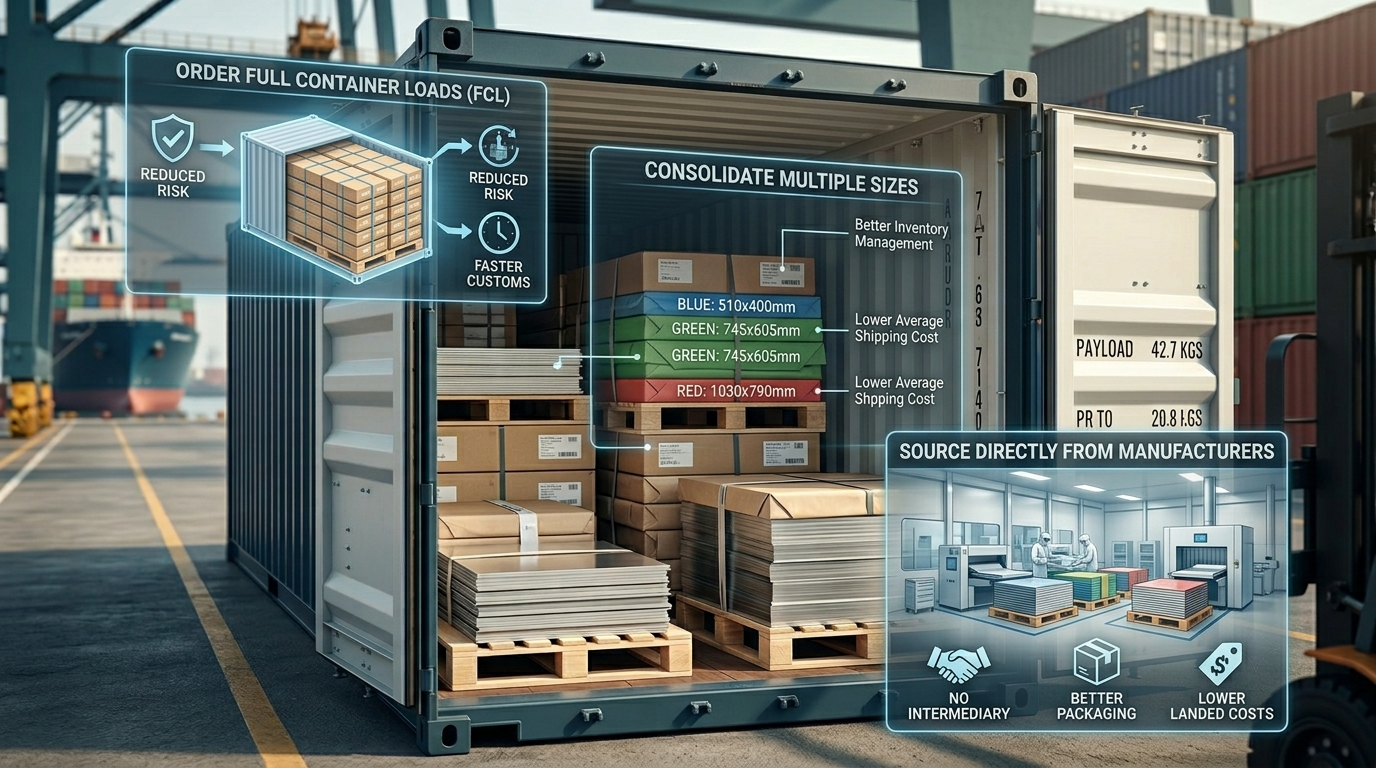
Order Full Container Loads
Full Container Load (FCL) shipments usually offer lower logistics costs per plate than Less-than-Container Load (LCL) shipments.
Benefits include:
- Lower handling costs
- Reduced damage risk
- Faster customs clearance
- Better freight efficiency
Consolidate Multiple Sizes
Importers often combine several plate sizes in one container.
Advantages include:
- Better inventory management
- Improved container utilization
- Lower average shipping cost
Source Directly from Manufacturers
Factory-direct procurement eliminates intermediary markups and often provides:
- Better packaging solutions
- More accurate loading plans
- Lower overall landed costs
20FT vs 40HQ Container for CTP Plates
Many buyers also compare 20FT and 40HQ containers.
| Feature | 20FT Container | 40HQ Container |
|---|---|---|
| Payload Capacity | Higher density loading | Higher volume |
| Suitable for Heavy Cargo | Excellent | Moderate |
| Typical CTP Plate Usage | Very Common | Common |
| Freight Efficiency | High | Depends on route |
Because CTP plates are relatively heavy, many exporters prefer 20FT containers due to payload optimization.
Frequently Asked Questions
How many CTP plates fit in a 20-foot container?
A 20FT container typically holds between 35,000 and 300,000 CTP plates depending on plate size, thickness, and packaging configuration.
What limits CTP plate container capacity?
Container payload weight is usually the primary limitation because aluminum printing plates are relatively heavy.
Are 20FT containers better than 40FT containers for printing plates?
In many cases, yes. A 20FT container often provides better weight utilization and lower shipping costs for dense products such as aluminum printing plates.
Can I mix different CTP plate sizes in one container?
Yes. Most manufacturers support mixed loading plans to improve container efficiency and meet diverse inventory requirements.
How can I reduce shipping costs for CTP plates?
Ordering full container loads, consolidating plate sizes, and purchasing directly from manufacturers are among the most effective ways to reduce shipping costs.
Conclusion
The number of CTP plates that fit in a 20FT container depends primarily on plate dimensions, thickness, packaging configuration, and container payload restrictions. In most cases, a standard 20FT container can accommodate anywhere from 35,000 to 300,000 plates.
For distributors and commercial printers, understanding container capacity is essential for calculating landed costs, optimizing procurement strategies, and improving logistics efficiency. Working with an experienced CTP plate manufacturer can help maximize container utilization, reduce shipping expenses, and ensure safe international transportation.
Why Does a CTP Plate Scum on Press ? 9 Common Causes and Proven Solutions
Learn why CTP plates scum on press, the most common causes, troubleshooting methods, and practical solutions to improve offset printing quality and reduce downtime.
Which Offset Machine Is Best ? A Practical Guide for Commercial Printing
Which offset machine is best? Learn how to choose the right offset printing machine based on format, volume, cost, and CTP technology.
Where to Buy Thermal CTP Plates for Offset Printing | Best Supplier Guide & Expert Tips
Looking for reliable thermal CTP plates for offset printing? This expert guide explains how to choose a trustworthy supplier, compares global and Chinese manufacturers, and shares key quality criteria.