Introduction
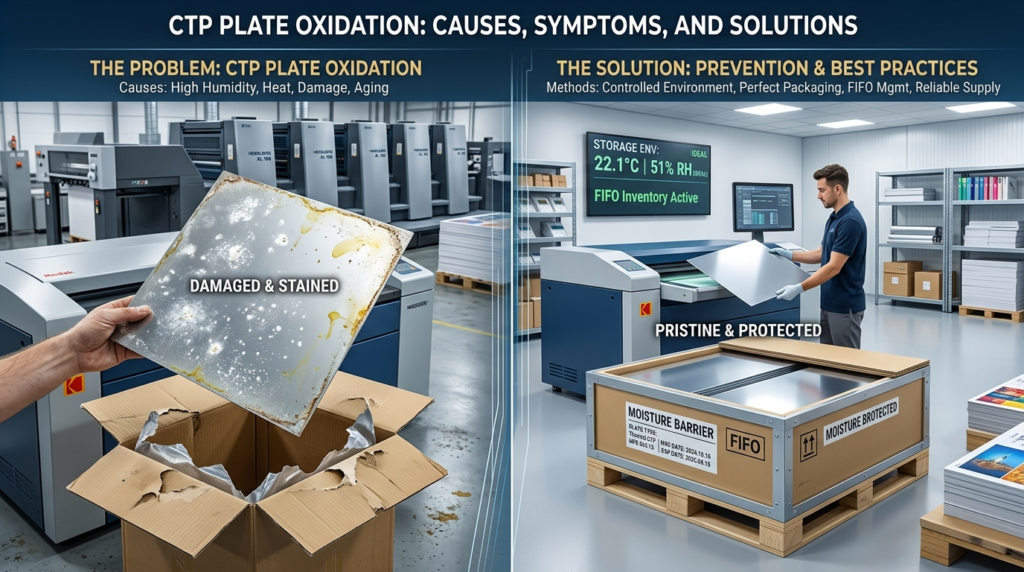
CTP (Computer-to-Plate) technology has transformed modern offset printing by delivering higher imaging precision, improved productivity, and reduced prepress preparation time. However, even high-quality CTP plates can experience performance issues if they are not stored, transported, or handled correctly.
Among the most common technical challenges faced by commercial printers is CTP plate oxidation. Oxidation may lead to imaging defects, unstable ink-water balance, shortened plate life, and increased production waste.
Fortunately, most oxidation problems can be prevented—or significantly reduced—through proper storage, handling, and quality control procedures.
This guide explains the causes of CTP plate oxidation, how to recognize early warning signs, effective prevention methods, and practical solutions for maintaining consistent printing performance.
What Is CTP Plate Oxidation?
CTP plates are manufactured from high-purity aluminum that undergoes electrochemical graining, anodizing, and photosensitive coating.
Although the anodized layer provides excellent corrosion resistance, prolonged exposure to moisture, oxygen, chemicals, or improper environmental conditions can gradually damage the protective surface.
When oxidation develops, the plate’s hydrophilic properties become unstable, directly affecting imaging quality and printing performance.
Unlike normal aging, oxidation often develops unevenly, causing localized defects that are difficult to correct during production.
Why Do CTP Plates Oxidize?
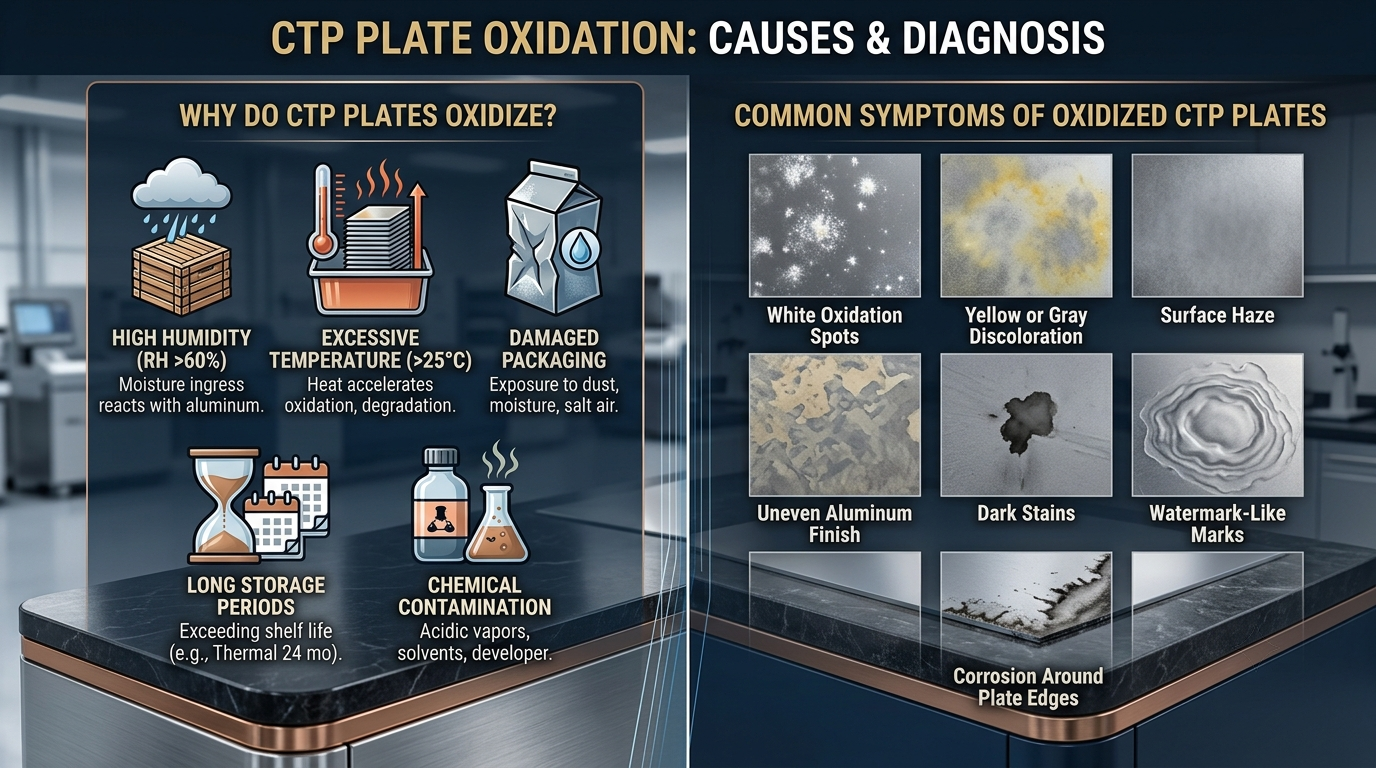
Several environmental and operational factors contribute to oxidation.
1. High Humidity
Humidity is the leading cause of plate oxidation.
When relative humidity exceeds recommended levels, moisture can penetrate packaging and react with the aluminum substrate.
High-risk environments include:
- Coastal warehouses
- Rainy seasons
- Poorly ventilated storage rooms
- Containers exposed to condensation
Recommended humidity:
40–60% RH
2. Excessive Storage Temperature
Heat accelerates oxidation and coating degradation.
Ideal storage conditions:
| Parameter | Recommended Range |
|---|---|
| Temperature | 18–25°C |
| Relative Humidity | 40–60% |
| Sunlight | Avoid Direct Exposure |
Plates stored near windows, heaters, or inside hot shipping containers are much more likely to oxidize.
3. Damaged Packaging
Export packaging protects plates from:
- Moisture
- Dust
- Salt air
- Physical damage
If cartons or protective wrapping are damaged during transportation, oxidation can begin long before the plates reach the printing facility.
4. Long Storage Periods
Even under ideal conditions, every CTP plate has a recommended shelf life.
Typical shelf life:
| Plate Type | Shelf Life |
|---|---|
| Thermal CTP Plate | 18–24 Months |
| Process Free Plate | 12–18 Months |
| UV CTP Plate | 12–18 Months |
Using inventory according to the First-In, First-Out (FIFO) principle helps reduce aging-related oxidation.
5. Chemical Contamination
Exposure to:
- Acidic vapors
- Cleaning solvents
- Developer spills
- Industrial chemicals
can damage the anodized surface and accelerate oxidation.
Common Symptoms of Oxidized CTP Plates
Operators should inspect plates before imaging.
Typical symptoms include:
- White oxidation spots
- Yellow or gray discoloration
- Surface haze
- Uneven aluminum finish
- Dark stains
- Watermark-like marks
- Corrosion around plate edges
In severe cases, oxidation may already be visible when opening the original package.
How Oxidation Affects Printing Performance
Oxidized plates often produce unstable printing results.
Imaging Problems
Possible issues include:
- Poor laser sensitivity
- Weak image contrast
- Incomplete image formation
- Dot loss
Development Problems
Conventional processed plates may experience:
- Uneven development
- Residual coating
- Poor image density
- Background contamination
Printing Problems
During press operation, oxidation may cause:
- Background toning
- Scumming
- Poor ink-water balance
- Reduced print sharpness
- Shorter run length
- Increased make-ready waste
These issues reduce productivity and increase operating costs.
Professional Solutions for CTP Plate Oxidation
Solution 1: Improve Storage Conditions
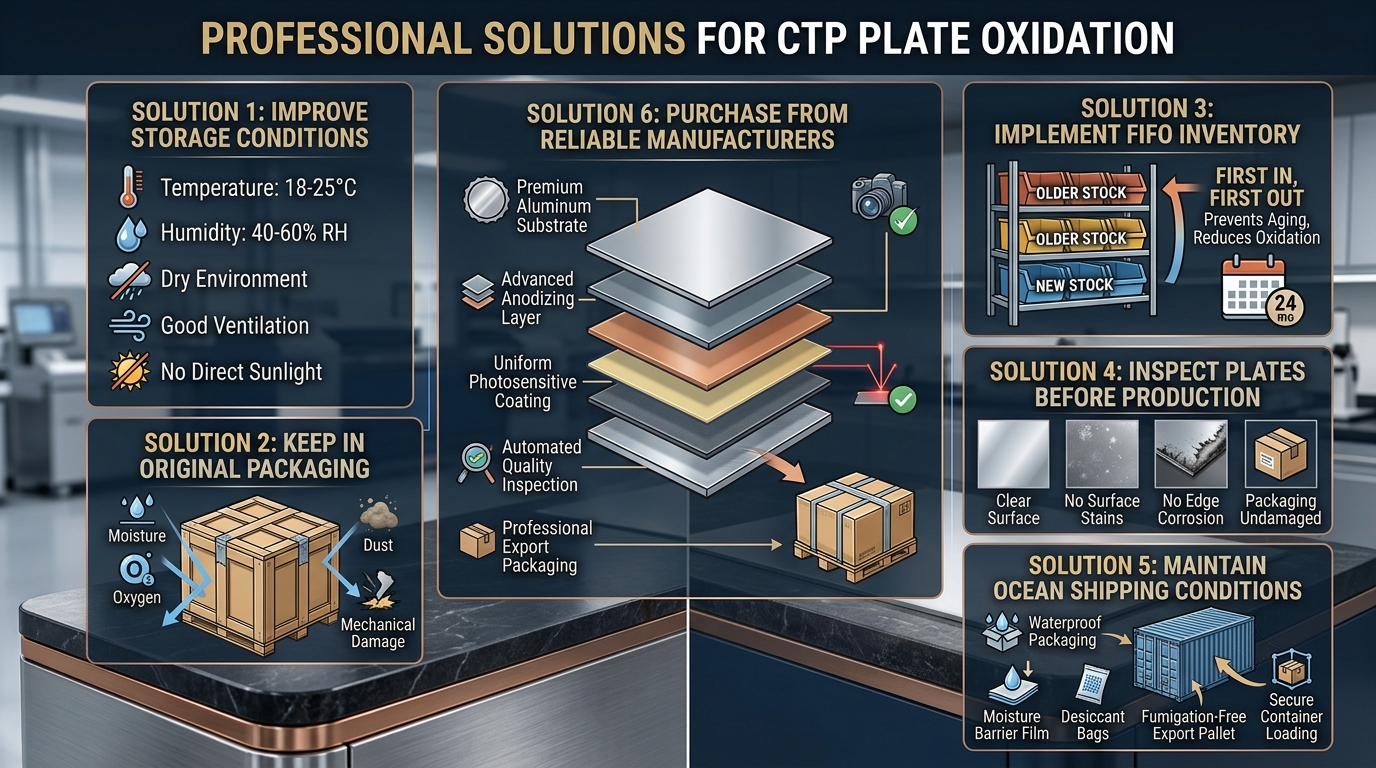
The most effective solution is maintaining a controlled storage environment.
Recommended conditions:
- Temperature: 18–25°C
- Humidity: 40–60% RH
- Dry environment
- Good ventilation
- No direct sunlight
Climate-controlled warehouses significantly reduce oxidation risk.
Solution 2: Keep Plates in Original Packaging
Original factory packaging protects plates from:
- Moisture
- Oxygen
- Dust
- Mechanical damage
Only remove packaging immediately before imaging.
Solution 3: Implement FIFO Inventory Management
Older inventory should always be used first.
FIFO management helps:
- Prevent over-aging
- Reduce oxidation
- Improve inventory turnover
- Minimize waste
Solution 4: Inspect Plates Before Production
Every production batch should include a visual inspection.
Check for:
- Surface stains
- Edge corrosion
- Coating defects
- Packaging damage
Early detection prevents costly production interruptions.
Solution 5: Maintain Proper Shipping Conditions
International transportation requires additional protection.
Recommended practices include:
- Waterproof packaging
- Moisture barrier film
- Desiccant bags
- Fumigation-free export pallets
- Secure container loading
For long-distance ocean freight, humidity control is especially important.
Solution 6: Purchase from Reliable Manufacturers
High-quality manufacturers reduce oxidation risk through:
- Premium aluminum substrates
- Advanced anodizing technology
- Uniform photosensitive coatings
- Automated quality inspection
- Professional export packaging
Reliable manufacturing improves both shelf life and printing consistency.
Can Oxidized Plates Be Repaired?
The answer depends on the severity of oxidation.
Minor Oxidation
If oxidation is only superficial:
- Perform an imaging test
- Verify print quality
- Use the plate only if results meet production requirements
Moderate Oxidation
Moderate oxidation may cause:
- Uneven development
- Reduced sensitivity
- Lower image quality
These plates should be tested carefully before production.
Severe Oxidation
If oxidation damages the anodized layer or photosensitive coating, the plate usually cannot be restored.
Replacing the plate is often more economical than risking production defects.
Best Practices to Prevent Future Oxidation
Printing companies should establish standard operating procedures (SOPs) covering:
Warehouse Management
- Climate-controlled storage
- Regular humidity monitoring
- Clean storage environment
Inventory Management
- FIFO inventory rotation
- Shelf life tracking
- Batch identification
Transportation
- Export-grade packaging
- Moisture protection
- Careful pallet handling
Operator Training
Employees should understand:
- Proper handling techniques
- Storage requirements
- Inspection procedures
- Plate maintenance practices
Well-trained operators significantly reduce plate damage and waste.
Frequently Asked Questions
What causes CTP plate oxidation?
The most common causes include excessive humidity, high storage temperatures, damaged packaging, long storage periods, and exposure to chemicals.
Can oxidized CTP plates still be used?
Lightly oxidized plates may still perform adequately after testing, but severely oxidized plates often produce unacceptable print quality and should be replaced.
What is the ideal storage environment for CTP plates?
Most manufacturers recommend storing plates at 18–25°C with 40–60% relative humidity, away from direct sunlight and moisture.
How can oxidation be prevented?
Proper climate control, sealed packaging, FIFO inventory management, moisture protection during transportation, and purchasing high-quality plates from reliable manufacturers are the most effective prevention methods.
Does oxidation affect print quality?
Yes. Oxidation can reduce imaging sensitivity, cause background toning, increase scumming, shorten run length, and reduce overall printing consistency.
Conclusion
CTP plate oxidation is a preventable problem that can significantly affect printing quality, production efficiency, and operating costs if left unmanaged.
By maintaining proper storage conditions, following recommended inventory practices, using export-grade packaging, and selecting reliable CTP plate manufacturers, printers can greatly reduce oxidation risks and maximize plate performance.
For commercial printers and distributors, preventing oxidation is not only about protecting inventory—it is also an essential step toward achieving consistent print quality, minimizing waste, and lowering total production costs.
Why Does a CTP Plate Scum on Press ? 9 Common Causes and Proven Solutions
Learn why CTP plates scum on press, the most common causes, troubleshooting methods, and practical solutions to improve offset printing quality and reduce downtime.

Which Offset Machine Is Best ? A Practical Guide for Commercial Printing
Which offset machine is best? Learn how to choose the right offset printing machine based on format, volume, cost, and CTP technology.

Where to Buy Thermal CTP Plates for Offset Printing | Best Supplier Guide & Expert Tips
Looking for reliable thermal CTP plates for offset printing? This expert guide explains how to choose a trustworthy supplier, compares global and Chinese manufacturers, and shares key quality criteria.