Introduction
In today’s offset printing industry, CTP (Computer-to-Plate) technology is the backbone of efficient, high-quality production. However, even the most advanced CTP system cannot deliver consistent results without one critical element: a reliable CTP plate supplier.
Choosing the right CTP plate supplier affects far more than plate pricing. It directly influences print quality, plate run length, makeready time, waste rate, press stability, and ultimately your profit margins. With dozens of suppliers offering thermal plates, UV-CTP plates, and processless plates, how do you determine which partner is truly right for your business?
This guide walks you through how to choose the right CTP plate supplier, using clear criteria and real-world printing experience.
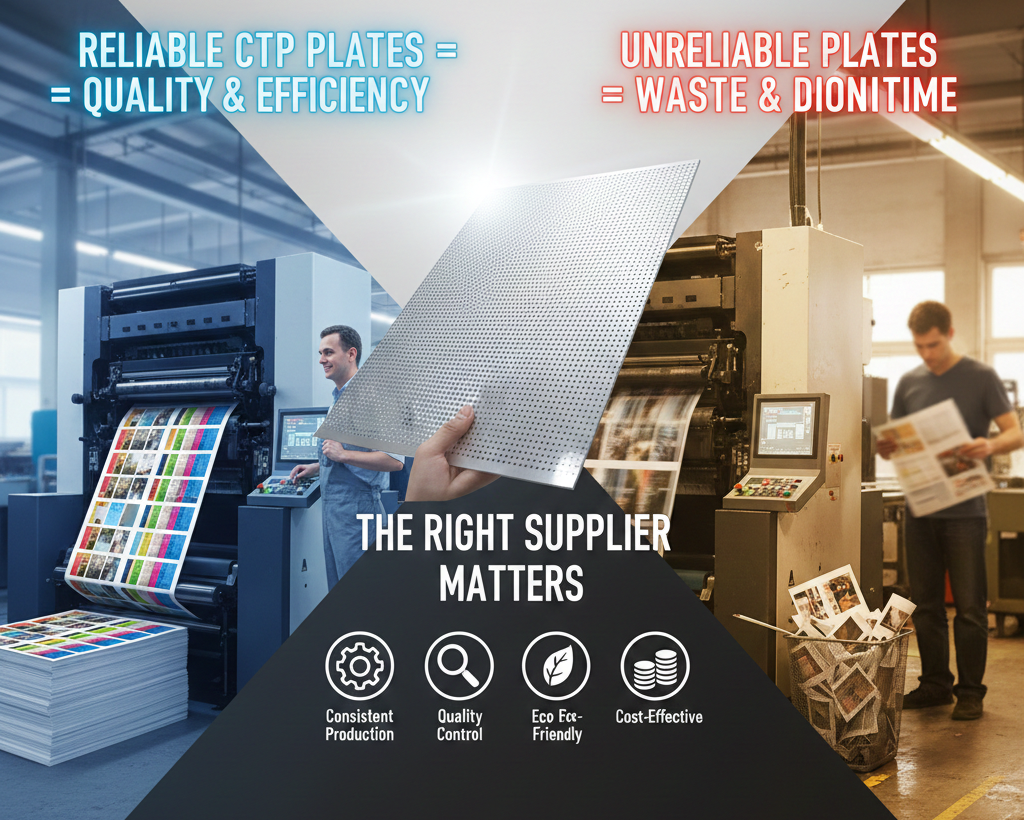
1. Why Choosing the Right CTP Plate Supplier Matters
CTP plates are not interchangeable commodities. Differences in aluminum quality, coating formulation, and production consistency can dramatically affect performance on press.
A qualified CTP plate supplier helps you achieve:
Stable dot reproduction
Consistent ink-water balance
Long plate run length
Lower remake and waste rates
Predictable, repeatable results
An unreliable supplier, on the other hand, leads to:
Plate failures
Color variation
Increased downtime
Hidden production costs
Choosing the right supplier is a strategic decision, not just a purchasing one.
2. Evaluate Plate Quality and Performance First
2.1 Aluminum Base Quality
High-quality CTP plates start with high-grade aluminum. Look for suppliers that offer:
Electrochemically grained aluminum
Uniform surface roughness
Excellent oxidation resistance
Poor aluminum quality results in:
Uneven ink transfer
Shortened plate life
Increased dot deformation
2.2 Coating Consistency
The coating layer determines exposure latitude and press durability.
A good supplier provides:
Stable sensitivity across batches
Clean development with minimal residue
Strong resistance to ink and fountain solution
Consistency from batch to batch is more important than extreme specifications.
3. Ensure Compatibility With Your CTP System
Not all plates perform equally on all CTP engines.
3.1 Thermal vs. UV-CTP Compatibility
Your supplier should clearly specify:
Laser wavelength (830 nm, 405 nm, etc.)
Recommended exposure energy
Developer type and parameters
A professional supplier supports compatibility with major CTP brands such as:
Heidelberg
Screen
Agfa
Kodak
Fuji
Amsky
Ecoo
3.2 Auto-Loader and Plate Handling
If your CTP system uses automatic loading, plate accuracy matters:
Exact plate dimensions
Clean edges
Flatness control
A good supplier understands these mechanical requirements.
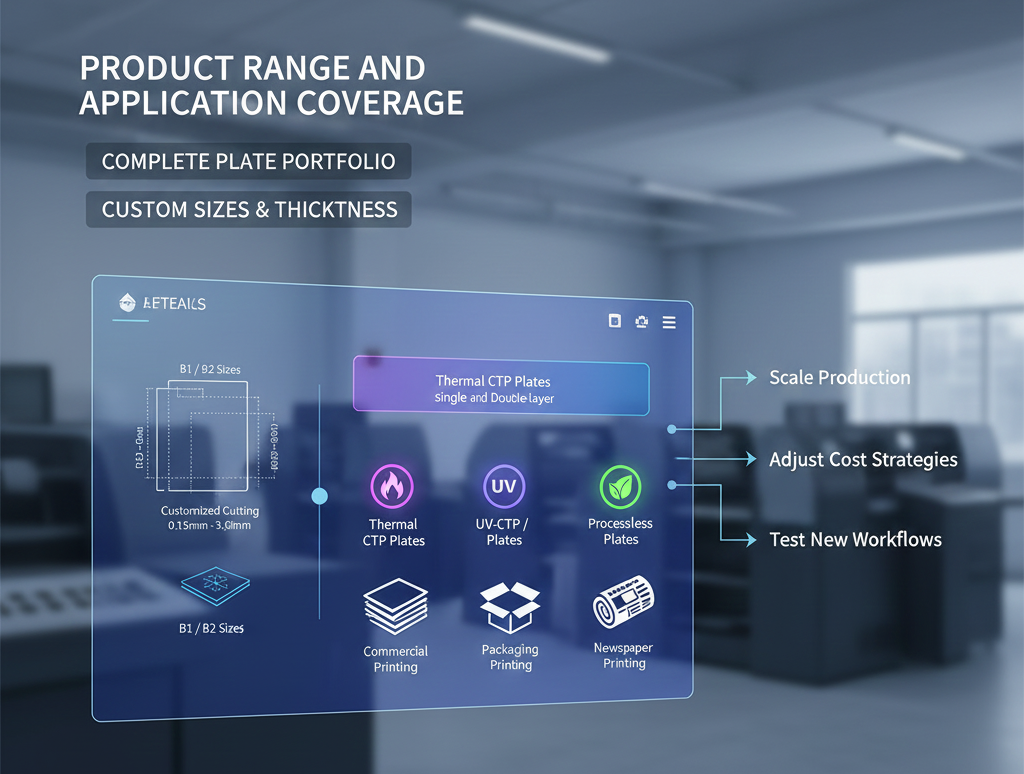
4. Product Range and Application Coverage
A reliable CTP plate supplier should offer more than just one plate type.
4.1 Complete Plate Portfolio
Look for suppliers who can provide:
Thermal CTP plates (single-layer and double-layer)
UV-CTP / CTCP plates
Processless thermal plates
Plates for commercial, packaging, and newspaper printing
This allows you to:
Scale production
Adjust cost strategies
Test new workflows
4.2 Custom Plate Sizes and Thickness
Professional suppliers support:
Standard B1 / B2 sizes
Customized cutting
Multiple thickness options (0.15 mm – 0.30 mm)
This flexibility reduces waste and improves press compatibility.
5. Technical Support and Problem-Solving Ability
Plate issues are inevitable—what matters is how your supplier responds.
5.1 Pre-Sales Technical Guidance
A professional supplier helps you:
Select the right plate type
Optimize exposure settings
Match developer chemistry
Adjust for press conditions
5.2 After-Sales Support
When issues arise, your supplier should:
Analyze plate samples
Review exposure and development data
Provide actionable solutions
Suppliers who only sell plates—but cannot troubleshoot—create long-term risk.
6. Quality Control and Production Stability
Consistency is critical for industrial printing.
6.1 Manufacturing Standards
Ask if the supplier follows:
ISO quality management systems
Strict raw material sourcing
Batch traceability
6.2 Batch-to-Batch Stability
High-volume printers cannot afford plate variations.
A reliable supplier ensures:
Identical coating behavior
Predictable press performance
Minimal recalibration between batches
7. Environmental and Regulatory Compliance
Sustainability is now a requirement, not a bonus.
7.1 Low-VOC and Eco-Friendly Plates
Modern suppliers should offer:
Low-VOC plate coatings
Processless plate options
Reduced chemical consumption
7.2 Compliance with Global Regulations
Ensure the supplier meets:
REACH
RoHS
Local wastewater and chemical standards
Eco-compliance reduces regulatory risk and improves workplace safety.
8. Pricing Transparency and Total Cost of Ownership
8.1 Avoid Focusing Only on Unit Price
Cheaper plates may lead to:
Shorter run length
Higher waste
More remakes
The true cost is cost per printed sheet, not cost per plate.
8.2 Look for Long-Term Cost Stability
A good supplier offers:
Stable pricing
Predictable supply
Clear MOQ policies
This helps you plan production and manage inventory efficiently.
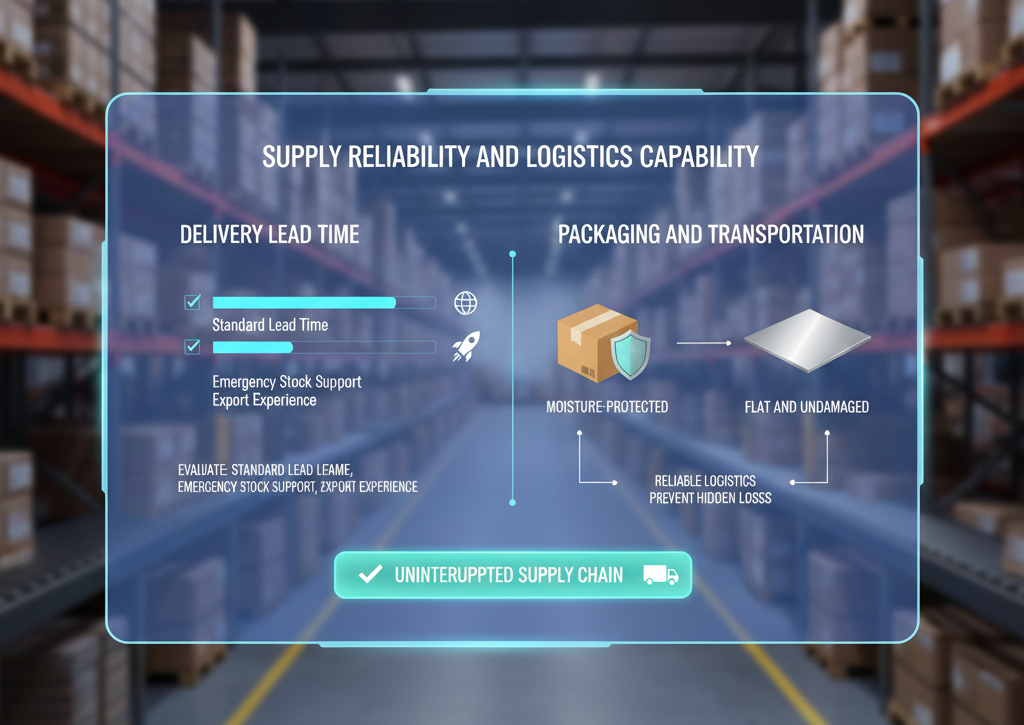
9. Supply Reliability and Logistics Capability
CTP plates are consumables—supply interruption is unacceptable.
9.1 Delivery Lead Time
Evaluate:
Standard lead time
Emergency stock support
Export experience
9.2 Packaging and Transportation
Plates must be:
Moisture-protected
Flat and undamaged
Securely packed
Reliable logistics prevent hidden losses.
10. Why Many Printers Choose Us as Their CTP Plate Supplier
We are a professional CTP Plate Supplier with years of industry experience, offering:
Thermal CTP plates (single-layer & double-layer)
UV-CTP / CTCP plates
Processless thermal plates
Custom sizes and thicknesses
Stable batch-to-batch performance
Technical support from prepress to press
Our plates are designed to deliver:
Sharp dots
Long run length
Clean development
Consistent ink-water balance
If you are looking for a reliable, cost-effective, and technically capable CTP plate supplier, we are ready to support your production.
Feel free to contact us for samples, technical consultation, or quotations.
Why Does a CTP Plate Scum on Press ? 9 Common Causes and Proven Solutions
Learn why CTP plates scum on press, the most common causes, troubleshooting methods, and practical solutions to improve offset printing quality and reduce downtime.

Which Offset Machine Is Best ? A Practical Guide for Commercial Printing
Which offset machine is best? Learn how to choose the right offset printing machine based on format, volume, cost, and CTP technology.
Where to Buy Thermal CTP Plates for Offset Printing | Best Supplier Guide & Expert Tips
Looking for reliable thermal CTP plates for offset printing? This expert guide explains how to choose a trustworthy supplier, compares global and Chinese manufacturers, and shares key quality criteria.