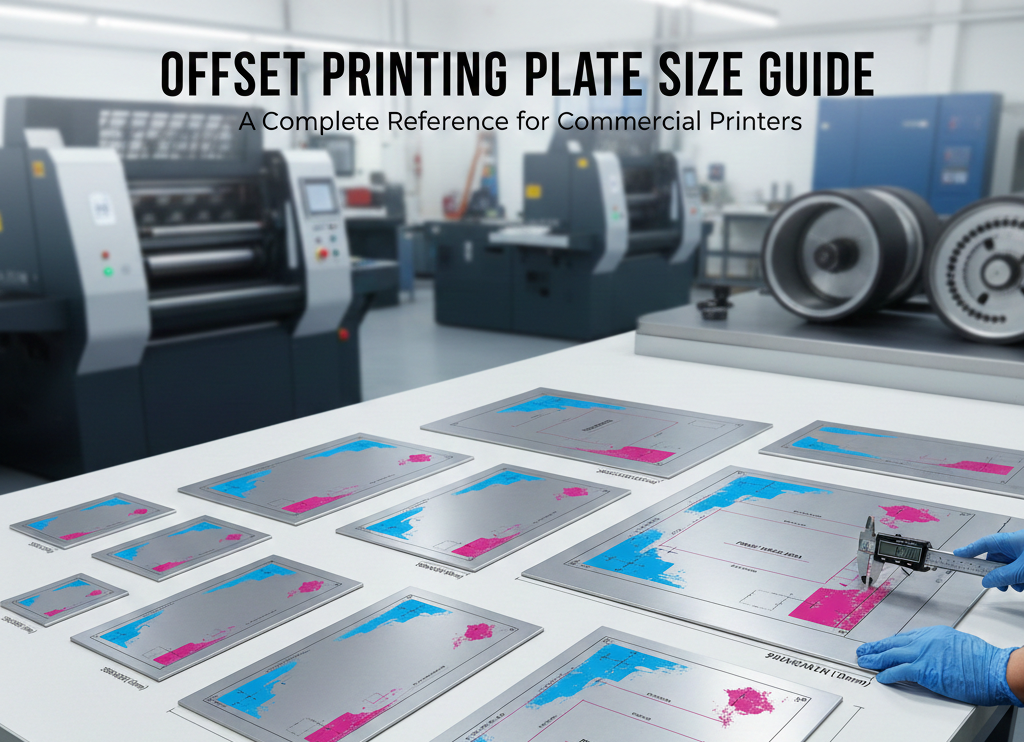
In offset printing, choosing the correct plate size is just as important as selecting the right plate material or CTP technology. A properly matched plate size improves workflow efficiency, reduces material waste, and ensures smooth feeding and registration on press. However, the world of offset printing plate sizes can be confusing—different regions use different standards, and each press model requires a specific plate dimension.
This guide provides a clear, practical, and professional breakdown of common offset plate sizes, how to select the right one, and what factors influence plate size requirements. Whether you run a commercial print shop, packaging operation, or newspaper press, this article serves as your go-to Offset Printing Plate Size Guide.
1. Why Offset Printing Plate Size Matters
Plate size impacts several aspects of your printing operation:
1.1 Print Area and Image Coverage
A larger plate allows:
Bigger sheet size
More imposition options
Higher productivity per sheet
Conversely, using an oversized plate wastes aluminum and chemical resources.
1.2 Press Compatibility
Every offset press has a fixed:
Maximum plate width
Maximum and minimum plate height
Specific clamp and gripper margin
Even a difference of 5–10 mm can cause feeding or tension issues.
1.3 Cost Efficiency
Choosing the correct plate size avoids:
Material waste
Recutting plates
Downtime during plate installation
1.4 Automation and CTP Workflow
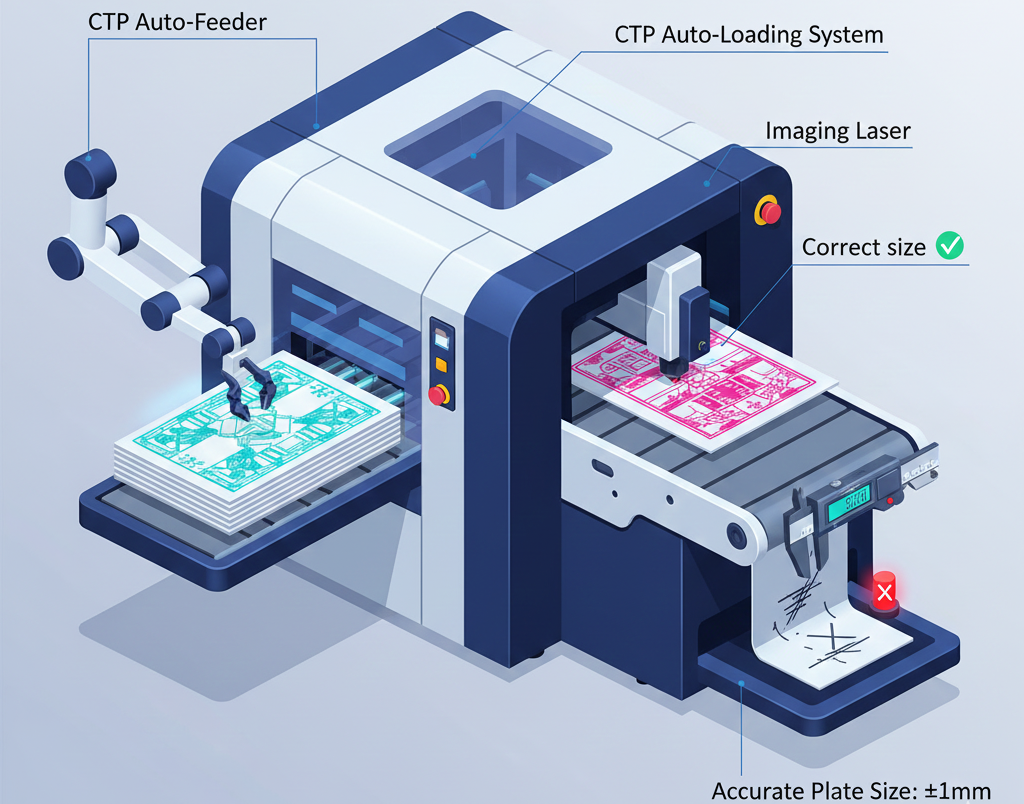
CTP auto-loading systems require precise plate dimensions.
Incorrect plate size may lead to:
Jams
Scratched plates
Misregistration
Thus, plate size is a foundational element of a stable prepress workflow.
2. Standard Offset Printing Plate Sizes (Quick Chart)
Below is an overview of commonly used plate sizes worldwide:
Table: Common Offset Plate Sizes by Press Format
| Press Format | Typical Plate Size (mm) | Typical Plate Size (inch) | Common Press Brands |
|---|---|---|---|
| Small Format (A3, A3+) | 330 × 488, 400 × 558 | 13 × 19, 16 × 22 | Ryobi, Hamada |
| B3 / 14″ Press | 420 × 560 | 16.5 × 22 | Ryobi, Komori Sprint |
| B2 / 20″ Press | 520 × 735, 510 × 620 | 20.5 × 29, 20 × 24 | Komori Lithrone 20, Heidelberg SM52 |
| A1 / 25″ Press | 650 × 920 | 25.6 × 36 | Mitsubishi 1F series |
| B1 / 40″ Press | 700 × 1030, 740 × 1030 | 28 × 40.5, 29 × 40.5 | Heidelberg CD102, Komori LS40 |
| Super B1 / Packaging Press | 800 × 1030, 900 × 1130 | 31.5 × 40.5, 35.4 × 44.5 | Manroland R700, KBA Rapida |
| Newspaper Press | 350 × 550, 400 × 570 | 13.7 × 21.6, 15.7 × 22.4 | Goss, Manroland, TKS |
Note: Plate sizes vary slightly by manufacturer, printing application, and plate clamp system.
3. Understanding Plate Dimensions (Width, Height, Gripper, Clamp)
To choose the correct plate, you need to understand the structure of the plate itself.
3.1 Plate Width
This is the dimension inserted side-to-side into the press. Width must match:
Cylindrical width
Side-guides
Automatic loading system
3.2 Plate Height
Runs around the plate cylinder circumference. Height determines:
Circumference
Print repeat length
3.3 Gripper Margin
The non-image area where the press grippers hold the plate.
Typical size: 8–15 mm.
3.4 Clamp Area
The top edge to be locked into the plate clamp.
Typical requirement: 10–18 mm.
4. How to Choose the Correct Offset Printing Plate Size
Below is a step-by-step process.
Step 1 — Identify Your Press Model
Most plate sizes are standardized by press model.
Examples:
Komori Lithrone 40 → 740 × 1030 mm
Heidelberg SM74 → 605 × 745 mm
The press manual will list approved plate dimensions.
Step 2 — Confirm Cylinder Circumference
Plate height = cylinder circumference + clamp margin + gripper margin.
Step 3 — Consider Imaging Area
Check if your print jobs require:
Full bleed
4-up or 8-up imposition
Large packaging layout
Step 4 — Check CTP System Compatibility
CTP systems have strict loading tolerances:
Plate width tolerance ±1 mm
Plate height tolerance ±1.5 mm
If using auto-loader, accuracy is even more critical.
Step 5 — Choose Plate Thickness
Common thickness:
0.15 mm (newspaper)
0.20 mm (small presses)
0.24 mm (commercial printing)
0.30 mm (high-speed packaging)
Thicker plates require different clamp pressure—ensure compatibility.
Step 6 — Select Plate Type (Thermal, UV-CTP, PS)
The plate material does not change size requirements, but thicker coatings may affect:
Bendability
Clamp tension
5. Regional Plate Size Standards (Asia, Europe, USA)
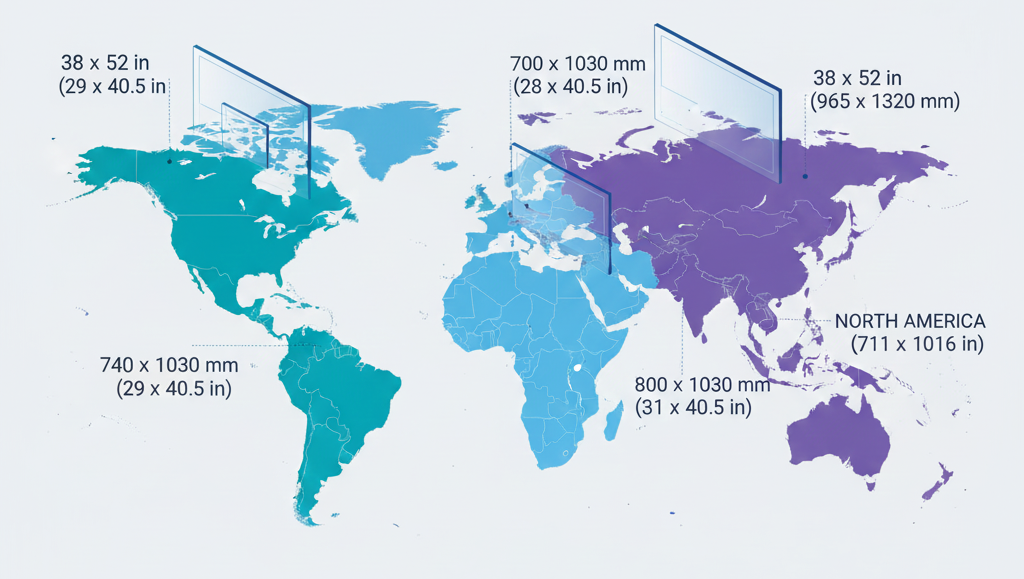
5.1 Asia (Japan, China, Korea)
Focuses on metric formats:
520 × 735 mm
740 × 1030 mm
Japanese presses dominate (Komori, Ryobi, Mitsubishi).
5.2 Europe
Uses both metric and inch-based variants:
Heidelberg 102 series: 700 × 1030 mm
KBA Rapida: 800 × 1030 mm
5.3 North America
Mixed sizes due to wide variety of presses:
28 × 40″
38 × 52″ (web offset)
Newspaper formats vary widely by publisher.
6. Offset Plate Sizes for Different Printing Applications
6.1 Commercial Printing
Common sizes:
B2 plates
B1 plates
Suitable for brochures, magazines, catalogs.
6.2 Packaging Printing
Often uses oversized plates:
800 × 1030 mm
900 × 1130 mm
Packaging layouts require space for:
Cutting lines
Bleed areas
Register marks
6.3 Newspaper Printing
Smaller and thinner plates:
0.15 mm thickness
350 × 550 mm or similar
Lightweight for quick changeovers.
7. Conclusion: Choosing the Right Plate Size Improves Quality & Efficiency
Offset plate sizing is not guesswork—it’s a strategic choice that impacts cost efficiency, print stability, press maintenance, and overall productivity.
By understanding:
Press format
Cylinder dimensions
Gripper and clamp requirements
Regional size standards
you can confidently select the ideal plate size for your printing workflow.
If you need help selecting plate sizes for thermal CTP, UV-CTP, or PS plates, our team can recommend the right dimensions and plate specifications based on your press model.
Why Does a CTP Plate Scum on Press ? 9 Common Causes and Proven Solutions
Learn why CTP plates scum on press, the most common causes, troubleshooting methods, and practical solutions to improve offset printing quality and reduce downtime.

Which Offset Machine Is Best ? A Practical Guide for Commercial Printing
Which offset machine is best? Learn how to choose the right offset printing machine based on format, volume, cost, and CTP technology.
Where to Buy Thermal CTP Plates for Offset Printing | Best Supplier Guide & Expert Tips
Looking for reliable thermal CTP plates for offset printing? This expert guide explains how to choose a trustworthy supplier, compares global and Chinese manufacturers, and shares key quality criteria.