Introduction
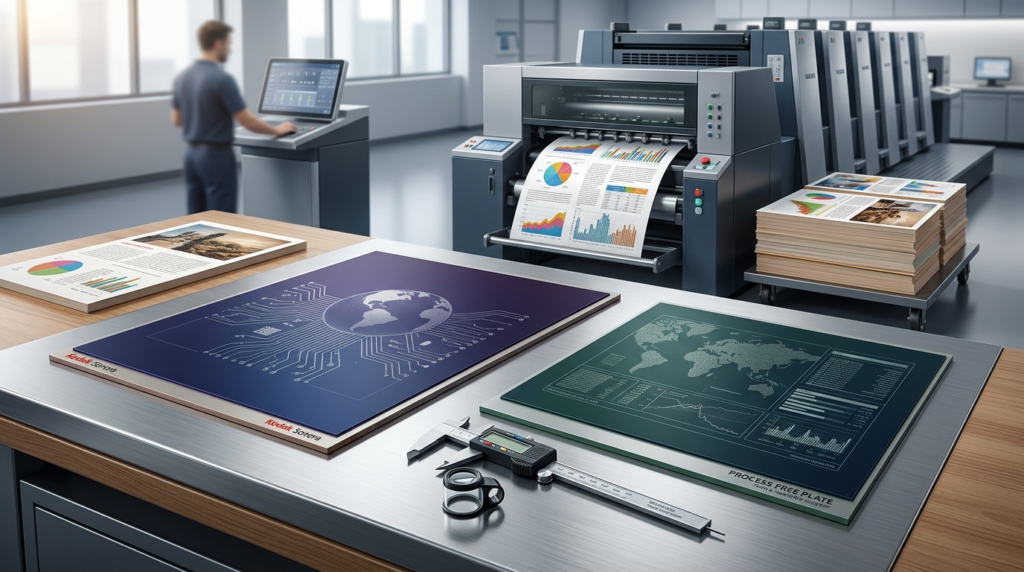
The global printing industry continues to move toward more sustainable and cost-efficient production methods. One of the most significant developments in recent years has been the rapid adoption of process free plate technology.
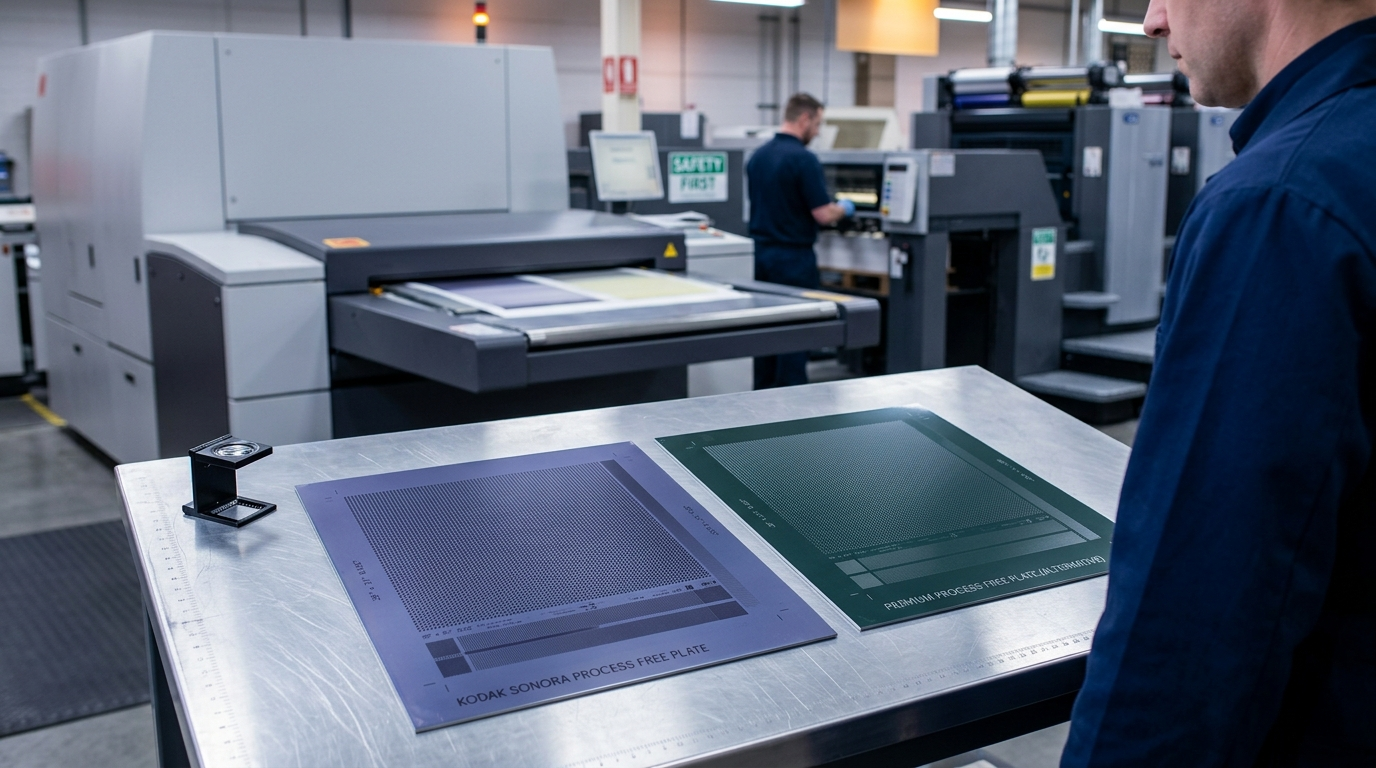
Among all process free solutions, Kodak Sonora Plates have become one of the most recognized products in the market. However, many printers are now evaluating whether premium-brand process free plates are worth the additional investment compared with other process free alternatives available from manufacturers around the world.
This guide compares Kodak Sonora and general process free plates across performance, cost, print quality, environmental impact, and long-term operating expenses to help printing companies make informed purchasing decisions.
What Are Kodak Sonora Plates?
Kodak Sonora Plates are process free offset printing plates designed to eliminate traditional plate processing steps.
Unlike conventional thermal plates, Sonora plates do not require:
- Plate developers
- Processing chemicals
- Gum solutions
- Water consumption during plate development
- Plate processing equipment
After imaging, the plate can be mounted directly onto the printing press, where the non-image layer is gradually removed during the initial press startup.
Key benefits include:
- Simplified workflow
- Reduced operating costs
- Lower environmental impact
- Faster production turnaround
- Reduced maintenance requirements
What Are Process Free Plates?
Process free plates refer to a broad category of offset printing plates that do not require traditional chemical processing before press use.
Today, many manufacturers produce process free plates, including:
- Global premium brands
- Regional plate manufacturers
- OEM suppliers
- Private-label printing plate producers
Although Kodak Sonora is one type of process free plate, the category itself includes numerous alternative products with varying performance levels and pricing structures.
Why Are Printers Comparing Kodak Sonora and Other Process Free Plates?
The main reason is simple:
Cost versus performance.
Many commercial printers want to achieve the environmental and operational advantages of process free technology while maintaining competitive production costs.
Questions commonly asked include:
- Is Kodak Sonora worth the premium price?
- Can alternative process free plates achieve similar results?
- What is the difference in run length?
- Are there quality differences?
- Which option offers the best return on investment?
Kodak Sonora vs Process Free Plates: Feature Comparison
| Feature | Kodak Sonora | Standard Process Free Plates |
|---|---|---|
| Processing Required | No | No |
| Developer Chemicals | None | None |
| Water Consumption | None | None |
| Processor Maintenance | None | None |
| Initial Investment | Low | Low |
| Brand Recognition | Very High | Varies |
| Plate Cost | Higher | Lower |
| Availability | Global | Depends on supplier |
| OEM Availability | No | Common |
| Custom Branding | No | Available |
From a workflow perspective, both solutions provide similar environmental and operational benefits.
The largest difference is often pricing and supplier flexibility.
Print Quality Comparison
Print quality remains one of the most important factors when selecting printing plates.
Kodak Sonora
Advantages include:
- Stable imaging performance
- Excellent dot reproduction
- Consistent plate coating quality
- Strong global technical support
Many large commercial printers rely on Sonora plates for demanding production environments where consistency is critical.
Alternative Process Free Plates
Modern process free plate manufacturers have significantly improved coating technologies over the past decade.
High-quality process free plates can now offer:
- Sharp image reproduction
- High-resolution printing
- Stable ink-water balance
- Reliable performance on modern presses
For most commercial printing applications, quality differences are often minimal when using plates from reputable suppliers.
Run Length Comparison
Run length is frequently used to evaluate plate durability.
Typical Run Length
| Plate Type | Typical Run Length |
|---|---|
| Kodak Sonora | 100,000 – 400,000 impressions |
| Quality Process Free Plate | 80,000 – 300,000 impressions |
Actual results depend on:
- Press conditions
- Ink systems
- Paper types
- Plate handling
- Imaging quality
For standard commercial printing jobs, both options generally provide sufficient durability.
Cost Comparison
Cost is where the biggest differences often appear.
Kodak Sonora
Benefits:
- Premium technology
- Strong brand reputation
- Proven performance
Challenges:
- Higher purchase price
- Premium-brand pricing structure
Alternative Process Free Plates
Benefits:
- Lower acquisition cost
- Competitive performance
- OEM and private-label options
- Flexible purchasing volumes
Challenges:
- Product quality varies by manufacturer
- Supplier evaluation becomes more important
For many distributors and medium-sized printing companies, lower-cost process free plates can provide substantial annual savings.
Environmental Impact
Both options support sustainability goals.
Environmental Benefits
By eliminating traditional processing, both plate types reduce:
- Chemical consumption
- Wastewater generation
- Energy usage
- Processor maintenance requirements
This helps printers:
- Reduce operating costs
- Meet environmental regulations
- Improve ESG performance
- Simplify plant operations
As sustainability becomes increasingly important, process free technologies are expected to continue gaining market share worldwide.
Which Option Is Better for Commercial Printers?
The answer depends on production requirements.
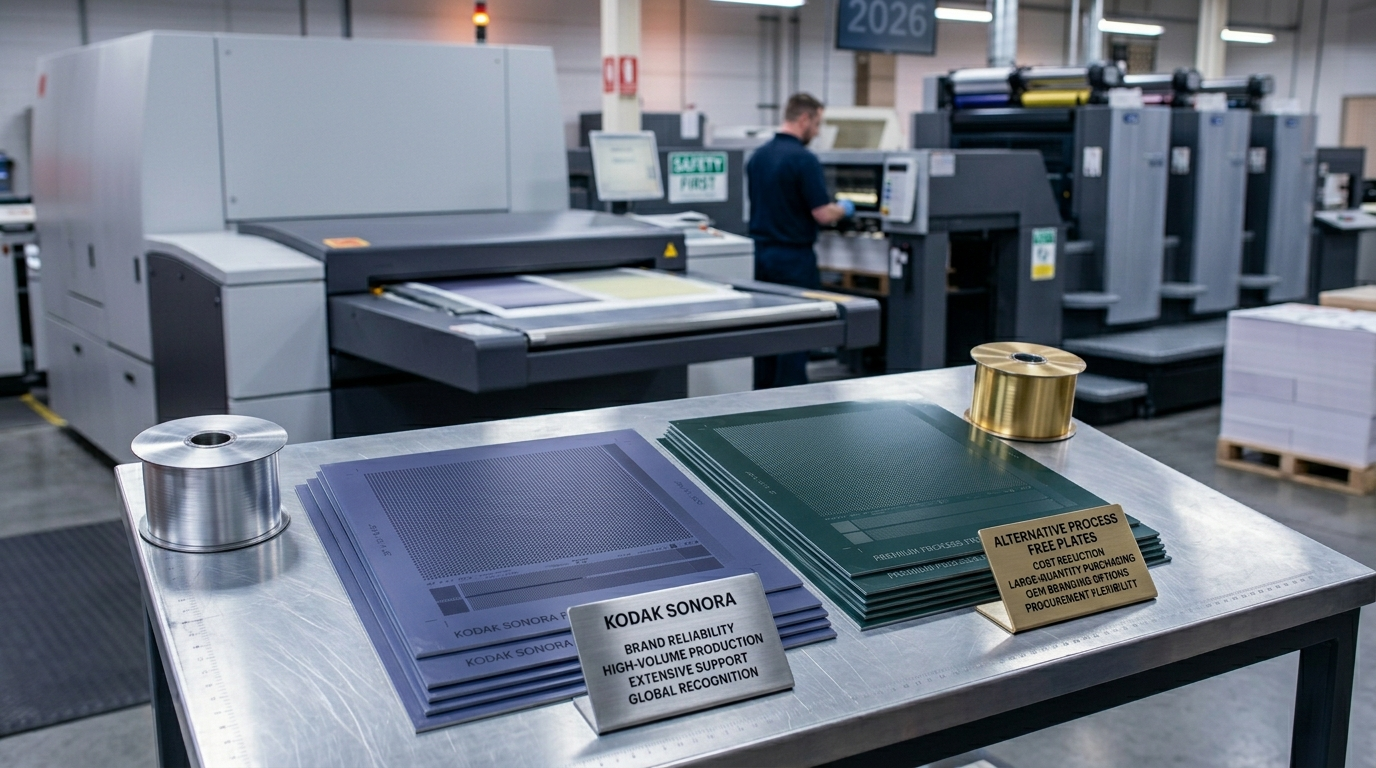
Kodak Sonora May Be Better If:
- You prioritize brand reliability
- You operate high-volume production facilities
- You require extensive technical support
- You prefer globally recognized solutions
Alternative Process Free Plates May Be Better If:
- Cost reduction is a priority
- You purchase in large quantities
- You need OEM branding options
- You operate regional distribution businesses
- You seek higher procurement flexibility
Many printing companies find that modern process free plates deliver comparable results while reducing annual consumable expenses.
How to Evaluate a Process Free Plate Supplier
Before switching suppliers, printers should evaluate:
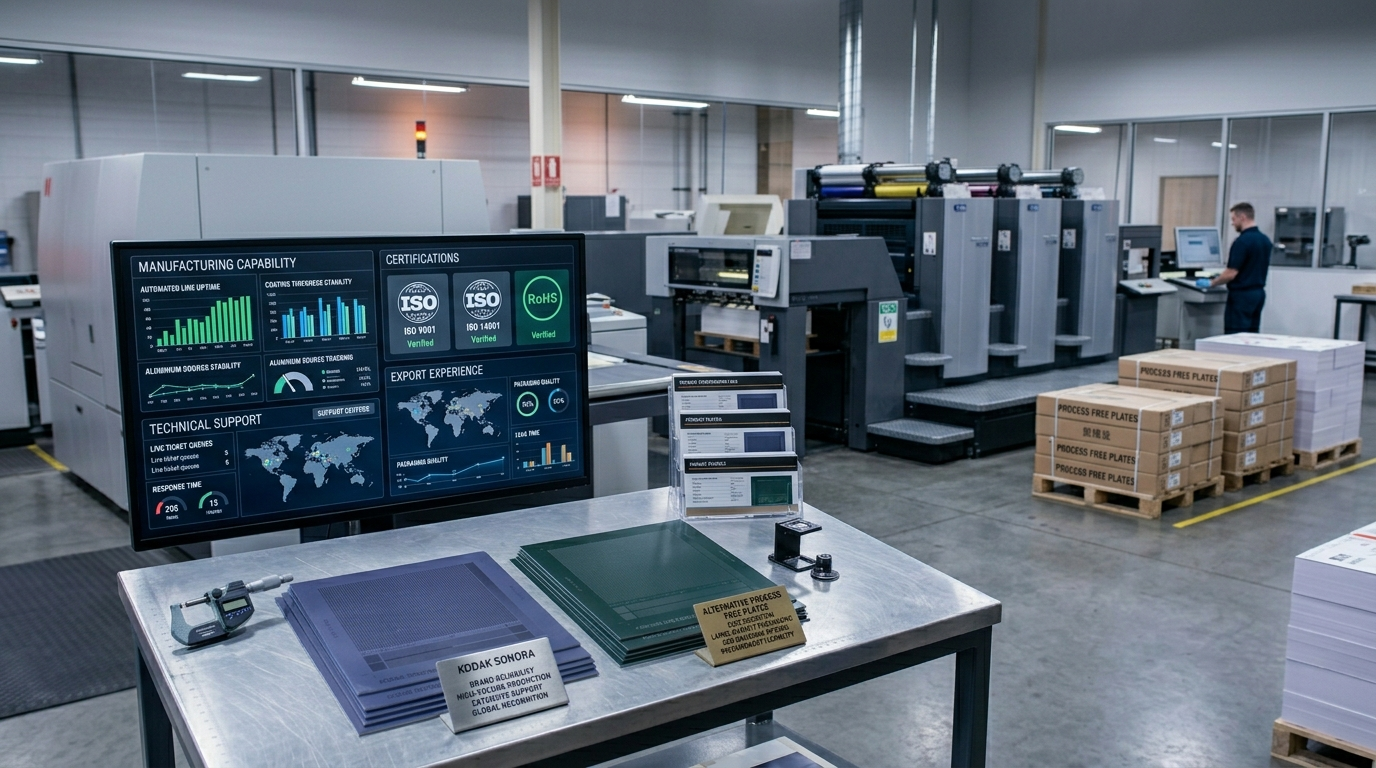
Manufacturing Capability
Look for suppliers with:
- Automated production lines
- Advanced coating technology
- Stable aluminum sourcing
- Consistent quality control systems
Certifications
Recommended certifications include:
- ISO 9001
- ISO 14001
- RoHS Compliance
Technical Support
A reliable supplier should provide:
- Imaging parameter recommendations
- Plate testing assistance
- Press compatibility guidance
- Troubleshooting support
Export Experience
International buyers should consider:
- Packaging quality
- Shipping experience
- Lead times
- Documentation support
Frequently Asked Questions
Is Kodak Sonora a process free plate?
Yes. Kodak Sonora is one of the most widely recognized process free plate technologies in the printing industry.
Are all process free plates the same?
No. Different manufacturers use different coating technologies, resulting in variations in run length, imaging performance, and durability.
Why are alternative process free plates often cheaper?
Many manufacturers operate with lower production costs and offer factory-direct pricing without premium brand markups.
Can process free plates replace thermal plates?
In many commercial printing environments, process free plates can successfully replace conventional thermal plates while simplifying production workflows.
Which plate offers better ROI?
ROI depends on plate pricing, print volume, waste reduction, and operational efficiency. For many printing businesses, high-quality process free plates provide an attractive balance between performance and cost.
Conclusion
The comparison between Kodak Sonora and other process free plates is no longer simply about technology. Today, both solutions can deliver substantial environmental and operational benefits by eliminating traditional plate processing.
Kodak Sonora remains a benchmark product with strong market recognition and proven performance. However, advancements in process free plate manufacturing have created competitive alternatives that offer excellent print quality, reliable run lengths, and significantly lower procurement costs.
For printing companies focused on maximizing profitability while maintaining print performance, evaluating high-quality process free plate suppliers may reveal opportunities for meaningful long-term savings without compromising production efficiency.
Why Does a CTP Plate Scum on Press ? 9 Common Causes and Proven Solutions
Learn why CTP plates scum on press, the most common causes, troubleshooting methods, and practical solutions to improve offset printing quality and reduce downtime.
Which Offset Machine Is Best ? A Practical Guide for Commercial Printing
Which offset machine is best? Learn how to choose the right offset printing machine based on format, volume, cost, and CTP technology.
Where to Buy Thermal CTP Plates for Offset Printing | Best Supplier Guide & Expert Tips
Looking for reliable thermal CTP plates for offset printing? This expert guide explains how to choose a trustworthy supplier, compares global and Chinese manufacturers, and shares key quality criteria.