Introduction
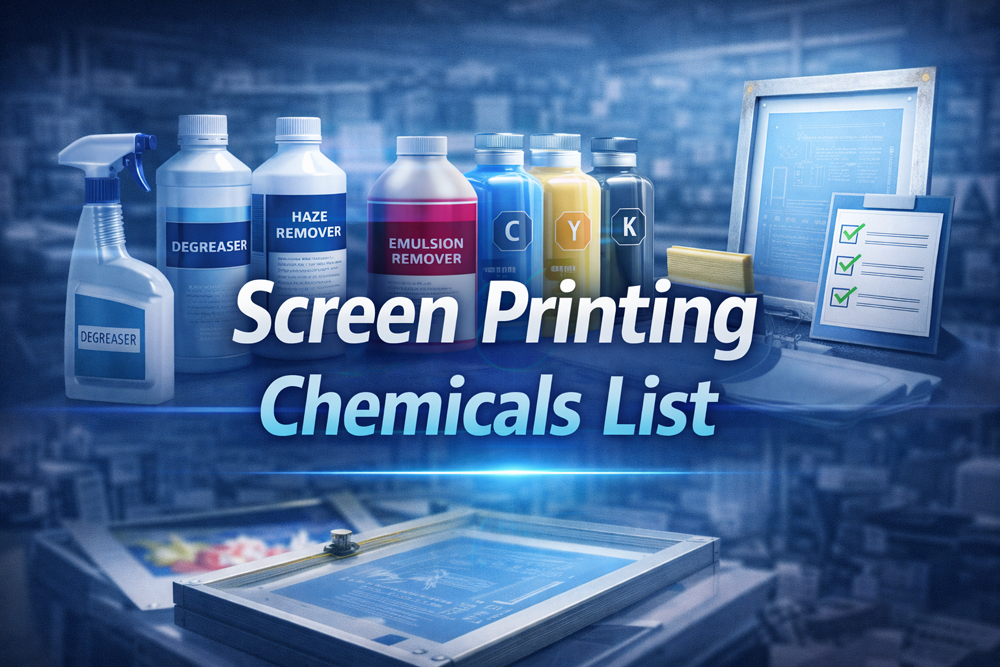
Screen printing is a versatile and widely used printing method in textile, graphic, packaging, and industrial applications. While screens, inks, and substrates are essential, screen printing chemicals play an equally critical role in ensuring print quality, production efficiency, and process stability.
For beginners and experienced printers alike, understanding the screen printing chemicals list is key to optimizing workflows, reducing defects, and extending screen life.
In this article, we provide a comprehensive and practical overview of screen printing chemicals, explaining their functions, types, and proper usage in professional screen printing operations.
Why Screen Printing Chemicals Matter
Screen printing is a chemical-assisted process. Chemicals are used at every stage, including:
>Screen preparation
>Image exposure and development
>Printing and curing
>Screen reclaiming and cleaning
Using the right chemicals ensures:
>Sharp image reproduction
>Consistent ink transfer
>Longer screen durability
>Reduced downtime and waste
Complete Screen Printing Chemicals List
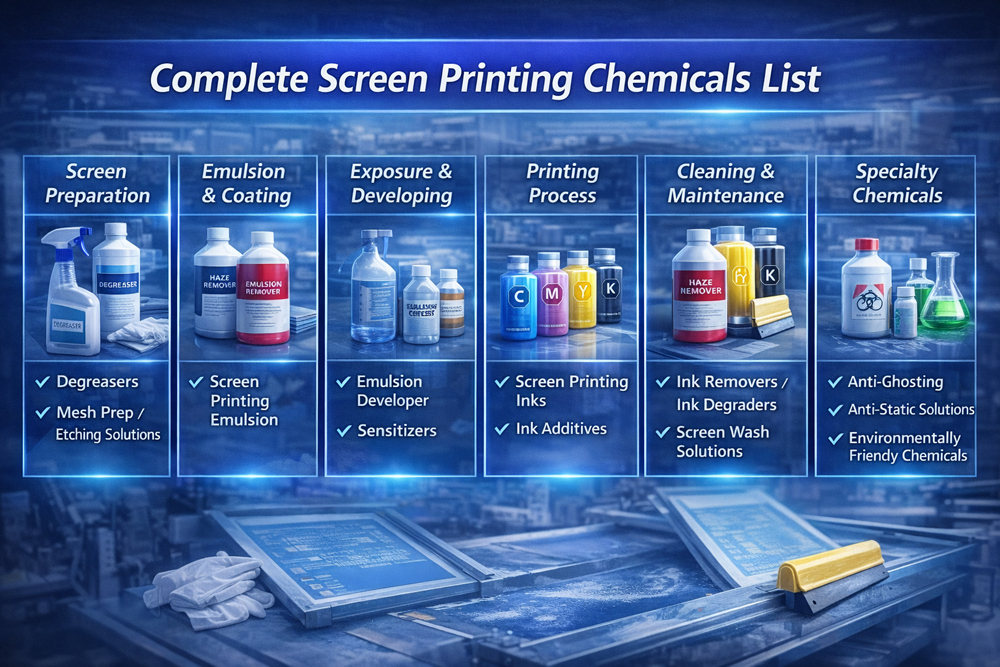
Below is a structured screen printing chemicals list, categorized by their application in the production process.
1. Screen Preparation Chemicals
1.1 Degreasers
Function:
Remove oil, dust, and residue from mesh before coating emulsion.
Benefits:
>Improves emulsion adhesion
>Reduces pinholes
>Ensures uniform coating
Degreasers are usually water-based and applied before emulsion coating.
1.2 Mesh Prep / Etching Solutions
Function:
Microscopically roughen mesh surface to enhance emulsion bonding.
Application:
Used mainly in high-resolution or long-run printing environments.
2. Emulsion and Coating Chemicals
2.1 Screen Printing Emulsion
Types:
>Diazo emulsions
>Dual-cure emulsions
>Pure photopolymer emulsions
Function:
Form the stencil image on the screen.
Each emulsion type offers different exposure speed, durability, and resolution.
2.2 Sensitizers
Function:
Added to certain emulsions to make them light-sensitive.
Note:
Once sensitized, emulsions have a limited pot life and must be used promptly.
3. Exposure and Developing Chemicals
3.1 Emulsion Developer
Function:
Wash out unexposed emulsion after exposure to reveal the image.
Features:
>Gentle to mesh
>Ensures clean stencil edges
>Minimizes undercutting
In many cases, clean water alone is sufficient, but developers help with difficult images.
3.2 Hardening Agents (Optional)
Function:
Increase stencil resistance to aggressive inks and long print runs.
Often used in industrial or solvent-based ink applications.
4. Printing Process Chemicals
4.1 Screen Printing Inks
Although inks are a category of their own, they are chemically engineered products.
Common types include:
>Plastisol inks
>Water-based inks
>Solvent-based inks
>UV-curable inks
Each ink type requires compatible chemicals for cleaning and reclaiming.
4.2 Ink Additives
Function:
Modify ink properties such as:
>Drying speed
>Viscosity
>Flexibility
>Adhesion
Examples include retarders, thinners, and catalysts.
5. Cleaning and Maintenance Chemicals
5.1 Ink Removers / Ink Degraders
Function:
Remove ink residue from screens after printing.
Features:
>Fast-acting
>Compatible with different ink systems
>Prevents ink ghosting
5.2 Screen Wash Solutions
Used for routine cleaning during press stops or color changes.
6. Screen Reclaiming Chemicals
6.1 Emulsion Removers (Stencil Removers)
Function:
Dissolve hardened emulsion after printing.
Essential for reusing screens efficiently.
6.2 Haze Removers / Ghost Image Removers
Function:
Eliminate ink stains and image ghosts left in the mesh.
These chemicals help restore mesh clarity and prolong screen life.
7. Specialty Screen Printing Chemicals
7.1 Anti-Ghosting Chemicals
Used to prevent residual images from reappearing during future print runs.
7.2 Anti-Static Solutions
Commonly used in textile and plastic printing to reduce dust attraction.
7.3 Environmentally Friendly Chemicals
Modern printing increasingly uses:
>Low-VOC cleaners
>Water-based reclaiming solutions
>Biodegradable degreasers
These support safer working environments and sustainability goals.
Safety and Handling Considerations
Proper handling of screen printing chemicals is critical:
>Use gloves and eye protection
>Ensure adequate ventilation
>Follow manufacturer dilution instructions
>Store chemicals in labeled containers
Safe handling improves operator safety and chemical performance.
How to Choose the Right Screen Printing Chemicals
When selecting chemicals, consider:
>Ink type (water-based, solvent, UV)
>Mesh count and stencil thickness
>Print run length
>Environmental regulations
>Compatibility with existing workflow
Using matched chemical systems often produces the best results.
Common Problems Caused by Incorrect Chemicals
Using unsuitable or low-quality chemicals may lead to:
>Poor stencil adhesion
>Image breakdown during printing
>Excessive screen damage
>Increased waste and downtime
A professional chemical solution directly improves production efficiency.
Future Trends in Screen Printing Chemicals
The screen printing industry is moving toward:
>Safer, eco-friendly formulations
>Faster-acting reclaiming chemicals
>Multi-purpose chemical solutions
>Reduced water and energy consumption
These innovations help printers stay competitive and compliant.
Conclusion: Build a Reliable Chemical System for Screen Printing
A complete and well-matched screen printing chemicals list is essential for high-quality, efficient, and repeatable screen printing. From screen preparation to reclaiming, each chemical plays a vital role in the final print result.
👉 We are also a professional manufacturer and supplier of printing chemicals, offering reliable solutions for screen printing, offset printing, and industrial printing applications.
If you are looking for stable quality, consistent performance, and professional technical support, feel free to contact us. We are ready to support your printing production with the right chemical solutions.
Why Does a CTP Plate Scum on Press ? 9 Common Causes and Proven Solutions
Learn why CTP plates scum on press, the most common causes, troubleshooting methods, and practical solutions to improve offset printing quality and reduce downtime.

Which Offset Machine Is Best ? A Practical Guide for Commercial Printing
Which offset machine is best? Learn how to choose the right offset printing machine based on format, volume, cost, and CTP technology.
Where to Buy Thermal CTP Plates for Offset Printing | Best Supplier Guide & Expert Tips
Looking for reliable thermal CTP plates for offset printing? This expert guide explains how to choose a trustworthy supplier, compares global and Chinese manufacturers, and shares key quality criteria.