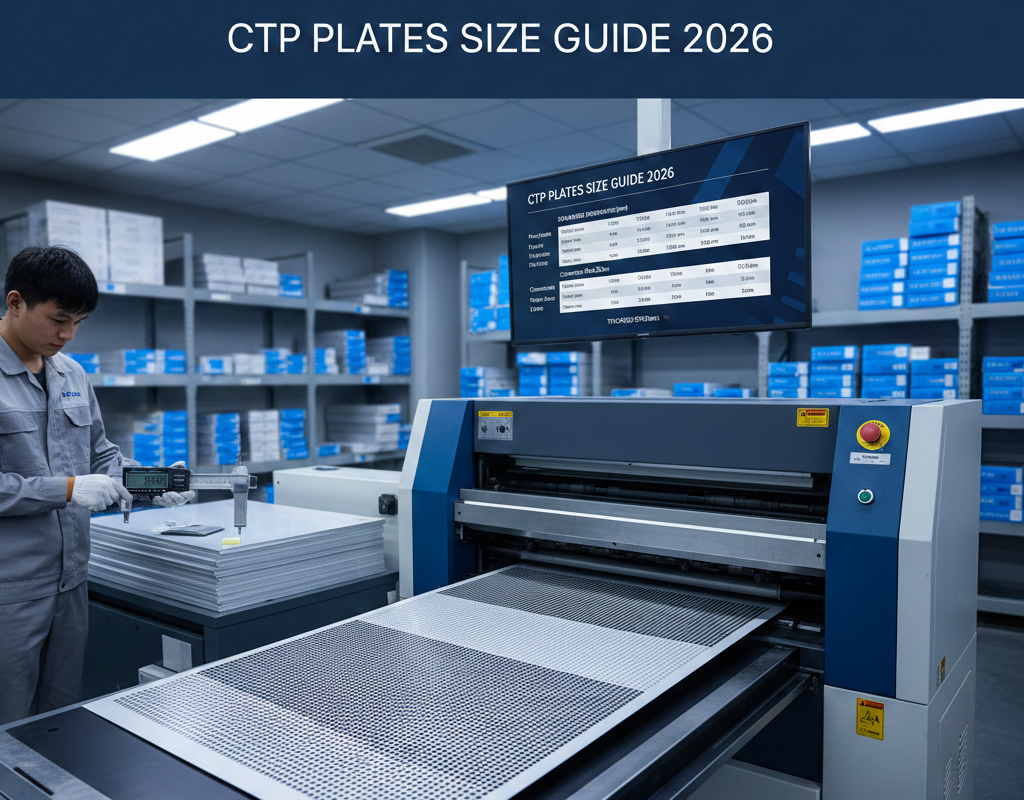
In the offset printing industry, one of the most frequently searched yet misunderstood topics is CTP Plates Size. Whether you operate a commercial print shop, newspaper press, packaging plant, or label factory, choosing the correct CTP plate size directly affects production efficiency, cost control, and print quality.
This comprehensive guide will explain:
Standard CTP plate sizes worldwide
How plate size relates to press format
Differences between thermal and UV plate sizing
Thickness and tolerance standards
Custom plate size solutions
Cost optimization strategies
If you are sourcing CTP plates internationally, this guide will help you avoid costly mistakes.
1. What Does “CTP Plates Size” Actually Mean?
When professionals refer to CTP Plates Size, they are usually talking about three key dimensions:
Length (mm)
Width (mm)
Thickness (mm)
Unlike paper size, CTP plate dimensions must match:
Printing press cylinder size
Plate clamp system
Image area requirement
Press manufacturer specifications
Even a 1 mm mismatch can cause mounting failure or registration problems.
2. Most Common CTP Plates Size Standards (Global Market)
Below are the most commonly used plate sizes in commercial printing:
| Press Format | Common Plate Size (mm) | Typical Use |
|---|---|---|
| 440 × 370 | Small offset press | Quick print shops |
| 510 × 400 | Small format commercial | |
| 745 × 605 | Medium commercial printing | |
| 1030 × 790 | Large format printing | |
| 1050 × 795 | Heidelberg 102 press | |
| 1160 × 940 | Packaging printing | |
| 1300 × 1030 | Large sheetfed press |
These sizes are widely used with presses from:
Heidelberg
Komori
Manroland
KBA (Koenig & Bauer)
Each manufacturer has slightly different clamp margins, so always confirm the exact required plate dimension before bulk ordering.
3. CTP Plate Thickness: The Hidden Factor in Size Selection
When discussing CTP Plates Size, thickness is equally critical.
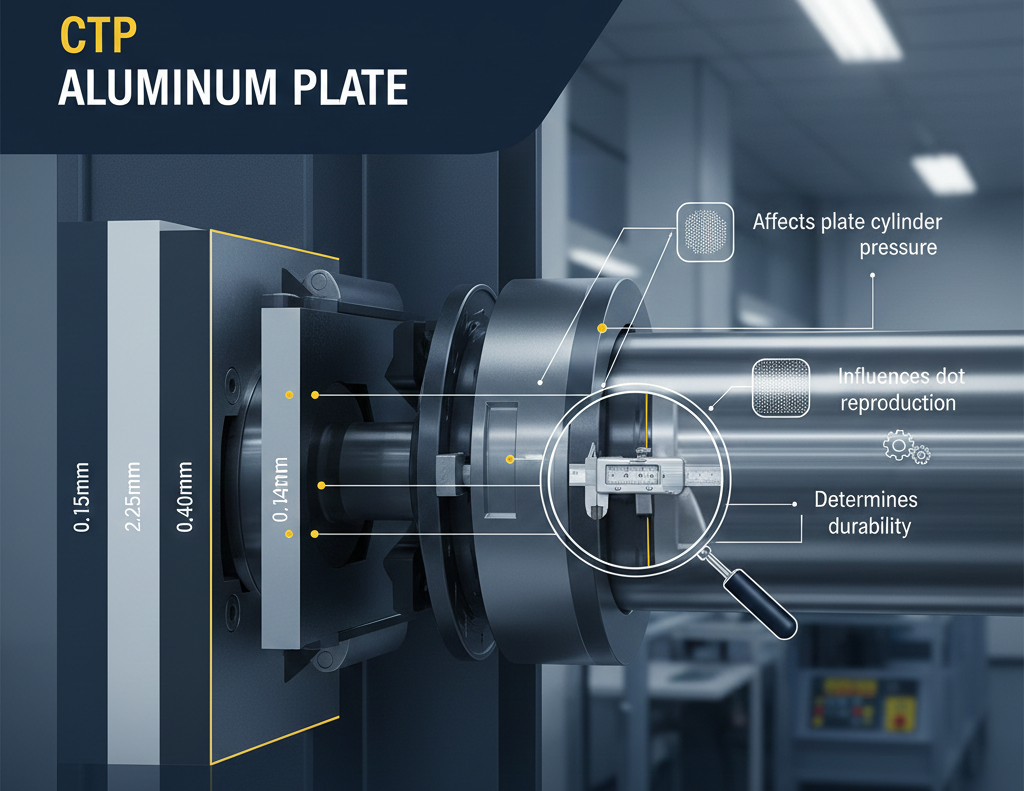
Common thickness options:
0.15 mm – Small presses
0.20 mm – Standard commercial
0.25 mm – Large format
0.30 mm – Packaging / heavy-duty
0.40 mm – UV and carton printing
Why Thickness Matters
Affects plate cylinder pressure
Influences dot reproduction
Determines durability
Impacts ink transfer stability
Using incorrect thickness can result in:
Ghosting
Premature plate wear
Registration instability
Mechanical damage to clamps
Professional advice: Always match thickness to press manufacturer recommendations.
4. Thermal vs UV CTP Plates Size Differences
Plate size standards remain similar, but there are operational differences:
Thermal CTP Plates
Stable dimension control
Suitable for high-resolution commercial work
Standard thickness range: 0.15–0.30 mm
Compatible with thermal platesetters
UV CTP Plates
Higher chemical resistance
Slightly more rigid
Often thicker (0.25–0.40 mm)
Common in packaging and label printing
Plate size itself does not change dramatically, but tolerance requirements are stricter in UV applications.
5. Plate Size Tolerance Standards
Professional buyers should understand manufacturing tolerance.
Typical tolerance range:
Length/Width: ±0.15 mm
Thickness: ±0.005 mm
High-quality manufacturers maintain tighter tolerances to ensure:
Accurate registration
Faster plate mounting
Reduced waste sheets
Better ink balance
Lower-grade suppliers often fail in thickness consistency, causing instability during long runs.
6. How to Choose the Right CTP Plates Size
Follow this 5-step professional checklist:
Step 1: Confirm Press Model
Identify:
Brand
Model
Maximum printing format
Clamp type
Step 2: Verify Image Area
Your printable area should be slightly smaller than plate dimension.
Step 3: Confirm Thickness Requirement
Check press manual.
Step 4: Consider Production Volume
High-volume production may require thicker plates.
Step 5: Ask for Sample Testing
Always test before container shipment.
7. Custom CTP Plates Size: When Standard Isn’t Enough
Many printing factories require custom plate sizes due to:
Modified presses
Specialized packaging formats
Regional machine models
Newspaper rotary systems
Professional manufacturers can:
Cut plates to customized dimensions
Adjust corner radius
Punch holes according to press type
Provide OEM packaging
Custom cutting precision is essential — laser-controlled cutting ensures dimensional stability.
8. Cost Impact of CTP Plates Size
Many buyers overlook how plate size affects cost structure.
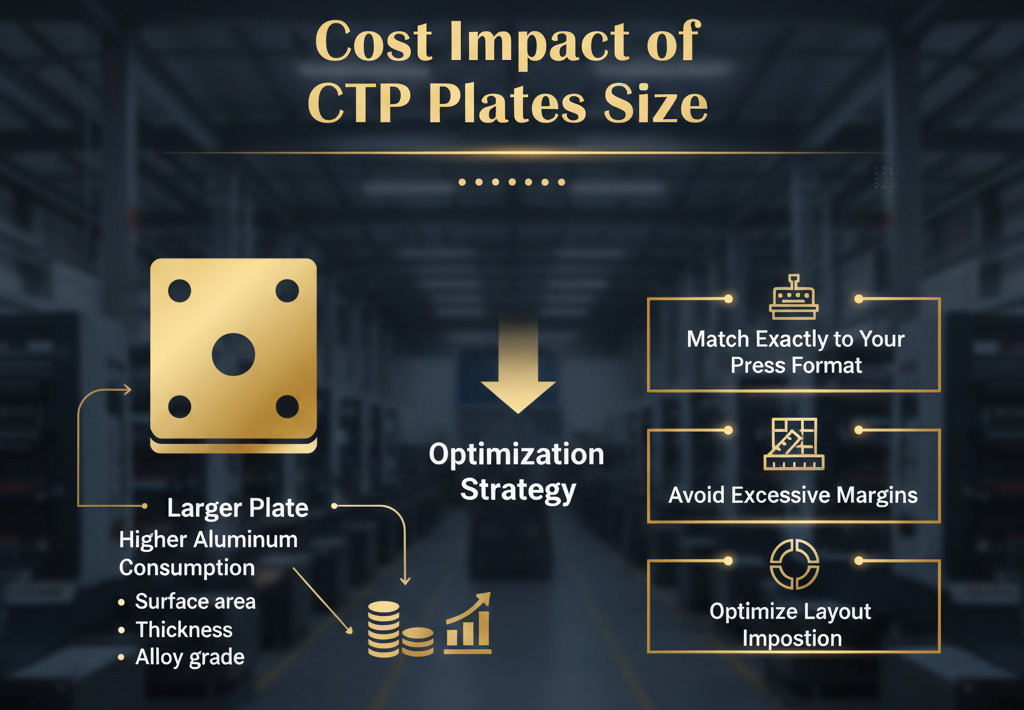
Larger Plate = Higher Aluminum Consumption
Raw material cost increases with:
Surface area
Thickness
Alloy grade
Optimization Strategy
Instead of choosing oversized plates:
Match exactly to your press format
Avoid excessive margins
Optimize layout imposition
Even 10 mm oversize per plate can significantly increase annual cost in high-volume production.
9. Regional Differences in CTP Plates Size Demand
Europe
Common sizes:
1030 × 790
1050 × 795
745 × 605
Southeast Asia
More demand for:
510 × 400
745 × 605
Middle East & Africa
Growing demand for:
1030 × 790
1160 × 940
Understanding regional market size trends helps distributors plan inventory efficiently.
10. Frequently Asked Questions (FAQ)
Q1: Can I use a slightly smaller CTP plate?
No. Plate must fit clamp exactly.
Q2: Can thickness compensate for size difference?
No. Size and thickness are independent factors.
Q3: Do process-free plates have different sizes?
No. Size standards remain the same.
Q4: Can manufacturers print logos on the plate back?
Yes, OEM service is common for bulk orders.
We Are Professional CTP Plates Manufacturer
At CN CTP Plates, we specialize in:
Thermal CTP plates
UV CTP plates
Process-free plates
Custom CTP Plates Size cutting
OEM & bulk supply
If you are looking for a reliable CTP Plates supplier, contact us today for samples and competitive quotations.
We support global shipping and long-term distributor cooperation.
Why Does a CTP Plate Scum on Press ? 9 Common Causes and Proven Solutions
Learn why CTP plates scum on press, the most common causes, troubleshooting methods, and practical solutions to improve offset printing quality and reduce downtime.

Which Offset Machine Is Best ? A Practical Guide for Commercial Printing
Which offset machine is best? Learn how to choose the right offset printing machine based on format, volume, cost, and CTP technology.
Where to Buy Thermal CTP Plates for Offset Printing | Best Supplier Guide & Expert Tips
Looking for reliable thermal CTP plates for offset printing? This expert guide explains how to choose a trustworthy supplier, compares global and Chinese manufacturers, and shares key quality criteria.