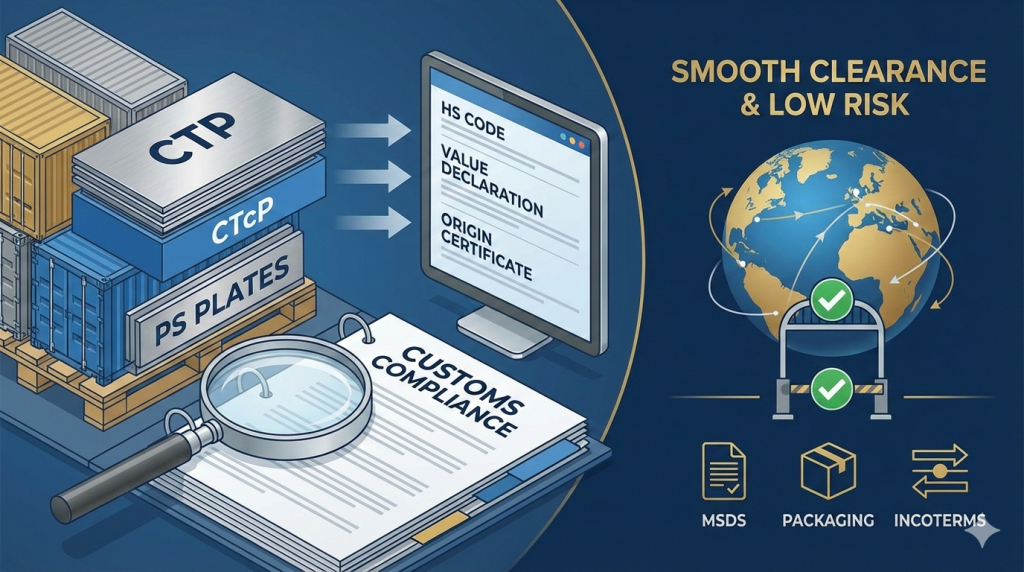
Introduction
When buying printing plates from overseas suppliers, most buyers are not looking for a full customs manual. What they really care about is simple:
Will my shipment clear customs smoothly?
Will there be unexpected taxes or delays?
Are there compliance risks that could stop the plates at the port?
Based on real export experience, this article focuses only on the key customs and import issues that printing plate buyers truly need to pay attention to—nothing more, nothing less.
1. Correct Product Description (This Causes Most Delays)
For printing plates, product description on the invoice is critical.
What Buyers Should Ensure
The product description should clearly state:
Plate type: CTP plate / CTcP plate / PS plate
Usage: Offset printing
Material: Aluminum printing plate
Coating type if needed: thermal / UV / photosensitive
What to Avoid
Vague terms like “printing materials” or “printing accessories”
Mixed descriptions for different plate types in one line
Why it matters:
Unclear descriptions often trigger customs inspections or document rejections.
2. HS Code Confirmation (Before Shipment, Not After)
Printing plates usually fall under printing-related HS codes, but codes may differ by country and plate technology.
Buyer Checklist
Confirm HS code with the supplier
Double-check with local customs broker
Keep HS code consistent across:
Invoice
Packing list
Customs declaration
Why it matters:
Wrong HS codes can mean:
Higher import duty
Delayed clearance
Reclassification penalties
3. Declared Value Must Match the Real Transaction
Many buyers try to lower declared value to reduce tax—but this is risky.
Best Practice
Declare a reasonable commercial value
Ensure invoice value matches:
Contract
Payment record
Why it matters:
Customs can compare declared value with market references. If flagged, clearance stops.
4. Country of Origin (Especially for Aluminum Plates)
Printing plates are aluminum-based products, and country of origin matters in many regions.
Buyers Should Confirm
Country of origin stated clearly on invoice
Whether a Certificate of Origin (CO) is required
Why it matters:
Some countries apply:
Different duty rates
Anti-dumping rules
Special aluminum-related controls
5. Chemical & Coating Compliance (Often Overlooked)
CTP and PS plates are chemically coated products, not plain aluminum sheets.
Documents Buyers Should Ask For
MSDS (Material Safety Data Sheet)
Non-hazardous declaration (if applicable)
Why it matters:
Customs or carriers may request this information, especially for:
Air shipments
First-time imports
Missing documents can cause shipment holds.
6. Packaging Method (Customs & Damage Risk)
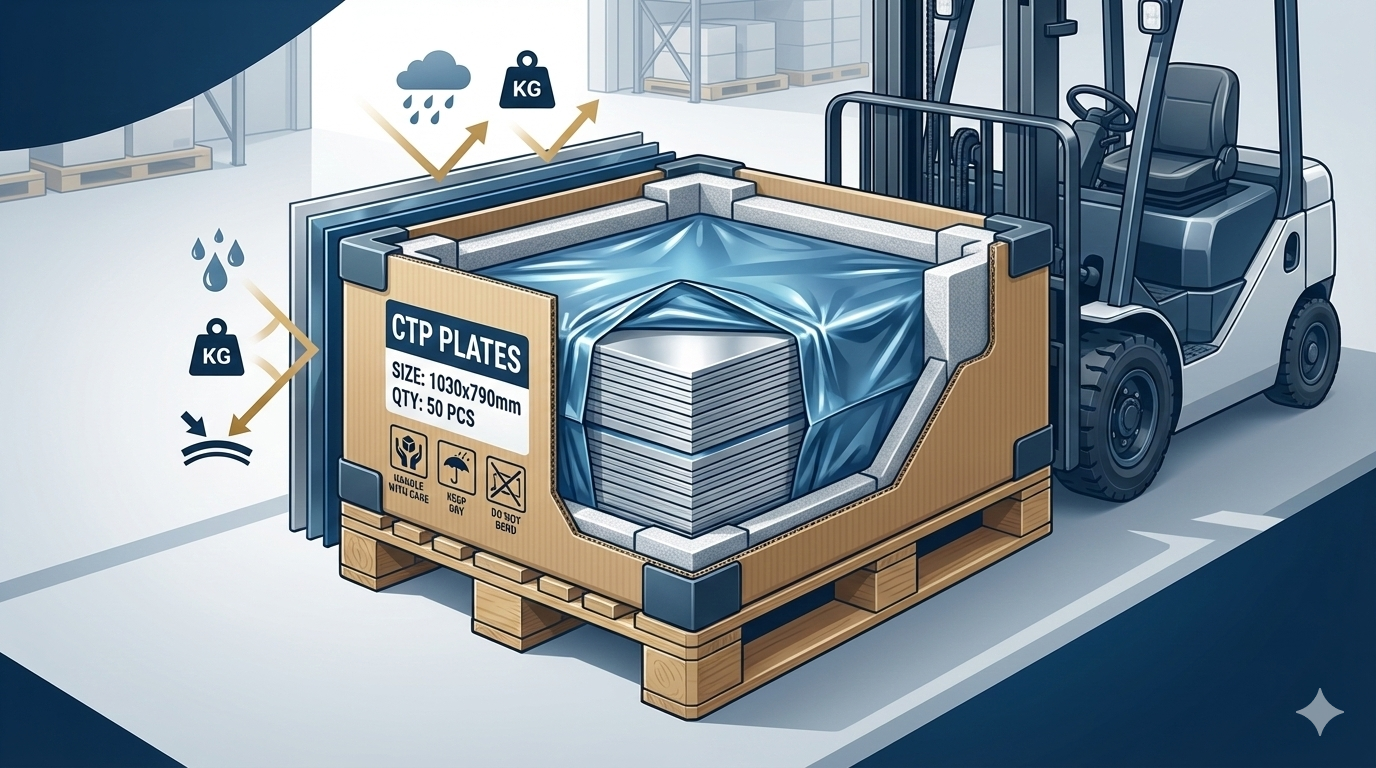
Printing plates are sensitive to:
Moisture
Pressure
Bending
What Buyers Should Confirm
Moisture-proof inner packaging
Strong outer cartons or pallets
Clear labeling (plate size, quantity)
Why it matters:
Damaged plates often result in:
Customs inspection
Insurance claims
Production delays
7. Incoterms: Know Who Handles Customs
Many import issues happen because buyers assume the supplier handles everything.
Key Incoterms Reminder
FOB / CIF: Buyer handles import customs
DDP: Supplier handles import customs
Buyer Tip:
If you are not experienced with customs, clarify responsibilities clearly before ordering.
8. Lead Time Buffer (Customs Is Not Always Predictable)
Even with perfect documents, customs clearance may take longer than expected.
What Buyers Should Do
Avoid ordering at the last minute
Keep safety stock for plates
Track shipment status proactively
Printing plates are production-critical items—no buffer means production risk.
9. Work With a Supplier Who Knows Export Details
The simplest way to reduce customs risk is choosing the right supplier.
A professional printing plates manufacturer should:
Use correct product descriptions
Provide stable HS codes
Prepare export documents accurately
Understand plate-specific customs risks
Why Many Buyers Choose Us as Their Printing Plates Manufacturer
We are a professional Printing Plates manufacturer supplying:
CTP plates
CTcP plates
PS plates
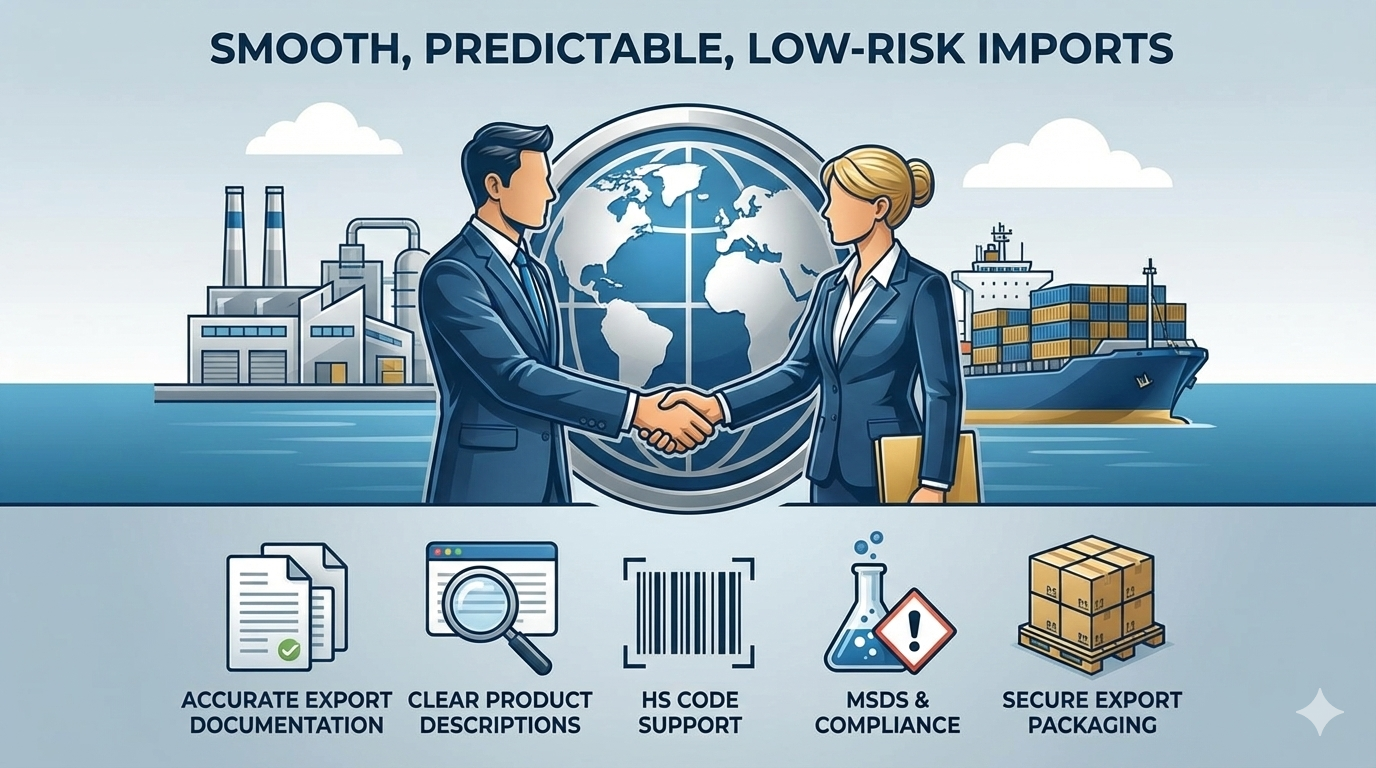
We support buyers with:
Accurate export documentation
Clear product descriptions
HS code reference support
MSDS and compliance documents
Secure export packaging
If you want your printing plates imports to be smooth, predictable, and low-risk,
feel free to contact us for product details, samples, or export guidance.
Why Does a CTP Plate Scum on Press ? 9 Common Causes and Proven Solutions
Learn why CTP plates scum on press, the most common causes, troubleshooting methods, and practical solutions to improve offset printing quality and reduce downtime.

Which Offset Machine Is Best ? A Practical Guide for Commercial Printing
Which offset machine is best? Learn how to choose the right offset printing machine based on format, volume, cost, and CTP technology.
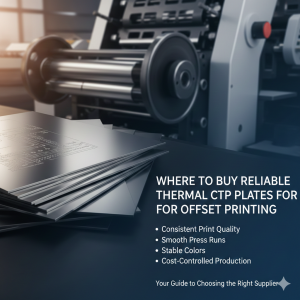
Where to Buy Thermal CTP Plates for Offset Printing | Best Supplier Guide & Expert Tips
Looking for reliable thermal CTP plates for offset printing? This expert guide explains how to choose a trustworthy supplier, compares global and Chinese manufacturers, and shares key quality criteria.