Introduction
Thermal Positive CTP plates have become the mainstream choice for offset printing plants worldwide due to their stability, imaging accuracy, and compatibility with modern high-speed workflows. However, not all thermal positive CTP plates deliver the same performance, even if the specifications look similar on paper.
For printing companies, distributors, and procurement managers, choosing the right thermal positive CTP plate is not just about price—it directly affects plate-making efficiency, print quality, press uptime, and long-term operating costs.
1. What Is a Thermal Positive CTP Plate?
A Thermal Positive CTP plate is an aluminum offset printing plate coated with a thermal-sensitive positive-working layer. The image area is exposed by a thermal laser (typically 830nm), and the exposed coating is removed during processing, leaving the image area ink-receptive.
Key Characteristics
Requires thermal CTP exposure
Positive-working chemistry
High imaging stability
Suitable for long and medium press runs
These plates are widely used in:
Commercial printing
Book and magazine printing
Packaging printing
Newspaper and publication printing
2. Why Thermal Positive CTP Plates Are Widely Preferred
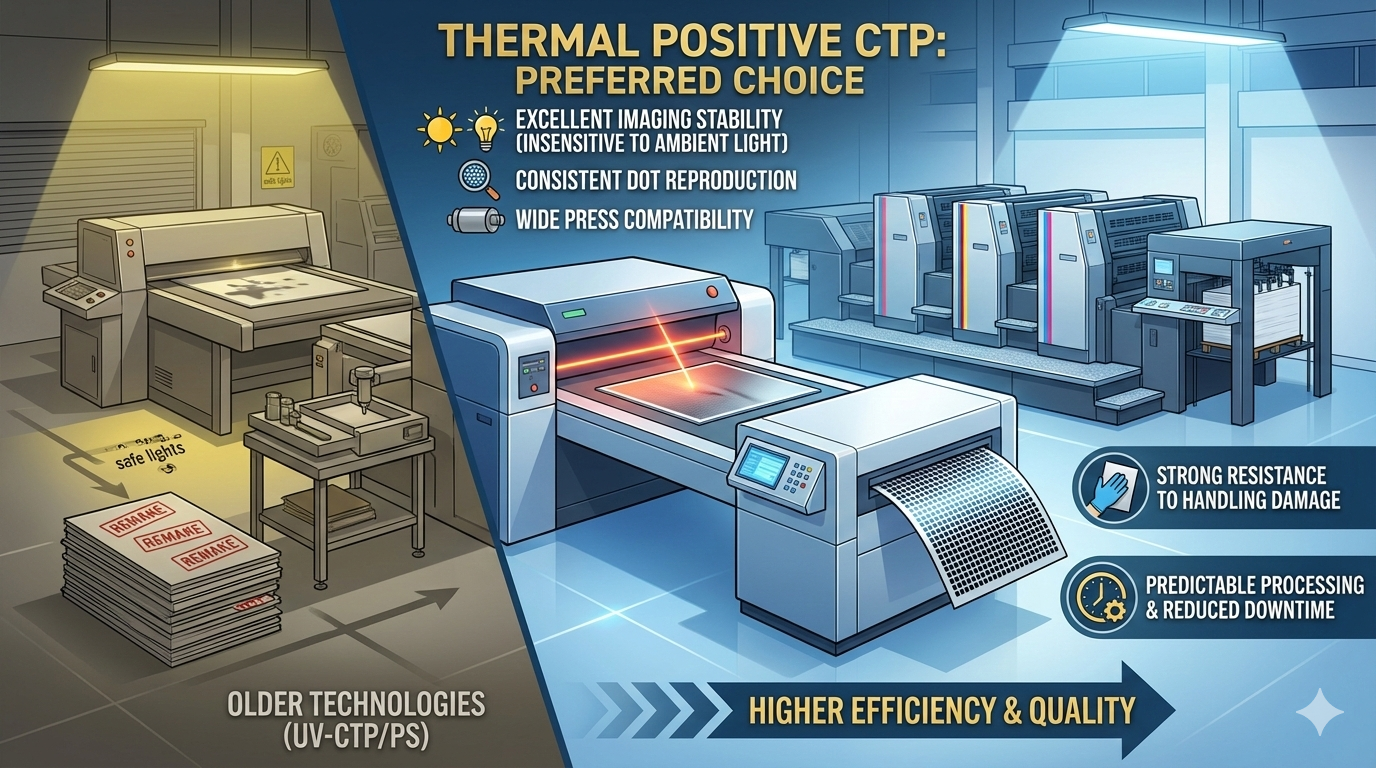
Compared with UV-CTP or older PS plates, thermal positive CTP plates offer several advantages that matter in real production environments.
Main Advantages
Excellent imaging stability (insensitive to ambient light)
Consistent dot reproduction
Wide press compatibility
Strong resistance to handling damage
Predictable processing performance
For printers running multiple shifts or handling frequent job changes, thermal positive plates provide reliability that reduces plate remake rates and downtime.
3. Key Technical Specifications Buyers Should Focus On
Many buyers only look at price and size, but experienced procurement teams focus on performance-related parameters.
A. Laser Sensitivity
Typically 130–150 mJ/cm²
Should match your CTP device brand and power
Stable sensitivity ensures consistent imaging without frequent recalibration
B. Resolution & Dot Reproduction
Supports 1–99% dot reproduction
High-resolution plates maintain clean highlights and sharp text
Critical for fine screens and high-end commercial work
C. Aluminum Substrate Quality
Electrochemically grained and anodized aluminum
Uniform surface improves ink-water balance
Strong substrate ensures better press durability
4. Press Run Length: Don’t Overpay or Under-Specify
Press run capability directly affects cost efficiency.
| Plate Type | Typical Press Run |
|---|---|
| Standard Thermal Positive Plate | 100,000 – 150,000 impressions |
| Enhanced / Baked Plate | Up to 300,000+ impressions |
Buyer Tip
Commercial printers often do not need extremely high run lengths
Packaging printers may benefit from higher durability options
Choose based on actual usage, not maximum claims
5. Developer Compatibility and Processing Stability
Thermal positive CTP plates require chemical processing, making developer compatibility a key factor.
What Buyers Should Check
Works with mainstream developers
Stable development latitude
Low foam and low sludge generation
Consistent results across temperature variations
A plate that requires “perfect conditions” increases operating risk and hidden costs.
6. Plate Thickness and Size Selection
Thermal positive CTP plates are available in various thicknesses and sizes to match different presses.
Common Thickness Options
0.15 mm – lightweight, flexible
0.20 mm – general commercial printing
0.25 mm – packaging and longer runs
0.30 mm – heavy-duty applications
Key Considerations
Match press cylinder requirements
Confirm gripper margin specifications
Ensure consistent cutting accuracy
Incorrect thickness or sizing can cause mounting issues and waste.
7. Environmental and Storage Considerations
Even the best plate can fail if storage and environmental resistance are poor.
What to Look For
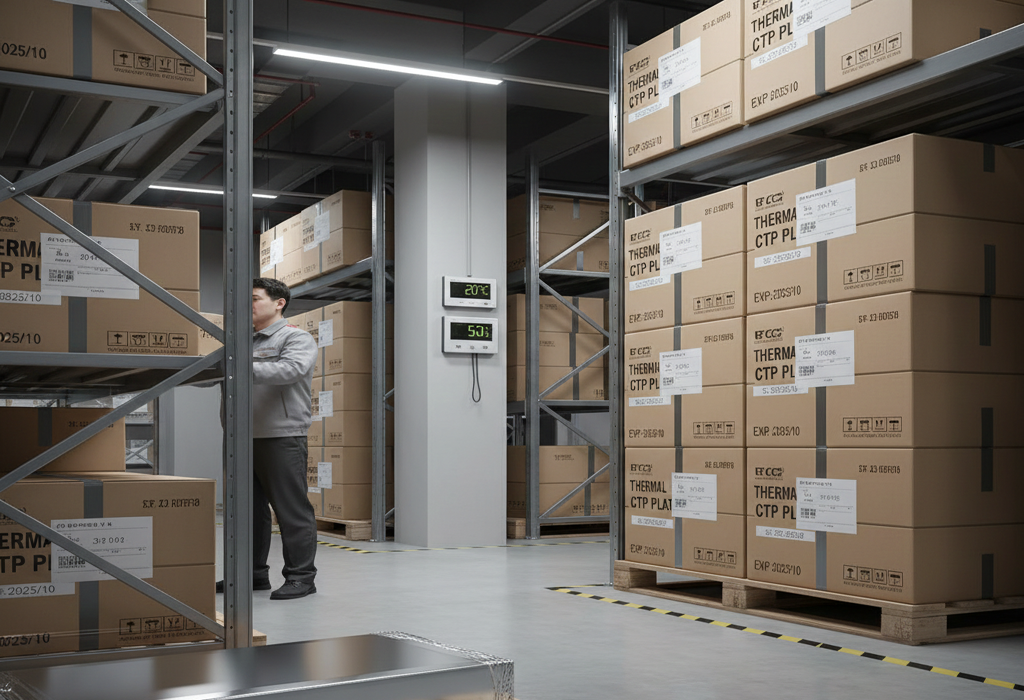
Good resistance to humidity
Long shelf life (12–18 months)
Stable performance under varying workshop conditions
Thermal plates should tolerate normal production environments without frequent defects.
8. Quality Consistency: The Most Overlooked Factor
Many suppliers can deliver one good batch, but consistency over time is what matters.
Buyer Checklist
Stable coating quality
Consistent sensitivity across batches
Reliable aluminum substrate sourcing
Clear quality control processes
Inconsistent plates lead to recalibration, remakes, and production delays.
Why Choose Us as Your Thermal Positive CTP Plate Manufacturer
We are a professional Thermal Positive CTP Plate manufacturer with extensive experience serving global printing markets.
Our advantages include:
Stable coating technology
High-quality aluminum substrates
Consistent batch performance
Compatibility with major CTP systems
Reliable export packaging and documentation
Whether you are a commercial printer, distributor, or printing group, we can support your production with dependable thermal positive CTP plates.
👉 If you have requirements for Thermal Positive CTP Plates, feel free to contact us for technical details, samples, or quotations.
Why Does a CTP Plate Scum on Press ? 9 Common Causes and Proven Solutions
Learn why CTP plates scum on press, the most common causes, troubleshooting methods, and practical solutions to improve offset printing quality and reduce downtime.

Which Offset Machine Is Best ? A Practical Guide for Commercial Printing
Which offset machine is best? Learn how to choose the right offset printing machine based on format, volume, cost, and CTP technology.
Where to Buy Thermal CTP Plates for Offset Printing | Best Supplier Guide & Expert Tips
Looking for reliable thermal CTP plates for offset printing? This expert guide explains how to choose a trustworthy supplier, compares global and Chinese manufacturers, and shares key quality criteria.