Introduction
In screen printing, image quality starts long before ink touches the substrate. One of the most critical yet often underestimated components of the workflow is the printing film positive. Whether you are printing textiles, graphics, decals, or industrial markings, the quality of your film positive directly determines edge sharpness, ink deposit accuracy, stencil durability, and overall print consistency.
While modern digital tools have transformed artwork preparation, film positives remain essential for most screen printing operations. Understanding how printing film positives work, how to choose the right film, and how to optimize output is crucial for achieving reliable results.
This article provides a practical, professional overview of printing film positives for screen printing, helping printers and prepress operators make informed decisions.
1. What Are Printing Film Positives for Screen Printing?
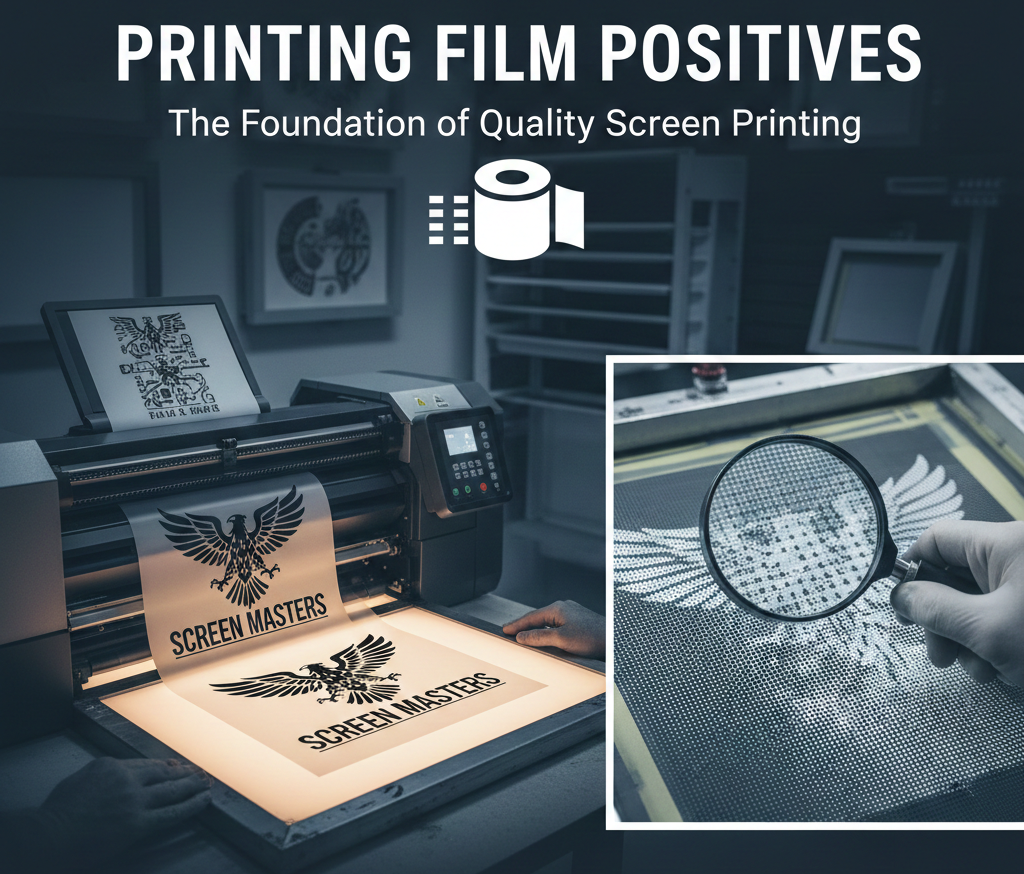
A film positive is a transparent polyester film printed with opaque black ink that represents the final artwork. During screen exposure, the film blocks UV light in the image areas, allowing the emulsion beneath to remain soft and washable.
Key Function
Opaque areas block UV light
Clear areas allow UV light to harden the emulsion
The result is a precise stencil matching the artwork
In simple terms, the film positive is the master template used to create the screen.
2. Why Film Positives Are Critical in Screen Printing
Even with high-quality screens and emulsions, poor film output leads to poor results.
High-quality film positives ensure:
Sharp image edges
Accurate halftone dots
Clean stencil washout
Consistent exposure results
Low-quality films can cause:
Light leakage
Blurred edges
Pinholes
Inconsistent stencil thickness
In screen printing, film quality equals print quality.
3. Common Types of Printing Film Used for Screen Printing
3.1 Inkjet Film (Most Common)
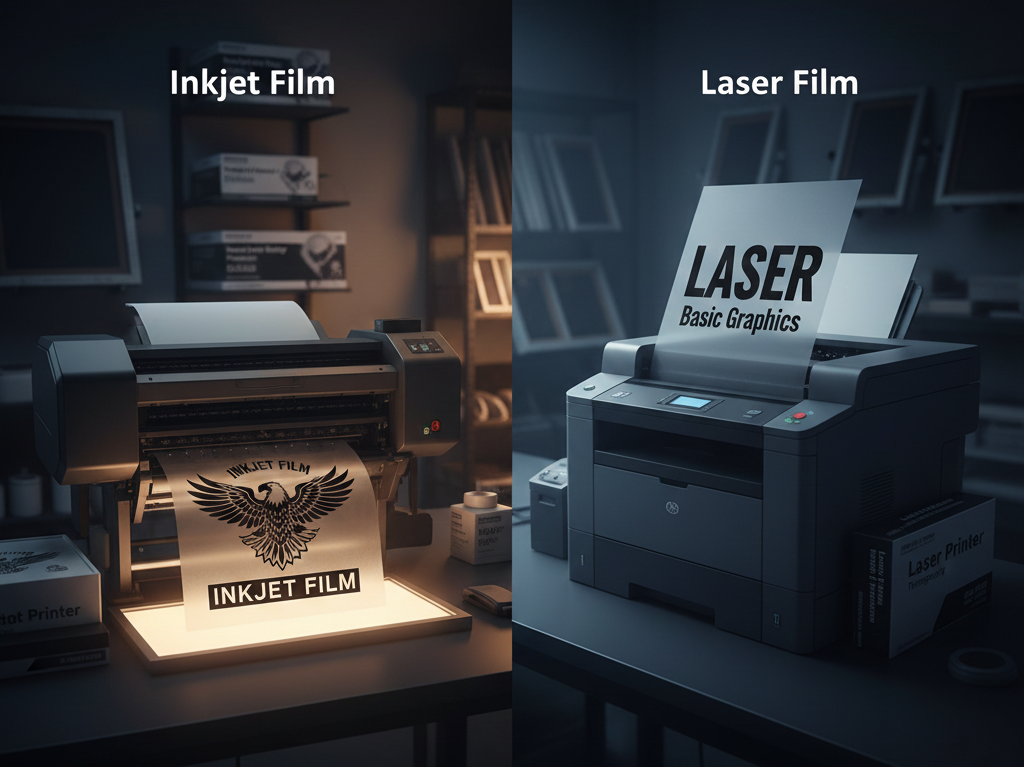
Designed specifically for inkjet printers using dye or pigment inks.
Characteristics:
High ink absorption
Fast drying
Excellent optical density (Dmax)
Best for:
Textile screen printing
Graphic screen printing
Small to medium production environments
3.2 Laser Film
Optimized for laser printers and toner-based systems.
Characteristics:
Heat-resistant coating
Good toner adhesion
Lower ink density than inkjet film
Best for:
Basic graphics
Office-style workflows
Inkjet film is generally preferred for professional-quality screen printing.
4. Key Performance Requirements of Film Positives
4.1 Optical Density (Dmax)
High optical density ensures that UV light does not pass through image areas.
Recommended Dmax: ≥ 3.0
Higher Dmax = cleaner exposure
4.2 Edge Definition
Sharp transitions between black and clear areas are essential, especially for:
Fine lines
Small text
Halftone dots
4.3 Dimensional Stability
High-quality polyester film resists:
Shrinkage
Warping
Curling
This ensures accurate registration, especially for multi-color printing.
5. Printing Film Positives: Inkjet vs Laser Comparison
| Feature | Inkjet Film | Laser Film |
|---|---|---|
| Image Density | Very high | Medium |
| Edge Sharpness | Excellent | Good |
| Halftone Accuracy | Excellent | Fair |
| Printer Cost | Medium | Low |
| Professional Use | Preferred | Limited |
Conclusion:
Inkjet film positives deliver superior results for professional screen printing.
6. Film Thickness and Surface Finish
Typical Thickness
100–120 microns (standard)
Thicker films offer better stability
Surface Types
Coated side (ink-receptive)
Smooth base side
Correct orientation during printing is critical to ensure ink adhesion.
7. Best Practices for Printing Film Positives
7.1 Printer Settings
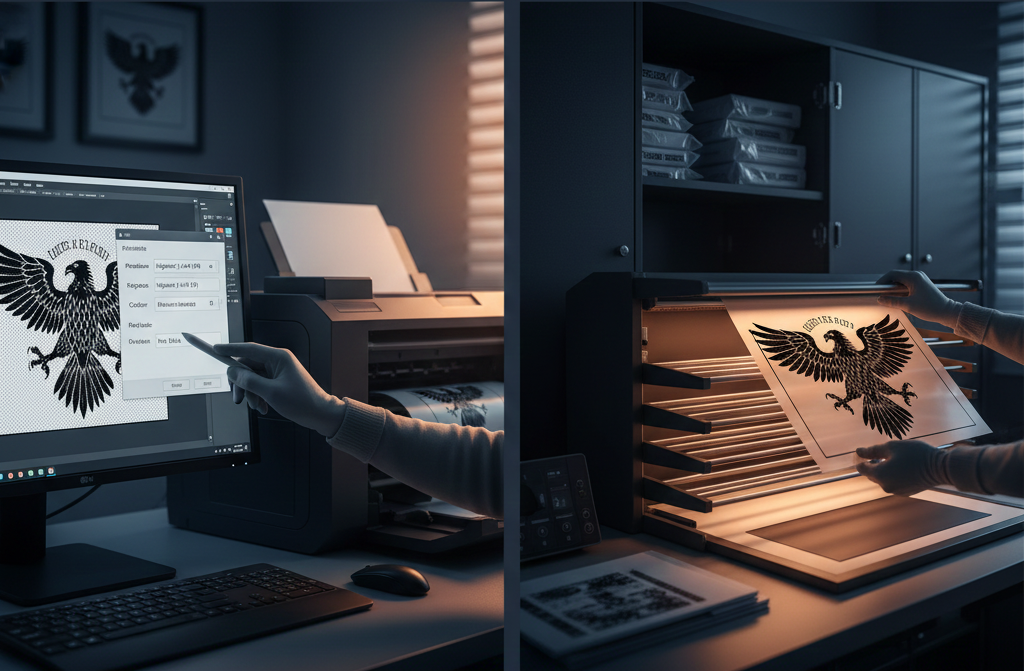
Use highest print resolution
Disable color management
Print in pure black mode
7.2 Ink Selection
Use pigment-based black inks
Avoid low-density dye inks
7.3 Drying and Handling
Allow films to dry completely
Avoid stacking wet films
Store flat in a dust-free environment
These steps significantly improve exposure consistency.
8. Film Positives and Halftone Printing
For halftone work, film quality becomes even more critical.
Key Considerations
Dot shape accuracy
Consistent dot size
No ink bleeding
High-quality film ensures:
Smooth tonal transitions
Clean highlight dots
Stable midtones
9. Common Problems and How to Avoid Them
| Problem | Cause | Solution |
|---|---|---|
| Light leakage | Low ink density | Use high-Dmax film |
| Blurry edges | Ink spread | Use proper film coating |
| Pinholes | Dust or poor coating | Clean environment |
| Poor washout | Film not opaque enough | Increase density |
Most exposure issues trace back to film quality or handling errors.
10. Storage and Shelf Life of Printing Film
Proper storage extends film life:
Store in cool, dry conditions
Avoid direct sunlight
Keep original packaging sealed
Quality film remains stable for long periods when stored correctly.
11. How to Choose the Right Printing Film Supplier
A reliable supplier should offer:
Consistent coating quality
High optical density
Compatibility with major inkjet systems
Stable batch-to-batch performance
Technical support and product consistency matter as much as price.
12. Why We Are a Professional Printing Film Manufacturer
We are a professional printing film manufacturer, supplying high-quality printing film positives for screen printing.
Our products offer:
High optical density for clean exposure
Sharp edge definition
Excellent dimensional stability
Compatibility with leading inkjet printers
Reliable batch consistency
Our printing films are widely used for:
Textile screen printing
Graphic and signage printing
Industrial and specialty applications
If you are looking for reliable, high-performance printing film positives, we are ready to support your production.
Feel free to contact us for samples, technical consultation, or pricing.
Why Does a CTP Plate Scum on Press ? 9 Common Causes and Proven Solutions
Learn why CTP plates scum on press, the most common causes, troubleshooting methods, and practical solutions to improve offset printing quality and reduce downtime.

Which Offset Machine Is Best ? A Practical Guide for Commercial Printing
Which offset machine is best? Learn how to choose the right offset printing machine based on format, volume, cost, and CTP technology.
Where to Buy Thermal CTP Plates for Offset Printing | Best Supplier Guide & Expert Tips
Looking for reliable thermal CTP plates for offset printing? This expert guide explains how to choose a trustworthy supplier, compares global and Chinese manufacturers, and shares key quality criteria.